

470
John F. Valentine and J. Emmett Duffy
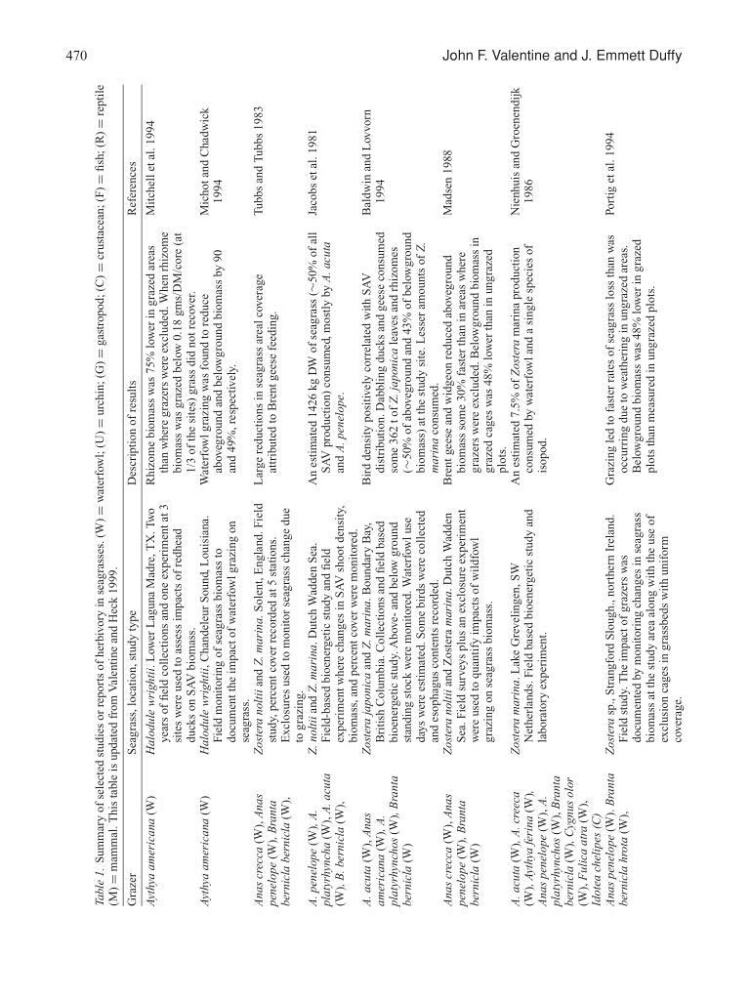
Table 1. Summary of selected studies or reports of herbivory in seagrasses. (W)
= waterfowl; (U)
= urchin; (G)
= gastropod; (C)
= crustacean; (F)
= fish; (R)
= reptile
(M)
= mammal. This table is updated from Valentine and Heck 1999.
Grazer
Seagrass, location, study type
Description of results
References
Aythya americana (W)
Halodule wrightii. Lower Laguna Madre, TX. Two
years of field collections and one experiment at 3
sites were used to assess impacts of redhead
ducks on SAV biomass.
Rhizome biomass was 75% lower in grazed areas
than where grazers were excluded. When rhizome
biomass was grazed below 0.18 gms/DM/core (at
1/3 of the sites) grass did not recover.
Mitchell et al. 1994
Aythya americana (W)
Halodule wrightii, Chandeleur Sound, Louisiana.
Field monitoring of seagrass biomass to
document the impact of waterfowl grazing on
seagrass.
Waterfowl grazing was found to reduce
aboveground and belowground biomass by 90
and 49%, respectively.
Michot and Chadwick
1994
Anas crecca (W), Anas
penelope (W), Branta
bernicla bernicla (W),
Zostera noltii and Z. marina. Solent, England. Field
study, percent cover recorded at 5 stations.
Exclosures used to monitor seagrass change due
to grazing.
Large reductions in seagrass areal coverage
attributed to Brent geese feeding.
Tubbs and Tubbs 1983
A. penelope (W), A.
platyrhyncha (W), A. acuta
(W), B. bernicla (W),
Z. noltii and Z. marina. Dutch Wadden Sea.
Field-based bioenergetic study and field
experiment where changes in SAV shoot density,
biomass, and percent cover were monitored.
An estimated 1426 kg DW of seagrass (∼50% of all
SAV production) consumed, mostly by A. acuta
and A. penelope.
Jacobs et al. 1981
A. acuta (W), Anas
americana (W), A.
platyrhynchos (W), Branta
bernicla (W)
Zostera japonica and Z. marina. Boundary Bay,
British Columbia. Collections and field based
bioenergetic study. Above- and below ground
standing stock were monitored. Waterfowl use
days were estimated. Some birds were collected
and esophagus contents recorded.
Bird density positively correlated with SAV
distribution. Dabbling ducks and geese consumed
some 362 t of Z. japonica leaves and rhizomes
(∼50% of aboveground and 43% of belowground
biomass) at the study site. Lesser amounts of Z.
marina consumed.
Baldwin and Lovvorn
1994
Anas crecca (W), Anas
penelope (W), Branta
bernicla (W)
Zostera noltii and Zostera marina. Dutch Wadden
Sea. Field surveys plus an exclosure experiment
were used to quantify impacts of wildfowl
grazing on seagrass biomass.
Brent geese and widgeon reduced aboveground
biomass some 30% faster than in areas where
grazers were excluded. Belowground biomass in
grazed cages was 48% lower than in ungrazed
plots.
Madsen 1988
A. acuta (W), A. creeca
(W), Aythya ferina (W),
Anas penelope (W), A.
platyrhynchos (W), Branta
bernicla (W), Cygnus olor
(W), Fulica atra (W),
Idotea chelipes (C)
Zostera marina. Lake Grevelingen, SW
Netherlands. Field based bioenergetic study and
laboratory experiment.
An estimated 7.5% of Zostera marina production
consumed by waterfowl and a single species of
isopod.
Nienhuis and Groenendijk
1986
Anas penelope (W). Branta
bernicla hrota (W),
Zostera sp., Strangford Slough., northern Ireland.
Field study. The impact of grazers was
documented by monitoring changes in seagrass
biomass at the study area along with the use of
exclusion cages in grassbeds with uniform
coverage.
Grazing led to faster rates of seagrass loss than was
occurring due to weathering in ungrazed areas.
Belowground biomass was 48% lower in grazed
plots than measured in ungrazed plots.
Portig et al. 1994
John F. Valentine and J. Emmett Duffy
Table 1. Summary of selected studies or reports of herbivory in seagrasses. (W)
= waterfowl; (U)
= urchin; (G)
= gastropod; (C)
= crustacean; (F)
= fish; (R)
= reptile
(M)
= mammal. This table is updated from Valentine and Heck 1999.
Grazer
Seagrass, location, study type
Description of results
References
Aythya americana (W)
Halodule wrightii. Lower Laguna Madre, TX. Two
years of field collections and one experiment at 3
sites were used to assess impacts of redhead
ducks on SAV biomass.
Rhizome biomass was 75% lower in grazed areas
than where grazers were excluded. When rhizome
biomass was grazed below 0.18 gms/DM/core (at
1/3 of the sites) grass did not recover.
Mitchell et al. 1994
Aythya americana (W)
Halodule wrightii, Chandeleur Sound, Louisiana.
Field monitoring of seagrass biomass to
document the impact of waterfowl grazing on
seagrass.
Waterfowl grazing was found to reduce
aboveground and belowground biomass by 90
and 49%, respectively.
Michot and Chadwick
1994
Anas crecca (W), Anas
penelope (W), Branta
bernicla bernicla (W),
Zostera noltii and Z. marina. Solent, England. Field
study, percent cover recorded at 5 stations.
Exclosures used to monitor seagrass change due
to grazing.
Large reductions in seagrass areal coverage
attributed to Brent geese feeding.
Tubbs and Tubbs 1983
A. penelope (W), A.
platyrhyncha (W), A. acuta
(W), B. bernicla (W),
Z. noltii and Z. marina. Dutch Wadden Sea.
Field-based bioenergetic study and field
experiment where changes in SAV shoot density,
biomass, and percent cover were monitored.
An estimated 1426 kg DW of seagrass (∼50% of all
SAV production) consumed, mostly by A. acuta
and A. penelope.
Jacobs et al. 1981
A. acuta (W), Anas
americana (W), A.
platyrhynchos (W), Branta
bernicla (W)
Zostera japonica and Z. marina. Boundary Bay,
British Columbia. Collections and field based
bioenergetic study. Above- and below ground
standing stock were monitored. Waterfowl use
days were estimated. Some birds were collected
and esophagus contents recorded.
Bird density positively correlated with SAV
distribution. Dabbling ducks and geese consumed
some 362 t of Z. japonica leaves and rhizomes
(∼50% of aboveground and 43% of belowground
biomass) at the study site. Lesser amounts of Z.
marina consumed.
Baldwin and Lovvorn
1994
Anas crecca (W), Anas
penelope (W), Branta
bernicla (W)
Zostera noltii and Zostera marina. Dutch Wadden
Sea. Field surveys plus an exclosure experiment
were used to quantify impacts of wildfowl
grazing on seagrass biomass.
Brent geese and widgeon reduced aboveground
biomass some 30% faster than in areas where
grazers were excluded. Belowground biomass in
grazed cages was 48% lower than in ungrazed
plots.
Madsen 1988
A. acuta (W), A. creeca
(W), Aythya ferina (W),
Anas penelope (W), A.
platyrhynchos (W), Branta
bernicla (W), Cygnus olor
(W), Fulica atra (W),
Idotea chelipes (C)
Zostera marina. Lake Grevelingen, SW
Netherlands. Field based bioenergetic study and
laboratory experiment.
An estimated 7.5% of Zostera marina production
consumed by waterfowl and a single species of
isopod.
Nienhuis and Groenendijk
1986
Anas penelope (W). Branta
bernicla hrota (W),
Zostera sp., Strangford Slough., northern Ireland.
Field study. The impact of grazers was
documented by monitoring changes in seagrass
biomass at the study area along with the use of
exclusion cages in grassbeds with uniform
coverage.
Grazing led to faster rates of seagrass loss than was
occurring due to weathering in ungrazed areas.
Belowground biomass was 48% lower in grazed
plots than measured in ungrazed plots.
Portig et al. 1994