

32
Michelle Waycott, Gabriele Procaccini, Donald H. Les and Thorsten B. H. Reusch
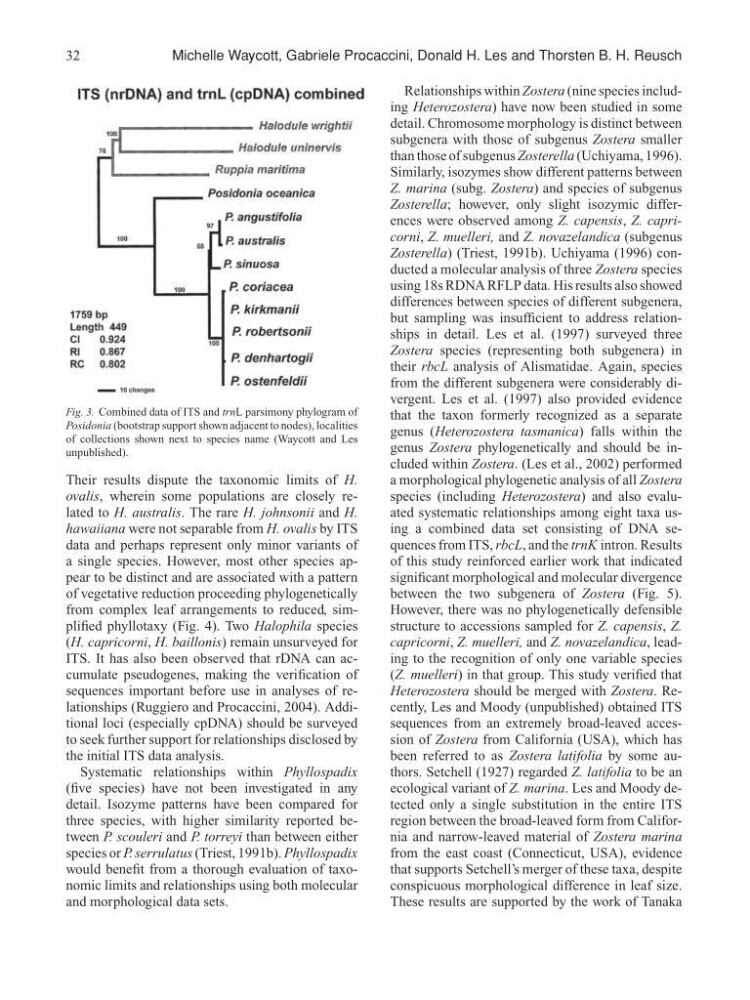
Fig. 3. Combined data of ITS and trnL parsimony phylogram of
Posidonia (bootstrap support shown adjacent to nodes), localities
of collections shown next to species name (Waycott and Les
unpublished).
Their results dispute the taxonomic limits of H.
ovalis, wherein some populations are closely related to H. australis. The rare H. johnsonii and H.
hawaiiana were not separable from H. ovalis by ITS
data and perhaps represent only minor variants of
a single species. However, most other species appear to be distinct and are associated with a pattern
of vegetative reduction proceeding phylogenetically
from complex leaf arrangements to reduced, simplified phyllotaxy (Fig. 4). Two Halophila species
(H. capricorni, H. baillonis) remain unsurveyed for
ITS. It has also been observed that rDNA can accumulate pseudogenes, making the verification of
sequences important before use in analyses of relationships (Ruggiero and Procaccini, 2004). Additional loci (especially cpDNA) should be surveyed
to seek further support for relationships disclosed by
the initial ITS data analysis.
Systematic relationships within Phyllospadix
(five species) have not been investigated in any
detail. Isozyme patterns have been compared for
three species, with higher similarity reported between P. scouleri and P. torreyi than between either
species or P. serrulatus (Triest, 1991b). Phyllospadix
would benefit from a thorough evaluation of taxonomic limits and relationships using both molecular
and morphological data sets.
Relationships within Zostera (nine species including Heterozostera) have now been studied in some
detail. Chromosome morphology is distinct between
subgenera with those of subgenus Zostera smaller
than those of subgenus Zosterella (Uchiyama, 1996).
Similarly, isozymes show different patterns between
Z. marina (subg. Zostera) and species of subgenus
Zosterella; however, only slight isozymic differences were observed among Z. capensis, Z. capricorni, Z. muelleri, and Z. novazelandica (subgenus
Zosterella) (Triest, 1991b). Uchiyama (1996) conducted a molecular analysis of three Zostera species
using 18s RDNA RFLP data. His results also showed
differences between species of different subgenera,
but sampling was insufficient to address relationships in detail. Les et al. (1997) surveyed three
Zostera species (representing both subgenera) in
their rbcL analysis of Alismatidae. Again, species
from the different subgenera were considerably divergent. Les et al. (1997) also provided evidence
that the taxon formerly recognized as a separate
genus (Heterozostera tasmanica) falls within the
genus Zostera phylogenetically and should be included within Zostera. (Les et al., 2002) performed
a morphological phylogenetic analysis of all Zostera
species (including Heterozostera) and also evaluated systematic relationships among eight taxa using a combined data set consisting of DNA sequences from ITS, rbcL, and the trnK intron. Results
of this study reinforced earlier work that indicated
significant morphological and molecular divergence
between the two subgenera of Zostera (Fig. 5).
However, there was no phylogenetically defensible
structure to accessions sampled for Z. capensis, Z.
capricorni, Z. muelleri, and Z. novazelandica, leading to the recognition of only one variable species
(Z. muelleri) in that group. This study verified that
Heterozostera should be merged with Zostera. Recently, Les and Moody (unpublished) obtained ITS
sequences from an extremely broad-leaved accession of Zostera from California (USA), which has
been referred to as Zostera latifolia by some authors. Setchell (1927) regarded Z. latifolia to be an
ecological variant of Z. marina. Les and Moody detected only a single substitution in the entire ITS
region between the broad-leaved form from California and narrow-leaved material of Zostera marina
from the east coast (Connecticut, USA), evidence
that supports Setchell’s merger of these taxa, despite
conspicuous morphological difference in leaf size.
These results are supported by the work of Tanaka
Michelle Waycott, Gabriele Procaccini, Donald H. Les and Thorsten B. H. Reusch
Fig. 3. Combined data of ITS and trnL parsimony phylogram of
Posidonia (bootstrap support shown adjacent to nodes), localities
of collections shown next to species name (Waycott and Les
unpublished).
Their results dispute the taxonomic limits of H.
ovalis, wherein some populations are closely related to H. australis. The rare H. johnsonii and H.
hawaiiana were not separable from H. ovalis by ITS
data and perhaps represent only minor variants of
a single species. However, most other species appear to be distinct and are associated with a pattern
of vegetative reduction proceeding phylogenetically
from complex leaf arrangements to reduced, simplified phyllotaxy (Fig. 4). Two Halophila species
(H. capricorni, H. baillonis) remain unsurveyed for
ITS. It has also been observed that rDNA can accumulate pseudogenes, making the verification of
sequences important before use in analyses of relationships (Ruggiero and Procaccini, 2004). Additional loci (especially cpDNA) should be surveyed
to seek further support for relationships disclosed by
the initial ITS data analysis.
Systematic relationships within Phyllospadix
(five species) have not been investigated in any
detail. Isozyme patterns have been compared for
three species, with higher similarity reported between P. scouleri and P. torreyi than between either
species or P. serrulatus (Triest, 1991b). Phyllospadix
would benefit from a thorough evaluation of taxonomic limits and relationships using both molecular
and morphological data sets.
Relationships within Zostera (nine species including Heterozostera) have now been studied in some
detail. Chromosome morphology is distinct between
subgenera with those of subgenus Zostera smaller
than those of subgenus Zosterella (Uchiyama, 1996).
Similarly, isozymes show different patterns between
Z. marina (subg. Zostera) and species of subgenus
Zosterella; however, only slight isozymic differences were observed among Z. capensis, Z. capricorni, Z. muelleri, and Z. novazelandica (subgenus
Zosterella) (Triest, 1991b). Uchiyama (1996) conducted a molecular analysis of three Zostera species
using 18s RDNA RFLP data. His results also showed
differences between species of different subgenera,
but sampling was insufficient to address relationships in detail. Les et al. (1997) surveyed three
Zostera species (representing both subgenera) in
their rbcL analysis of Alismatidae. Again, species
from the different subgenera were considerably divergent. Les et al. (1997) also provided evidence
that the taxon formerly recognized as a separate
genus (Heterozostera tasmanica) falls within the
genus Zostera phylogenetically and should be included within Zostera. (Les et al., 2002) performed
a morphological phylogenetic analysis of all Zostera
species (including Heterozostera) and also evaluated systematic relationships among eight taxa using a combined data set consisting of DNA sequences from ITS, rbcL, and the trnK intron. Results
of this study reinforced earlier work that indicated
significant morphological and molecular divergence
between the two subgenera of Zostera (Fig. 5).
However, there was no phylogenetically defensible
structure to accessions sampled for Z. capensis, Z.
capricorni, Z. muelleri, and Z. novazelandica, leading to the recognition of only one variable species
(Z. muelleri) in that group. This study verified that
Heterozostera should be merged with Zostera. Recently, Les and Moody (unpublished) obtained ITS
sequences from an extremely broad-leaved accession of Zostera from California (USA), which has
been referred to as Zostera latifolia by some authors. Setchell (1927) regarded Z. latifolia to be an
ecological variant of Z. marina. Les and Moody detected only a single substitution in the entire ITS
region between the broad-leaved form from California and narrow-leaved material of Zostera marina
from the east coast (Connecticut, USA), evidence
that supports Setchell’s merger of these taxa, despite
conspicuous morphological difference in leaf size.
These results are supported by the work of Tanaka