

Chapter 20 Grazing in Seagrass Ecosystems
465
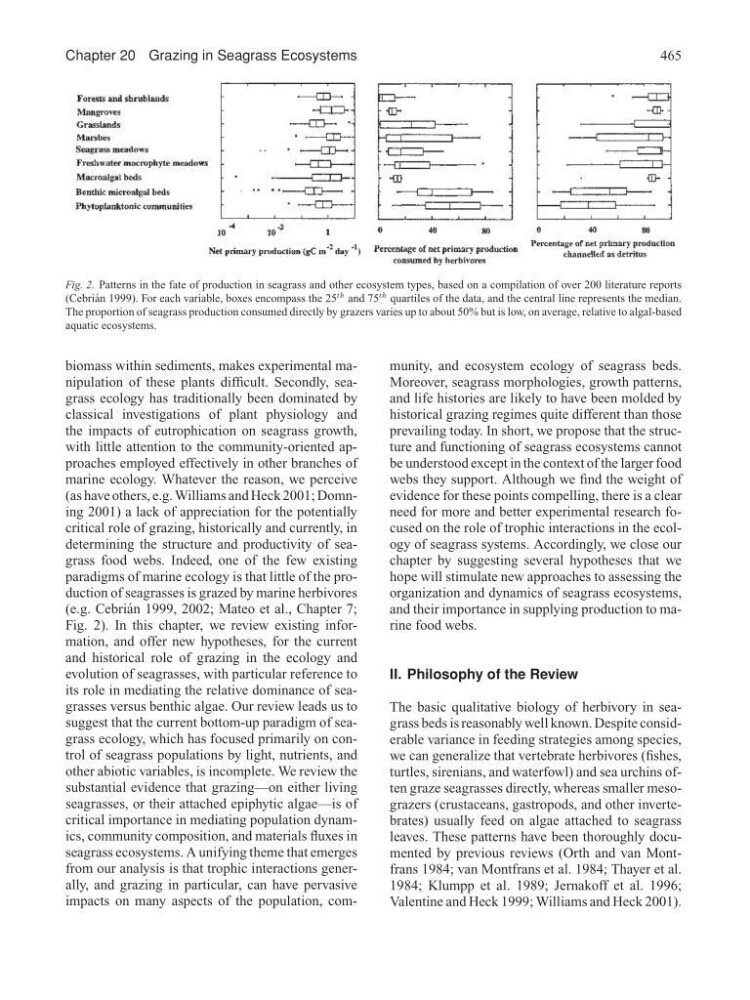
Fig. 2. Patterns in the fate of production in seagrass and other ecosystem types, based on a compilation of over 200 literature reports
(Cebri´ an 1999). For each variable, boxes encompass the 25
th and 75
th quartiles of the data, and the central line represents the median.
The proportion of seagrass production consumed directly by grazers varies up to about 50% but is low, on average, relative to algal-based
aquatic ecosystems.
biomass within sediments, makes experimental manipulation of these plants difficult. Secondly, seagrass ecology has traditionally been dominated by
classical investigations of plant physiology and
the impacts of eutrophication on seagrass growth,
with little attention to the community-oriented approaches employed effectively in other branches of
marine ecology. Whatever the reason, we perceive
(as have others, e.g. Williams and Heck 2001; Domning 2001) a lack of appreciation for the potentially
critical role of grazing, historically and currently, in
determining the structure and productivity of seagrass food webs. Indeed, one of the few existing
paradigms of marine ecology is that little of the production of seagrasses is grazed by marine herbivores
(e.g. Cebri´ an 1999, 2002; Mateo et al., Chapter 7;
Fig. 2). In this chapter, we review existing information, and offer new hypotheses, for the current
and historical role of grazing in the ecology and
evolution of seagrasses, with particular reference to
its role in mediating the relative dominance of seagrasses versus benthic algae. Our review leads us to
suggest that the current bottom-up paradigm of seagrass ecology, which has focused primarily on control of seagrass populations by light, nutrients, and
other abiotic variables, is incomplete. We review the
substantial evidence that grazing—on either living
seagrasses, or their attached epiphytic algae—is of
critical importance in mediating population dynamics, community composition, and materials fluxes in
seagrass ecosystems. A unifying theme that emerges
from our analysis is that trophic interactions generally, and grazing in particular, can have pervasive
impacts on many aspects of the population, community, and ecosystem ecology of seagrass beds.
Moreover, seagrass morphologies, growth patterns,
and life histories are likely to have been molded by
historical grazing regimes quite different than those
prevailing today. In short, we propose that the structure and functioning of seagrass ecosystems cannot
be understood except in the context of the larger food
webs they support. Although we find the weight of
evidence for these points compelling, there is a clear
need for more and better experimental research focused on the role of trophic interactions in the ecology of seagrass systems. Accordingly, we close our
chapter by suggesting several hypotheses that we
hope will stimulate new approaches to assessing the
organization and dynamics of seagrass ecosystems,
and their importance in supplying production to marine food webs.
II. Philosophy of the Review
The basic qualitative biology of herbivory in seagrass beds is reasonably well known. Despite considerable variance in feeding strategies among species,
we can generalize that vertebrate herbivores (fishes,
turtles, sirenians, and waterfowl) and sea urchins often graze seagrasses directly, whereas smaller mesograzers (crustaceans, gastropods, and other invertebrates) usually feed on algae attached to seagrass
leaves. These patterns have been thoroughly documented by previous reviews (Orth and van Montfrans 1984; van Montfrans et al. 1984; Thayer et al.
1984; Klumpp et al. 1989; Jernakoff et al. 1996;
Valentine and Heck 1999; Williams and Heck 2001).
465
Fig. 2. Patterns in the fate of production in seagrass and other ecosystem types, based on a compilation of over 200 literature reports
(Cebri´ an 1999). For each variable, boxes encompass the 25
th and 75
th quartiles of the data, and the central line represents the median.
The proportion of seagrass production consumed directly by grazers varies up to about 50% but is low, on average, relative to algal-based
aquatic ecosystems.
biomass within sediments, makes experimental manipulation of these plants difficult. Secondly, seagrass ecology has traditionally been dominated by
classical investigations of plant physiology and
the impacts of eutrophication on seagrass growth,
with little attention to the community-oriented approaches employed effectively in other branches of
marine ecology. Whatever the reason, we perceive
(as have others, e.g. Williams and Heck 2001; Domning 2001) a lack of appreciation for the potentially
critical role of grazing, historically and currently, in
determining the structure and productivity of seagrass food webs. Indeed, one of the few existing
paradigms of marine ecology is that little of the production of seagrasses is grazed by marine herbivores
(e.g. Cebri´ an 1999, 2002; Mateo et al., Chapter 7;
Fig. 2). In this chapter, we review existing information, and offer new hypotheses, for the current
and historical role of grazing in the ecology and
evolution of seagrasses, with particular reference to
its role in mediating the relative dominance of seagrasses versus benthic algae. Our review leads us to
suggest that the current bottom-up paradigm of seagrass ecology, which has focused primarily on control of seagrass populations by light, nutrients, and
other abiotic variables, is incomplete. We review the
substantial evidence that grazing—on either living
seagrasses, or their attached epiphytic algae—is of
critical importance in mediating population dynamics, community composition, and materials fluxes in
seagrass ecosystems. A unifying theme that emerges
from our analysis is that trophic interactions generally, and grazing in particular, can have pervasive
impacts on many aspects of the population, community, and ecosystem ecology of seagrass beds.
Moreover, seagrass morphologies, growth patterns,
and life histories are likely to have been molded by
historical grazing regimes quite different than those
prevailing today. In short, we propose that the structure and functioning of seagrass ecosystems cannot
be understood except in the context of the larger food
webs they support. Although we find the weight of
evidence for these points compelling, there is a clear
need for more and better experimental research focused on the role of trophic interactions in the ecology of seagrass systems. Accordingly, we close our
chapter by suggesting several hypotheses that we
hope will stimulate new approaches to assessing the
organization and dynamics of seagrass ecosystems,
and their importance in supplying production to marine food webs.
II. Philosophy of the Review
The basic qualitative biology of herbivory in seagrass beds is reasonably well known. Despite considerable variance in feeding strategies among species,
we can generalize that vertebrate herbivores (fishes,
turtles, sirenians, and waterfowl) and sea urchins often graze seagrasses directly, whereas smaller mesograzers (crustaceans, gastropods, and other invertebrates) usually feed on algae attached to seagrass
leaves. These patterns have been thoroughly documented by previous reviews (Orth and van Montfrans 1984; van Montfrans et al. 1984; Thayer et al.
1984; Klumpp et al. 1989; Jernakoff et al. 1996;
Valentine and Heck 1999; Williams and Heck 2001).