

Chapter 19 Epiphytes of Seagrasses
449
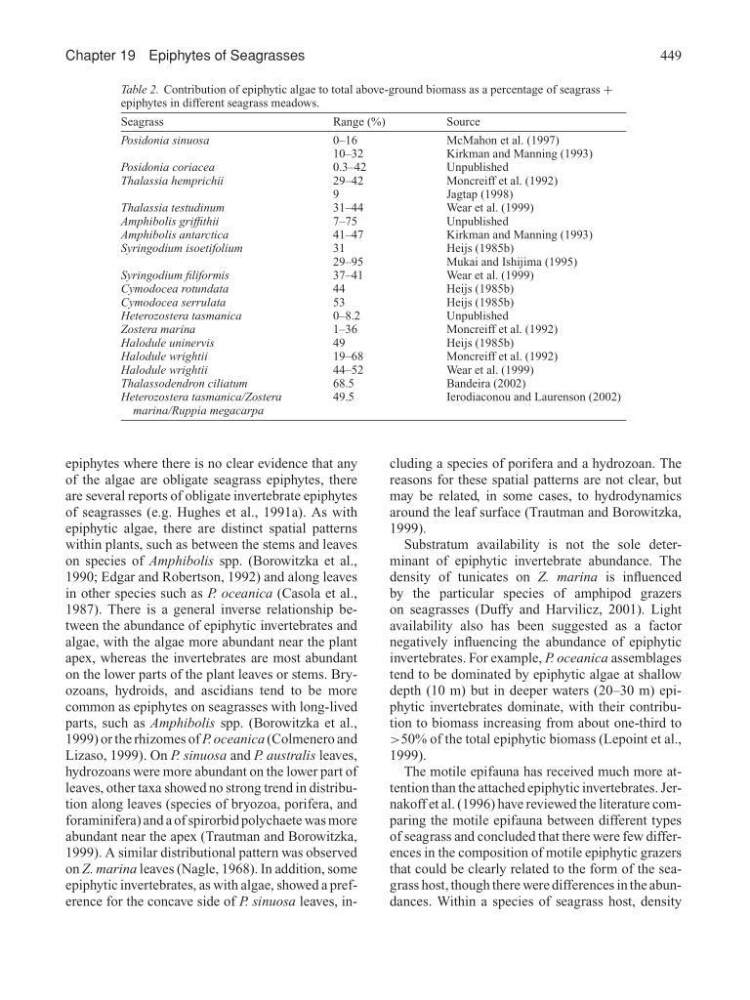
Table 2. Contribution of epiphytic algae to total above-ground biomass as a percentage of seagrass +
epiphytes in different seagrass meadows.
Seagrass
Range (%)
Source
Posidonia sinuosa
0–16
McMahon et al. (1997)
10–32
Kirkman and Manning (1993)
Posidonia coriacea
0.3–42
Unpublished
Thalassia hemprichii
29–42
Moncreiff et al. (1992)
9
Jagtap (1998)
Thalassia testudinum
31–44
Wear et al. (1999)
Amphibolis griffithii
7–75
Unpublished
Amphibolis antarctica
41–47
Kirkman and Manning (1993)
Syringodium isoetifolium
31
Heijs (1985b)
29–95
Mukai and Ishijima (1995)
Syringodium filiformis
37–41
Wear et al. (1999)
Cymodocea rotundata
44
Heijs (1985b)
Cymodocea serrulata
53
Heijs (1985b)
Heterozostera tasmanica
0–8.2
Unpublished
Zostera marina
1–36
Moncreiff et al. (1992)
Halodule uninervis
49
Heijs (1985b)
Halodule wrightii
19–68
Moncreiff et al. (1992)
Halodule wrightii
44–52
Wear et al. (1999)
Thalassodendron ciliatum
68.5
Bandeira (2002)
Heterozostera tasmanica/Zostera
marina/Ruppia megacarpa
49.5
Ierodiaconou and Laurenson (2002)
epiphytes where there is no clear evidence that any
of the algae are obligate seagrass epiphytes, there
are several reports of obligate invertebrate epiphytes
of seagrasses (e.g. Hughes et al., 1991a). As with
epiphytic algae, there are distinct spatial patterns
within plants, such as between the stems and leaves
on species of Amphibolis spp. (Borowitzka et al.,
1990; Edgar and Robertson, 1992) and along leaves
in other species such as P. oceanica (Casola et al.,
1987). There is a general inverse relationship between the abundance of epiphytic invertebrates and
algae, with the algae more abundant near the plant
apex, whereas the invertebrates are most abundant
on the lower parts of the plant leaves or stems. Bryozoans, hydroids, and ascidians tend to be more
common as epiphytes on seagrasses with long-lived
parts, such as Amphibolis spp. (Borowitzka et al.,
1999) or the rhizomes of P. oceanica (Colmenero and
Lizaso, 1999). On P. sinuosa and P. australis leaves,
hydrozoans were more abundant on the lower part of
leaves, other taxa showed no strong trend in distribution along leaves (species of bryozoa, porifera, and
foraminifera) and a of spirorbid polychaete was more
abundant near the apex (Trautman and Borowitzka,
1999). A similar distributional pattern was observed
on Z. marina leaves (Nagle, 1968). In addition, some
epiphytic invertebrates, as with algae, showed a preference for the concave side of P. sinuosa leaves, including a species of porifera and a hydrozoan. The
reasons for these spatial patterns are not clear, but
may be related, in some cases, to hydrodynamics
around the leaf surface (Trautman and Borowitzka,
1999).
Substratum availability is not the sole determinant of epiphytic invertebrate abundance. The
density of tunicates on Z. marina is influenced
by the particular species of amphipod grazers
on seagrasses (Duffy and Harvilicz, 2001). Light
availability also has been suggested as a factor
negatively influencing the abundance of epiphytic
invertebrates. For example, P. oceanica assemblages
tend to be dominated by epiphytic algae at shallow
depth (10 m) but in deeper waters (20–30 m) epiphytic invertebrates dominate, with their contribution to biomass increasing from about one-third to
>50% of the total epiphytic biomass (Lepoint et al.,
1999).
The motile epifauna has received much more attention than the attached epiphytic invertebrates. Jernakoff et al. (1996) have reviewed the literature comparing the motile epifauna between different types
of seagrass and concluded that there were few differences in the composition of motile epiphytic grazers
that could be clearly related to the form of the seagrass host, though there were differences in the abundances. Within a species of seagrass host, density
449
Table 2. Contribution of epiphytic algae to total above-ground biomass as a percentage of seagrass +
epiphytes in different seagrass meadows.
Seagrass
Range (%)
Source
Posidonia sinuosa
0–16
McMahon et al. (1997)
10–32
Kirkman and Manning (1993)
Posidonia coriacea
0.3–42
Unpublished
Thalassia hemprichii
29–42
Moncreiff et al. (1992)
9
Jagtap (1998)
Thalassia testudinum
31–44
Wear et al. (1999)
Amphibolis griffithii
7–75
Unpublished
Amphibolis antarctica
41–47
Kirkman and Manning (1993)
Syringodium isoetifolium
31
Heijs (1985b)
29–95
Mukai and Ishijima (1995)
Syringodium filiformis
37–41
Wear et al. (1999)
Cymodocea rotundata
44
Heijs (1985b)
Cymodocea serrulata
53
Heijs (1985b)
Heterozostera tasmanica
0–8.2
Unpublished
Zostera marina
1–36
Moncreiff et al. (1992)
Halodule uninervis
49
Heijs (1985b)
Halodule wrightii
19–68
Moncreiff et al. (1992)
Halodule wrightii
44–52
Wear et al. (1999)
Thalassodendron ciliatum
68.5
Bandeira (2002)
Heterozostera tasmanica/Zostera
marina/Ruppia megacarpa
49.5
Ierodiaconou and Laurenson (2002)
epiphytes where there is no clear evidence that any
of the algae are obligate seagrass epiphytes, there
are several reports of obligate invertebrate epiphytes
of seagrasses (e.g. Hughes et al., 1991a). As with
epiphytic algae, there are distinct spatial patterns
within plants, such as between the stems and leaves
on species of Amphibolis spp. (Borowitzka et al.,
1990; Edgar and Robertson, 1992) and along leaves
in other species such as P. oceanica (Casola et al.,
1987). There is a general inverse relationship between the abundance of epiphytic invertebrates and
algae, with the algae more abundant near the plant
apex, whereas the invertebrates are most abundant
on the lower parts of the plant leaves or stems. Bryozoans, hydroids, and ascidians tend to be more
common as epiphytes on seagrasses with long-lived
parts, such as Amphibolis spp. (Borowitzka et al.,
1999) or the rhizomes of P. oceanica (Colmenero and
Lizaso, 1999). On P. sinuosa and P. australis leaves,
hydrozoans were more abundant on the lower part of
leaves, other taxa showed no strong trend in distribution along leaves (species of bryozoa, porifera, and
foraminifera) and a of spirorbid polychaete was more
abundant near the apex (Trautman and Borowitzka,
1999). A similar distributional pattern was observed
on Z. marina leaves (Nagle, 1968). In addition, some
epiphytic invertebrates, as with algae, showed a preference for the concave side of P. sinuosa leaves, including a species of porifera and a hydrozoan. The
reasons for these spatial patterns are not clear, but
may be related, in some cases, to hydrodynamics
around the leaf surface (Trautman and Borowitzka,
1999).
Substratum availability is not the sole determinant of epiphytic invertebrate abundance. The
density of tunicates on Z. marina is influenced
by the particular species of amphipod grazers
on seagrasses (Duffy and Harvilicz, 2001). Light
availability also has been suggested as a factor
negatively influencing the abundance of epiphytic
invertebrates. For example, P. oceanica assemblages
tend to be dominated by epiphytic algae at shallow
depth (10 m) but in deeper waters (20–30 m) epiphytic invertebrates dominate, with their contribution to biomass increasing from about one-third to
>50% of the total epiphytic biomass (Lepoint et al.,
1999).
The motile epifauna has received much more attention than the attached epiphytic invertebrates. Jernakoff et al. (1996) have reviewed the literature comparing the motile epifauna between different types
of seagrass and concluded that there were few differences in the composition of motile epiphytic grazers
that could be clearly related to the form of the seagrass host, though there were differences in the abundances. Within a species of seagrass host, density