

Chapter 18 The Biology of Thalassia
425
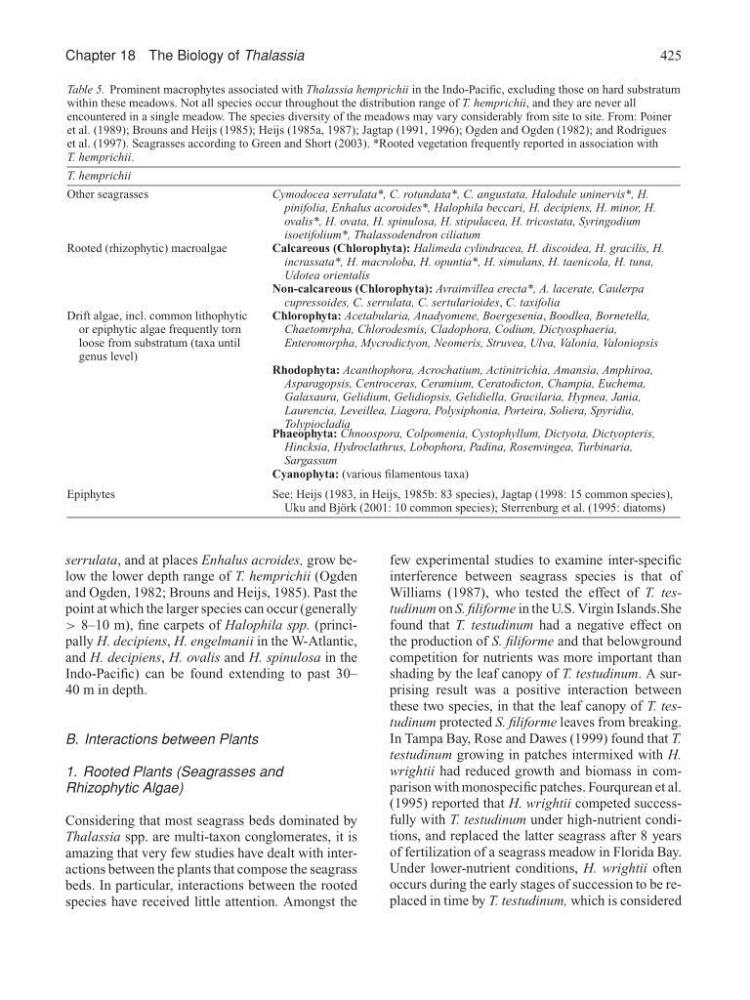
Table 5. Prominent macrophytes associated with Thalassia hemprichii in the Indo-Pacific, excluding those on hard substratum
within these meadows. Not all species occur throughout the distribution range of T. hemprichii, and they are never all
encountered in a single meadow. The species diversity of the meadows may vary considerably from site to site. From: Poiner
et al. (1989); Brouns and Heijs (1985); Heijs (1985a, 1987); Jagtap (1991, 1996); Ogden and Ogden (1982); and Rodrigues
et al. (1997). Seagrasses according to Green and Short (2003). *Rooted vegetation frequently reported in association with
T. hemprichii.
T. hemprichii
Other seagrasses
Cymodocea serrulata*, C. rotundata*, C. angustata, Halodule uninervis*, H.
pinifolia, Enhalus acoroides*, Halophila beccari, H. decipiens, H. minor, H.
ovalis*, H. ovata, H. spinulosa, H. stipulacea, H. tricostata, Syringodium
isoetifolium*, Thalassodendron ciliatum
Rooted (rhizophytic) macroalgae
Calcareous (Chlorophyta): Halimeda cylindracea, H. discoidea, H. gracilis, H.
incrassata*, H. macroloba, H. opuntia*, H. simulans, H. taenicola, H. tuna,
Udotea orientalis
Non-calcareous (Chlorophyta): Avrainvillea erecta*, A. lacerate, Caulerpa
cupressoides, C. serrulata, C. sertularioides, C. taxifolia
Drift algae, incl. common lithophytic
or epiphytic algae frequently torn
loose from substratum (taxa until
genus level)
Chlorophyta: Acetabularia, Anadyomene, Boergesenia, Boodlea, Bornetella,
Chaetomrpha, Chlorodesmis, Cladophora, Codium, Dictyosphaeria,
Enteromorpha, Mycrodictyon, Neomeris, Struvea, Ulva, Valonia, Valoniopsis
Rhodophyta: Acanthophora, Acrochatium, Actinitrichia, Amansia, Amphiroa,
Asparagopsis, Centroceras, Ceramium, Ceratodicton, Champia, Euchema,
Galaxaura, Gelidium, Gelidiopsis, Gelidiella, Gracilaria, Hypnea, Jania,
Laurencia, Leveillea, Liagora, Polysiphonia, Porteira, Soliera, Spyridia,
Tolypiocladia
Phaeophyta: Chnoospora, Colpomenia, Cystophyllum, Dictyota, Dictyopteris,
Hincksia, Hydroclathrus, Lobophora, Padina, Rosenvingea, Turbinaria,
Sargassum
Cyanophyta: (various filamentous taxa)
Epiphytes
See: Heijs (1983, in Heijs, 1985b: 83 species), Jagtap (1998: 15 common species),
Uku and Bj¨ ork (2001: 10 common species); Sterrenburg et al. (1995: diatoms)
serrulata, and at places Enhalus acroides, grow below the lower depth range of T. hemprichii (Ogden
and Ogden, 1982; Brouns and Heijs, 1985). Past the
point at which the larger species can occur (generally
> 8–10 m), fine carpets of Halophila spp. (principally H. decipiens, H. engelmanii in the W-Atlantic,
and H. decipiens, H. ovalis and H. spinulosa in the
Indo-Pacific) can be found extending to past 30–
40 m in depth.
B. Interactions between Plants
1. Rooted Plants (Seagrasses and
Rhizophytic Algae)
Considering that most seagrass beds dominated by
Thalassia spp. are multi-taxon conglomerates, it is
amazing that very few studies have dealt with interactions between the plants that compose the seagrass
beds. In particular, interactions between the rooted
species have received little attention. Amongst the
few experimental studies to examine inter-specific
interference between seagrass species is that of
Williams (1987), who tested the effect of T. testudinum on S. filiforme in the U.S. Virgin Islands.She
found that T. testudinum had a negative effect on
the production of S. filiforme and that belowground
competition for nutrients was more important than
shading by the leaf canopy of T. testudinum. A surprising result was a positive interaction between
these two species, in that the leaf canopy of T. testudinum protected S. filiforme leaves from breaking.
In Tampa Bay, Rose and Dawes (1999) found that T.
testudinum growing in patches intermixed with H.
wrightii had reduced growth and biomass in comparison with monospecific patches. Fourqurean et al.
(1995) reported that H. wrightii competed successfully with T. testudinum under high-nutrient conditions, and replaced the latter seagrass after 8 years
of fertilization of a seagrass meadow in Florida Bay.
Under lower-nutrient conditions, H. wrightii often
occurs during the early stages of succession to be replaced in time by T. testudinum, which is considered
425
Table 5. Prominent macrophytes associated with Thalassia hemprichii in the Indo-Pacific, excluding those on hard substratum
within these meadows. Not all species occur throughout the distribution range of T. hemprichii, and they are never all
encountered in a single meadow. The species diversity of the meadows may vary considerably from site to site. From: Poiner
et al. (1989); Brouns and Heijs (1985); Heijs (1985a, 1987); Jagtap (1991, 1996); Ogden and Ogden (1982); and Rodrigues
et al. (1997). Seagrasses according to Green and Short (2003). *Rooted vegetation frequently reported in association with
T. hemprichii.
T. hemprichii
Other seagrasses
Cymodocea serrulata*, C. rotundata*, C. angustata, Halodule uninervis*, H.
pinifolia, Enhalus acoroides*, Halophila beccari, H. decipiens, H. minor, H.
ovalis*, H. ovata, H. spinulosa, H. stipulacea, H. tricostata, Syringodium
isoetifolium*, Thalassodendron ciliatum
Rooted (rhizophytic) macroalgae
Calcareous (Chlorophyta): Halimeda cylindracea, H. discoidea, H. gracilis, H.
incrassata*, H. macroloba, H. opuntia*, H. simulans, H. taenicola, H. tuna,
Udotea orientalis
Non-calcareous (Chlorophyta): Avrainvillea erecta*, A. lacerate, Caulerpa
cupressoides, C. serrulata, C. sertularioides, C. taxifolia
Drift algae, incl. common lithophytic
or epiphytic algae frequently torn
loose from substratum (taxa until
genus level)
Chlorophyta: Acetabularia, Anadyomene, Boergesenia, Boodlea, Bornetella,
Chaetomrpha, Chlorodesmis, Cladophora, Codium, Dictyosphaeria,
Enteromorpha, Mycrodictyon, Neomeris, Struvea, Ulva, Valonia, Valoniopsis
Rhodophyta: Acanthophora, Acrochatium, Actinitrichia, Amansia, Amphiroa,
Asparagopsis, Centroceras, Ceramium, Ceratodicton, Champia, Euchema,
Galaxaura, Gelidium, Gelidiopsis, Gelidiella, Gracilaria, Hypnea, Jania,
Laurencia, Leveillea, Liagora, Polysiphonia, Porteira, Soliera, Spyridia,
Tolypiocladia
Phaeophyta: Chnoospora, Colpomenia, Cystophyllum, Dictyota, Dictyopteris,
Hincksia, Hydroclathrus, Lobophora, Padina, Rosenvingea, Turbinaria,
Sargassum
Cyanophyta: (various filamentous taxa)
Epiphytes
See: Heijs (1983, in Heijs, 1985b: 83 species), Jagtap (1998: 15 common species),
Uku and Bj¨ ork (2001: 10 common species); Sterrenburg et al. (1995: diatoms)
serrulata, and at places Enhalus acroides, grow below the lower depth range of T. hemprichii (Ogden
and Ogden, 1982; Brouns and Heijs, 1985). Past the
point at which the larger species can occur (generally
> 8–10 m), fine carpets of Halophila spp. (principally H. decipiens, H. engelmanii in the W-Atlantic,
and H. decipiens, H. ovalis and H. spinulosa in the
Indo-Pacific) can be found extending to past 30–
40 m in depth.
B. Interactions between Plants
1. Rooted Plants (Seagrasses and
Rhizophytic Algae)
Considering that most seagrass beds dominated by
Thalassia spp. are multi-taxon conglomerates, it is
amazing that very few studies have dealt with interactions between the plants that compose the seagrass
beds. In particular, interactions between the rooted
species have received little attention. Amongst the
few experimental studies to examine inter-specific
interference between seagrass species is that of
Williams (1987), who tested the effect of T. testudinum on S. filiforme in the U.S. Virgin Islands.She
found that T. testudinum had a negative effect on
the production of S. filiforme and that belowground
competition for nutrients was more important than
shading by the leaf canopy of T. testudinum. A surprising result was a positive interaction between
these two species, in that the leaf canopy of T. testudinum protected S. filiforme leaves from breaking.
In Tampa Bay, Rose and Dawes (1999) found that T.
testudinum growing in patches intermixed with H.
wrightii had reduced growth and biomass in comparison with monospecific patches. Fourqurean et al.
(1995) reported that H. wrightii competed successfully with T. testudinum under high-nutrient conditions, and replaced the latter seagrass after 8 years
of fertilization of a seagrass meadow in Florida Bay.
Under lower-nutrient conditions, H. wrightii often
occurs during the early stages of succession to be replaced in time by T. testudinum, which is considered