

424
B. I. van Tussenbroek, J. A. Vonk, J. Stapel et al.
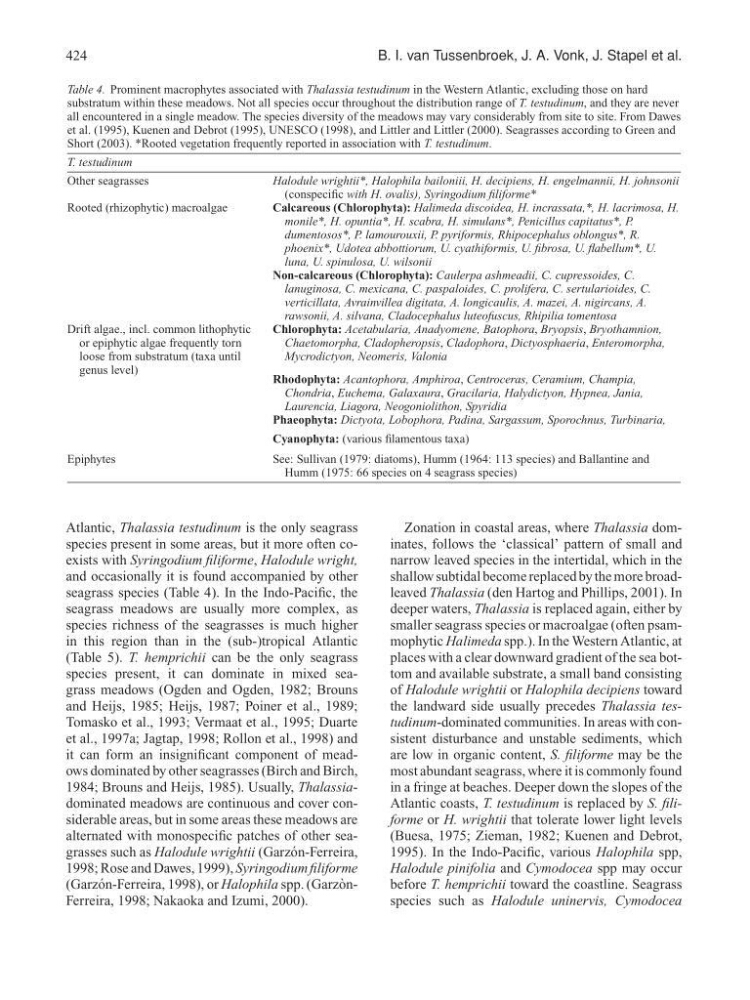
Table 4. Prominent macrophytes associated with Thalassia testudinum in the Western Atlantic, excluding those on hard
substratum within these meadows. Not all species occur throughout the distribution range of T. testudinum, and they are never
all encountered in a single meadow. The species diversity of the meadows may vary considerably from site to site. From Dawes
et al. (1995), Kuenen and Debrot (1995), UNESCO (1998), and Littler and Littler (2000). Seagrasses according to Green and
Short (2003). *Rooted vegetation frequently reported in association with T. testudinum.
T. testudinum
Other seagrasses
Halodule wrightii*, Halophila bailoniii, H. decipiens, H. engelmannii, H. johnsonii
(conspecific with H. ovalis), Syringodium filiforme*
Rooted (rhizophytic) macroalgae
Calcareous (Chlorophyta): Halimeda discoidea, H. incrassata,*, H. lacrimosa, H.
monile*, H. opuntia*, H. scabra, H. simulans*, Penicillus capitatus*, P.
dumentosos*, P. lamourouxii, P. pyriformis, Rhipocephalus oblongus*, R.
phoenix*, Udotea abbottiorum, U. cyathiformis, U. fibrosa, U. flabellum*, U.
luna, U. spinulosa, U. wilsonii
Non-calcareous (Chlorophyta): Caulerpa ashmeadii, C. cupressoides, C.
lanuginosa, C. mexicana, C. paspaloides, C. prolifera, C. sertularioides, C.
verticillata, Avrainvillea digitata, A. longicaulis, A. mazei, A. nigircans, A.
rawsonii, A. silvana, Cladocephalus luteofuscus, Rhipilia tomentosa
Drift algae., incl. common lithophytic
or epiphytic algae frequently torn
loose from substratum (taxa until
genus level)
Chlorophyta: Acetabularia, Anadyomene, Batophora, Bryopsis, Bryothamnion,
Chaetomorpha, Cladopheropsis, Cladophora, Dictyosphaeria, Enteromorpha,
Mycrodictyon, Neomeris, Valonia
Rhodophyta: Acantophora, Amphiroa, Centroceras, Ceramium, Champia,
Chondria, Euchema, Galaxaura, Gracilaria, Halydictyon, Hypnea, Jania,
Laurencia, Liagora, Neogoniolithon, Spyridia
Phaeophyta: Dictyota, Lobophora, Padina, Sargassum, Sporochnus, Turbinaria,
Cyanophyta: (various filamentous taxa)
Epiphytes
See: Sullivan (1979: diatoms), Humm (1964: 113 species) and Ballantine and
Humm (1975: 66 species on 4 seagrass species)
Atlantic, Thalassia testudinum is the only seagrass
species present in some areas, but it more often coexists with Syringodium filiforme, Halodule wright,
and occasionally it is found accompanied by other
seagrass species (Table 4). In the Indo-Pacific, the
seagrass meadows are usually more complex, as
species richness of the seagrasses is much higher
in this region than in the (sub-)tropical Atlantic
(Table 5). T. hemprichii can be the only seagrass
species present, it can dominate in mixed seagrass meadows (Ogden and Ogden, 1982; Brouns
and Heijs, 1985; Heijs, 1987; Poiner et al., 1989;
Tomasko et al., 1993; Vermaat et al., 1995; Duarte
et al., 1997a; Jagtap, 1998; Rollon et al., 1998) and
it can form an insignificant component of meadows dominated by other seagrasses (Birch and Birch,
1984; Brouns and Heijs, 1985). Usually, Thalassiadominated meadows are continuous and cover considerable areas, but in some areas these meadows are
alternated with monospecific patches of other seagrasses such as Halodule wrightii (Garz´ on-Ferreira,
1998; Rose and Dawes, 1999), Syringodium filiforme
(Garz´ on-Ferreira, 1998), or Halophila spp. (Garz` onFerreira, 1998; Nakaoka and Izumi, 2000).
Zonation in coastal areas, where Thalassia dominates, follows the ‘classical’ pattern of small and
narrow leaved species in the intertidal, which in the
shallow subtidal become replaced by the more broadleaved Thalassia (den Hartog and Phillips, 2001). In
deeper waters, Thalassia is replaced again, either by
smaller seagrass species or macroalgae (often psammophytic Halimeda spp.). In the Western Atlantic, at
places with a clear downward gradient of the sea bottom and available substrate, a small band consisting
of Halodule wrightii or Halophila decipiens toward
the landward side usually precedes Thalassia testudinum-dominated communities. In areas with consistent disturbance and unstable sediments, which
are low in organic content, S. filiforme may be the
most abundant seagrass, where it is commonly found
in a fringe at beaches. Deeper down the slopes of the
Atlantic coasts, T. testudinum is replaced by S. filiforme or H. wrightii that tolerate lower light levels
(Buesa, 1975; Zieman, 1982; Kuenen and Debrot,
1995). In the Indo-Pacific, various Halophila spp,
Halodule pinifolia and Cymodocea spp may occur
before T. hemprichii toward the coastline. Seagrass
species such as Halodule uninervis, Cymodocea
B. I. van Tussenbroek, J. A. Vonk, J. Stapel et al.
Table 4. Prominent macrophytes associated with Thalassia testudinum in the Western Atlantic, excluding those on hard
substratum within these meadows. Not all species occur throughout the distribution range of T. testudinum, and they are never
all encountered in a single meadow. The species diversity of the meadows may vary considerably from site to site. From Dawes
et al. (1995), Kuenen and Debrot (1995), UNESCO (1998), and Littler and Littler (2000). Seagrasses according to Green and
Short (2003). *Rooted vegetation frequently reported in association with T. testudinum.
T. testudinum
Other seagrasses
Halodule wrightii*, Halophila bailoniii, H. decipiens, H. engelmannii, H. johnsonii
(conspecific with H. ovalis), Syringodium filiforme*
Rooted (rhizophytic) macroalgae
Calcareous (Chlorophyta): Halimeda discoidea, H. incrassata,*, H. lacrimosa, H.
monile*, H. opuntia*, H. scabra, H. simulans*, Penicillus capitatus*, P.
dumentosos*, P. lamourouxii, P. pyriformis, Rhipocephalus oblongus*, R.
phoenix*, Udotea abbottiorum, U. cyathiformis, U. fibrosa, U. flabellum*, U.
luna, U. spinulosa, U. wilsonii
Non-calcareous (Chlorophyta): Caulerpa ashmeadii, C. cupressoides, C.
lanuginosa, C. mexicana, C. paspaloides, C. prolifera, C. sertularioides, C.
verticillata, Avrainvillea digitata, A. longicaulis, A. mazei, A. nigircans, A.
rawsonii, A. silvana, Cladocephalus luteofuscus, Rhipilia tomentosa
Drift algae., incl. common lithophytic
or epiphytic algae frequently torn
loose from substratum (taxa until
genus level)
Chlorophyta: Acetabularia, Anadyomene, Batophora, Bryopsis, Bryothamnion,
Chaetomorpha, Cladopheropsis, Cladophora, Dictyosphaeria, Enteromorpha,
Mycrodictyon, Neomeris, Valonia
Rhodophyta: Acantophora, Amphiroa, Centroceras, Ceramium, Champia,
Chondria, Euchema, Galaxaura, Gracilaria, Halydictyon, Hypnea, Jania,
Laurencia, Liagora, Neogoniolithon, Spyridia
Phaeophyta: Dictyota, Lobophora, Padina, Sargassum, Sporochnus, Turbinaria,
Cyanophyta: (various filamentous taxa)
Epiphytes
See: Sullivan (1979: diatoms), Humm (1964: 113 species) and Ballantine and
Humm (1975: 66 species on 4 seagrass species)
Atlantic, Thalassia testudinum is the only seagrass
species present in some areas, but it more often coexists with Syringodium filiforme, Halodule wright,
and occasionally it is found accompanied by other
seagrass species (Table 4). In the Indo-Pacific, the
seagrass meadows are usually more complex, as
species richness of the seagrasses is much higher
in this region than in the (sub-)tropical Atlantic
(Table 5). T. hemprichii can be the only seagrass
species present, it can dominate in mixed seagrass meadows (Ogden and Ogden, 1982; Brouns
and Heijs, 1985; Heijs, 1987; Poiner et al., 1989;
Tomasko et al., 1993; Vermaat et al., 1995; Duarte
et al., 1997a; Jagtap, 1998; Rollon et al., 1998) and
it can form an insignificant component of meadows dominated by other seagrasses (Birch and Birch,
1984; Brouns and Heijs, 1985). Usually, Thalassiadominated meadows are continuous and cover considerable areas, but in some areas these meadows are
alternated with monospecific patches of other seagrasses such as Halodule wrightii (Garz´ on-Ferreira,
1998; Rose and Dawes, 1999), Syringodium filiforme
(Garz´ on-Ferreira, 1998), or Halophila spp. (Garz` onFerreira, 1998; Nakaoka and Izumi, 2000).
Zonation in coastal areas, where Thalassia dominates, follows the ‘classical’ pattern of small and
narrow leaved species in the intertidal, which in the
shallow subtidal become replaced by the more broadleaved Thalassia (den Hartog and Phillips, 2001). In
deeper waters, Thalassia is replaced again, either by
smaller seagrass species or macroalgae (often psammophytic Halimeda spp.). In the Western Atlantic, at
places with a clear downward gradient of the sea bottom and available substrate, a small band consisting
of Halodule wrightii or Halophila decipiens toward
the landward side usually precedes Thalassia testudinum-dominated communities. In areas with consistent disturbance and unstable sediments, which
are low in organic content, S. filiforme may be the
most abundant seagrass, where it is commonly found
in a fringe at beaches. Deeper down the slopes of the
Atlantic coasts, T. testudinum is replaced by S. filiforme or H. wrightii that tolerate lower light levels
(Buesa, 1975; Zieman, 1982; Kuenen and Debrot,
1995). In the Indo-Pacific, various Halophila spp,
Halodule pinifolia and Cymodocea spp may occur
before T. hemprichii toward the coastline. Seagrass
species such as Halodule uninervis, Cymodocea