

392
S. Gobert, M. L. Cambridge, B. Velimirov, et al.
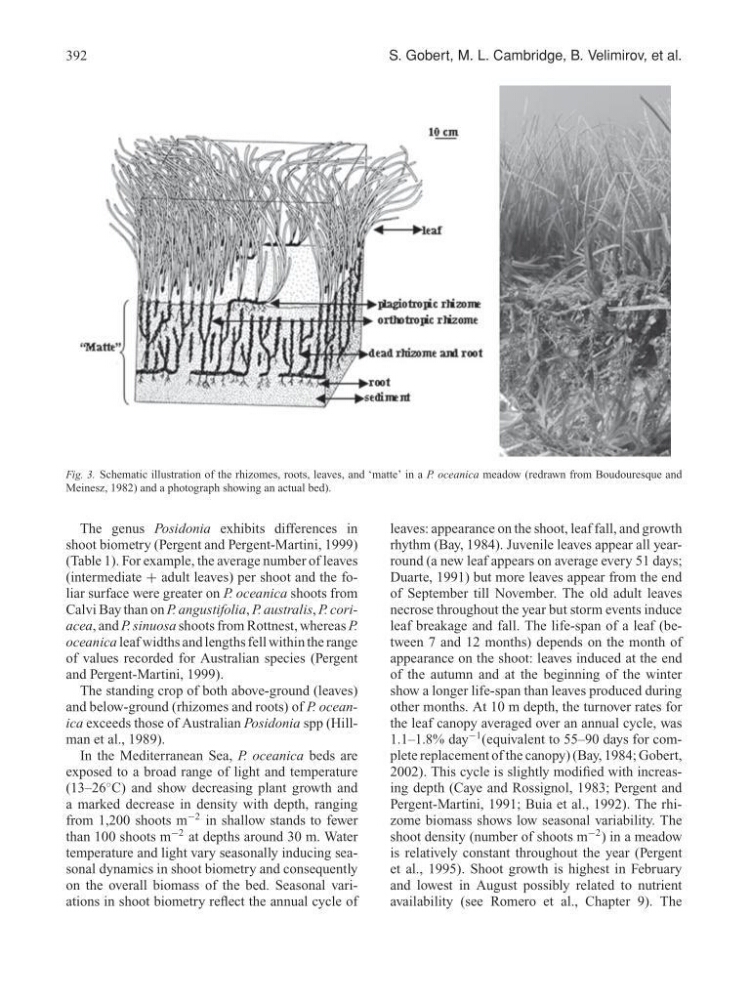
Fig. 3. Schematic illustration of the rhizomes, roots, leaves, and ‘matte’ in a P. oceanica meadow (redrawn from Boudouresque and
Meinesz, 1982) and a photograph showing an actual bed).
The genus Posidonia exhibits differences in
shoot biometry (Pergent and Pergent-Martini, 1999)
(Table 1). For example, the average number of leaves
(intermediate + adult leaves) per shoot and the foliar surface were greater on P. oceanica shoots from
Calvi Bay than on P. angustifolia, P. australis, P. coriacea, and P. sinuosa shoots from Rottnest, whereas P.
oceanica leaf widths and lengths fell within the range
of values recorded for Australian species (Pergent
and Pergent-Martini, 1999).
The standing crop of both above-ground (leaves)
and below-ground (rhizomes and roots) of P. oceanica exceeds those of Australian Posidonia spp (Hillman et al., 1989).
In the Mediterranean Sea, P. oceanica beds are
exposed to a broad range of light and temperature
(13–26
◦ C) and show decreasing plant growth and
a marked decrease in density with depth, ranging
from 1,200 shoots m
−2 in shallow stands to fewer
than 100 shoots m
−2 at depths around 30 m. Water
temperature and light vary seasonally inducing seasonal dynamics in shoot biometry and consequently
on the overall biomass of the bed. Seasonal variations in shoot biometry reflect the annual cycle of
leaves: appearance on the shoot, leaf fall, and growth
rhythm (Bay, 1984). Juvenile leaves appear all yearround (a new leaf appears on average every 51 days;
Duarte, 1991) but more leaves appear from the end
of September till November. The old adult leaves
necrose throughout the year but storm events induce
leaf breakage and fall. The life-span of a leaf (between 7 and 12 months) depends on the month of
appearance on the shoot: leaves induced at the end
of the autumn and at the beginning of the winter
show a longer life-span than leaves produced during
other months. At 10 m depth, the turnover rates for
the leaf canopy averaged over an annual cycle, was
1.1–1.8% day
−1 (equivalent to 55–90 days for complete replacement of the canopy) (Bay, 1984; Gobert,
2002). This cycle is slightly modified with increasing depth (Caye and Rossignol, 1983; Pergent and
Pergent-Martini, 1991; Buia et al., 1992). The rhizome biomass shows low seasonal variability. The
shoot density (number of shoots m
−2 ) in a meadow
is relatively constant throughout the year (Pergent
et al., 1995). Shoot growth is highest in February
and lowest in August possibly related to nutrient
availability (see Romero et al., Chapter 9). The
S. Gobert, M. L. Cambridge, B. Velimirov, et al.
Fig. 3. Schematic illustration of the rhizomes, roots, leaves, and ‘matte’ in a P. oceanica meadow (redrawn from Boudouresque and
Meinesz, 1982) and a photograph showing an actual bed).
The genus Posidonia exhibits differences in
shoot biometry (Pergent and Pergent-Martini, 1999)
(Table 1). For example, the average number of leaves
(intermediate + adult leaves) per shoot and the foliar surface were greater on P. oceanica shoots from
Calvi Bay than on P. angustifolia, P. australis, P. coriacea, and P. sinuosa shoots from Rottnest, whereas P.
oceanica leaf widths and lengths fell within the range
of values recorded for Australian species (Pergent
and Pergent-Martini, 1999).
The standing crop of both above-ground (leaves)
and below-ground (rhizomes and roots) of P. oceanica exceeds those of Australian Posidonia spp (Hillman et al., 1989).
In the Mediterranean Sea, P. oceanica beds are
exposed to a broad range of light and temperature
(13–26
◦ C) and show decreasing plant growth and
a marked decrease in density with depth, ranging
from 1,200 shoots m
−2 in shallow stands to fewer
than 100 shoots m
−2 at depths around 30 m. Water
temperature and light vary seasonally inducing seasonal dynamics in shoot biometry and consequently
on the overall biomass of the bed. Seasonal variations in shoot biometry reflect the annual cycle of
leaves: appearance on the shoot, leaf fall, and growth
rhythm (Bay, 1984). Juvenile leaves appear all yearround (a new leaf appears on average every 51 days;
Duarte, 1991) but more leaves appear from the end
of September till November. The old adult leaves
necrose throughout the year but storm events induce
leaf breakage and fall. The life-span of a leaf (between 7 and 12 months) depends on the month of
appearance on the shoot: leaves induced at the end
of the autumn and at the beginning of the winter
show a longer life-span than leaves produced during
other months. At 10 m depth, the turnover rates for
the leaf canopy averaged over an annual cycle, was
1.1–1.8% day
−1 (equivalent to 55–90 days for complete replacement of the canopy) (Bay, 1984; Gobert,
2002). This cycle is slightly modified with increasing depth (Caye and Rossignol, 1983; Pergent and
Pergent-Martini, 1991; Buia et al., 1992). The rhizome biomass shows low seasonal variability. The
shoot density (number of shoots m
−2 ) in a meadow
is relatively constant throughout the year (Pergent
et al., 1995). Shoot growth is highest in February
and lowest in August possibly related to nutrient
availability (see Romero et al., Chapter 9). The