

Chapter 16 Biology of Zostera
373
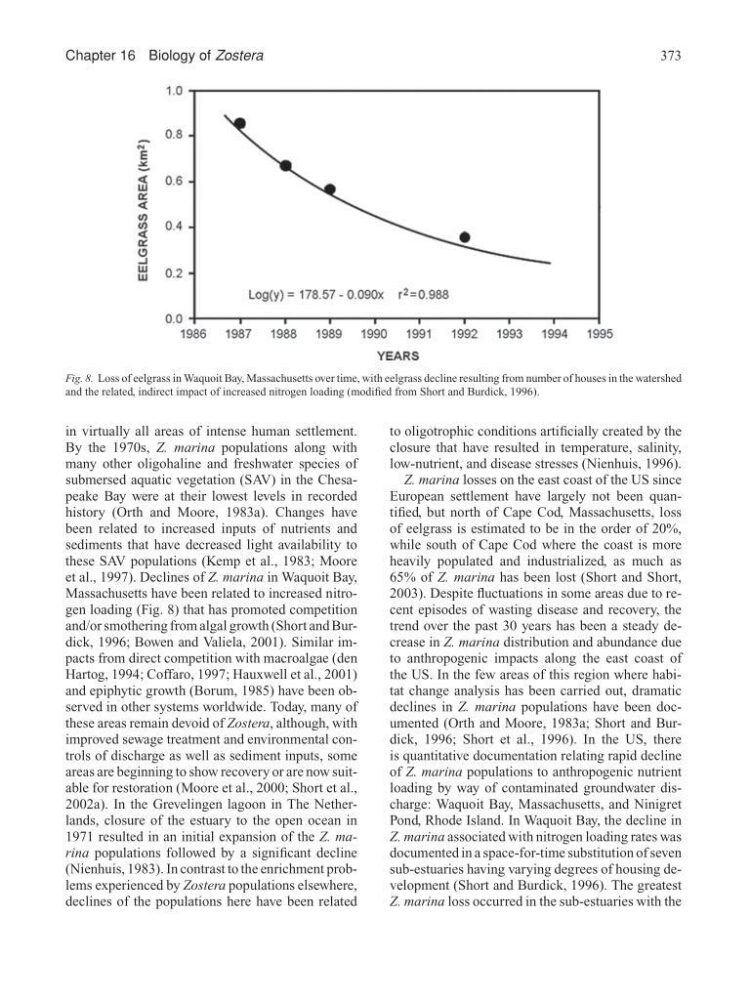
Fig. 8. Loss of eelgrass in Waquoit Bay, Massachusetts over time, with eelgrass decline resulting from number of houses in the watershed
and the related, indirect impact of increased nitrogen loading (modified from Short and Burdick, 1996).
in virtually all areas of intense human settlement.
By the 1970s, Z. marina populations along with
many other oligohaline and freshwater species of
submersed aquatic vegetation (SAV) in the Chesapeake Bay were at their lowest levels in recorded
history (Orth and Moore, 1983a). Changes have
been related to increased inputs of nutrients and
sediments that have decreased light availability to
these SAV populations (Kemp et al., 1983; Moore
et al., 1997). Declines of Z. marina in Waquoit Bay,
Massachusetts have been related to increased nitrogen loading (Fig. 8) that has promoted competition
and/or smothering from algal growth (Short and Burdick, 1996; Bowen and Valiela, 2001). Similar impacts from direct competition with macroalgae (den
Hartog, 1994; Coffaro, 1997; Hauxwell et al., 2001)
and epiphytic growth (Borum, 1985) have been observed in other systems worldwide. Today, many of
these areas remain devoid of Zostera, although, with
improved sewage treatment and environmental controls of discharge as well as sediment inputs, some
areas are beginning to show recovery or are now suitable for restoration (Moore et al., 2000; Short et al.,
2002a). In the Grevelingen lagoon in The Netherlands, closure of the estuary to the open ocean in
1971 resulted in an initial expansion of the Z. marina populations followed by a significant decline
(Nienhuis, 1983). In contrast to the enrichment problems experienced by Zostera populations elsewhere,
declines of the populations here have been related
to oligotrophic conditions artificially created by the
closure that have resulted in temperature, salinity,
low-nutrient, and disease stresses (Nienhuis, 1996).
Z. marina losses on the east coast of the US since
European settlement have largely not been quantified, but north of Cape Cod, Massachusetts, loss
of eelgrass is estimated to be in the order of 20%,
while south of Cape Cod where the coast is more
heavily populated and industrialized, as much as
65% of Z. marina has been lost (Short and Short,
2003). Despite fluctuations in some areas due to recent episodes of wasting disease and recovery, the
trend over the past 30 years has been a steady decrease in Z. marina distribution and abundance due
to anthropogenic impacts along the east coast of
the US. In the few areas of this region where habitat change analysis has been carried out, dramatic
declines in Z. marina populations have been documented (Orth and Moore, 1983a; Short and Burdick, 1996; Short et al., 1996). In the US, there
is quantitative documentation relating rapid decline
of Z. marina populations to anthropogenic nutrient
loading by way of contaminated groundwater discharge: Waquoit Bay, Massachusetts, and Ninigret
Pond, Rhode Island. In Waquoit Bay, the decline in
Z. marina associated with nitrogen loading rates was
documented in a space-for-time substitution of seven
sub-estuaries having varying degrees of housing development (Short and Burdick, 1996). The greatest
Z. marina loss occurred in the sub-estuaries with the
373
Fig. 8. Loss of eelgrass in Waquoit Bay, Massachusetts over time, with eelgrass decline resulting from number of houses in the watershed
and the related, indirect impact of increased nitrogen loading (modified from Short and Burdick, 1996).
in virtually all areas of intense human settlement.
By the 1970s, Z. marina populations along with
many other oligohaline and freshwater species of
submersed aquatic vegetation (SAV) in the Chesapeake Bay were at their lowest levels in recorded
history (Orth and Moore, 1983a). Changes have
been related to increased inputs of nutrients and
sediments that have decreased light availability to
these SAV populations (Kemp et al., 1983; Moore
et al., 1997). Declines of Z. marina in Waquoit Bay,
Massachusetts have been related to increased nitrogen loading (Fig. 8) that has promoted competition
and/or smothering from algal growth (Short and Burdick, 1996; Bowen and Valiela, 2001). Similar impacts from direct competition with macroalgae (den
Hartog, 1994; Coffaro, 1997; Hauxwell et al., 2001)
and epiphytic growth (Borum, 1985) have been observed in other systems worldwide. Today, many of
these areas remain devoid of Zostera, although, with
improved sewage treatment and environmental controls of discharge as well as sediment inputs, some
areas are beginning to show recovery or are now suitable for restoration (Moore et al., 2000; Short et al.,
2002a). In the Grevelingen lagoon in The Netherlands, closure of the estuary to the open ocean in
1971 resulted in an initial expansion of the Z. marina populations followed by a significant decline
(Nienhuis, 1983). In contrast to the enrichment problems experienced by Zostera populations elsewhere,
declines of the populations here have been related
to oligotrophic conditions artificially created by the
closure that have resulted in temperature, salinity,
low-nutrient, and disease stresses (Nienhuis, 1996).
Z. marina losses on the east coast of the US since
European settlement have largely not been quantified, but north of Cape Cod, Massachusetts, loss
of eelgrass is estimated to be in the order of 20%,
while south of Cape Cod where the coast is more
heavily populated and industrialized, as much as
65% of Z. marina has been lost (Short and Short,
2003). Despite fluctuations in some areas due to recent episodes of wasting disease and recovery, the
trend over the past 30 years has been a steady decrease in Z. marina distribution and abundance due
to anthropogenic impacts along the east coast of
the US. In the few areas of this region where habitat change analysis has been carried out, dramatic
declines in Z. marina populations have been documented (Orth and Moore, 1983a; Short and Burdick, 1996; Short et al., 1996). In the US, there
is quantitative documentation relating rapid decline
of Z. marina populations to anthropogenic nutrient
loading by way of contaminated groundwater discharge: Waquoit Bay, Massachusetts, and Ninigret
Pond, Rhode Island. In Waquoit Bay, the decline in
Z. marina associated with nitrogen loading rates was
documented in a space-for-time substitution of seven
sub-estuaries having varying degrees of housing development (Short and Burdick, 1996). The greatest
Z. marina loss occurred in the sub-estuaries with the