

372
Kenneth A. Moore and Frederick T. Short
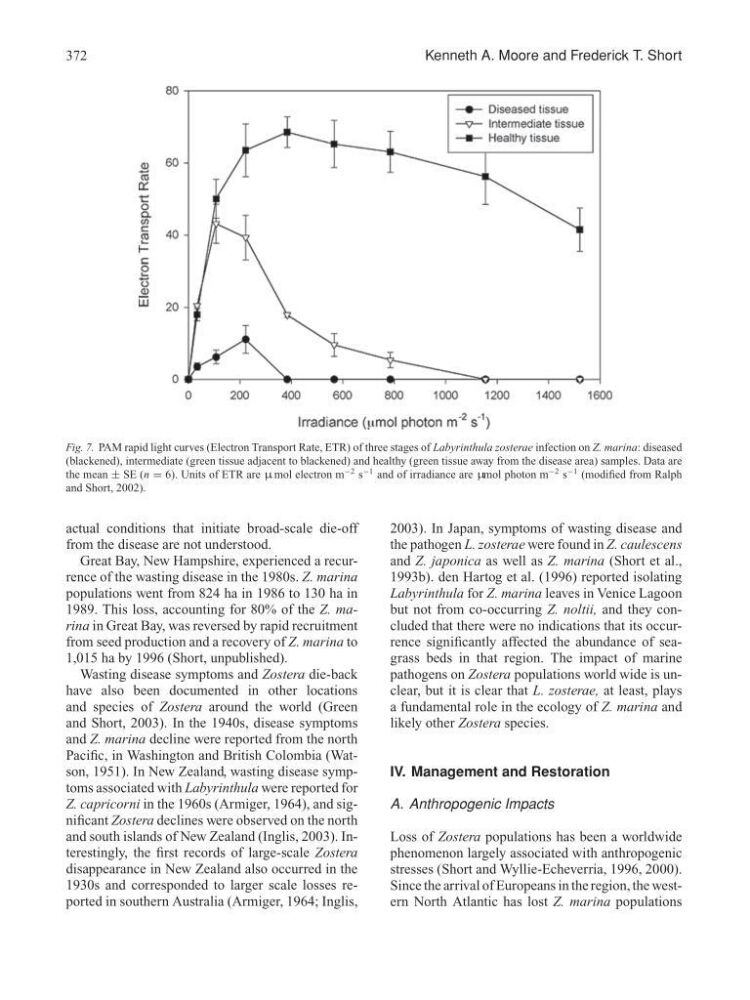
Fig. 7. PAM rapid light curves (Electron Transport Rate, ETR) of three stages of Labyrinthula zosterae infection on Z. marina: diseased
(blackened), intermediate (green tissue adjacent to blackened) and healthy (green tissue away from the disease area) samples. Data are
the mean ± SE (n = 6). Units of ETR are µmol electron m
−2 s
−1 and of irradiance are µmol photon m
−2 s
−1 (modified from Ralph
and Short, 2002).
actual conditions that initiate broad-scale die-off
from the disease are not understood.
Great Bay, New Hampshire, experienced a recurrence of the wasting disease in the 1980s. Z. marina
populations went from 824 ha in 1986 to 130 ha in
1989. This loss, accounting for 80% of the Z. marina in Great Bay, was reversed by rapid recruitment
from seed production and a recovery of Z. marina to
1,015 ha by 1996 (Short, unpublished).
Wasting disease symptoms and Zostera die-back
have also been documented in other locations
and species of Zostera around the world (Green
and Short, 2003). In the 1940s, disease symptoms
and Z. marina decline were reported from the north
Pacific, in Washington and British Colombia (Watson, 1951). In New Zealand, wasting disease symptoms associated with Labyrinthula were reported for
Z. capricorni in the 1960s (Armiger, 1964), and significant Zostera declines were observed on the north
and south islands of New Zealand (Inglis, 2003). Interestingly, the first records of large-scale Zostera
disappearance in New Zealand also occurred in the
1930s and corresponded to larger scale losses reported in southern Australia (Armiger, 1964; Inglis,
2003). In Japan, symptoms of wasting disease and
the pathogen L. zosterae were found in Z. caulescens
and Z. japonica as well as Z. marina (Short et al.,
1993b). den Hartog et al. (1996) reported isolating
Labyrinthula for Z. marina leaves in Venice Lagoon
but not from co-occurring Z. noltii, and they concluded that there were no indications that its occurrence significantly affected the abundance of seagrass beds in that region. The impact of marine
pathogens on Zostera populations world wide is unclear, but it is clear that L. zosterae, at least, plays
a fundamental role in the ecology of Z. marina and
likely other Zostera species.
IV. Management and Restoration
A. Anthropogenic Impacts
Loss of Zostera populations has been a worldwide
phenomenon largely associated with anthropogenic
stresses (Short and Wyllie-Echeverria, 1996, 2000).
Since the arrival of Europeans in the region, the western North Atlantic has lost Z. marina populations
Kenneth A. Moore and Frederick T. Short
Fig. 7. PAM rapid light curves (Electron Transport Rate, ETR) of three stages of Labyrinthula zosterae infection on Z. marina: diseased
(blackened), intermediate (green tissue adjacent to blackened) and healthy (green tissue away from the disease area) samples. Data are
the mean ± SE (n = 6). Units of ETR are µmol electron m
−2 s
−1 and of irradiance are µmol photon m
−2 s
−1 (modified from Ralph
and Short, 2002).
actual conditions that initiate broad-scale die-off
from the disease are not understood.
Great Bay, New Hampshire, experienced a recurrence of the wasting disease in the 1980s. Z. marina
populations went from 824 ha in 1986 to 130 ha in
1989. This loss, accounting for 80% of the Z. marina in Great Bay, was reversed by rapid recruitment
from seed production and a recovery of Z. marina to
1,015 ha by 1996 (Short, unpublished).
Wasting disease symptoms and Zostera die-back
have also been documented in other locations
and species of Zostera around the world (Green
and Short, 2003). In the 1940s, disease symptoms
and Z. marina decline were reported from the north
Pacific, in Washington and British Colombia (Watson, 1951). In New Zealand, wasting disease symptoms associated with Labyrinthula were reported for
Z. capricorni in the 1960s (Armiger, 1964), and significant Zostera declines were observed on the north
and south islands of New Zealand (Inglis, 2003). Interestingly, the first records of large-scale Zostera
disappearance in New Zealand also occurred in the
1930s and corresponded to larger scale losses reported in southern Australia (Armiger, 1964; Inglis,
2003). In Japan, symptoms of wasting disease and
the pathogen L. zosterae were found in Z. caulescens
and Z. japonica as well as Z. marina (Short et al.,
1993b). den Hartog et al. (1996) reported isolating
Labyrinthula for Z. marina leaves in Venice Lagoon
but not from co-occurring Z. noltii, and they concluded that there were no indications that its occurrence significantly affected the abundance of seagrass beds in that region. The impact of marine
pathogens on Zostera populations world wide is unclear, but it is clear that L. zosterae, at least, plays
a fundamental role in the ecology of Z. marina and
likely other Zostera species.
IV. Management and Restoration
A. Anthropogenic Impacts
Loss of Zostera populations has been a worldwide
phenomenon largely associated with anthropogenic
stresses (Short and Wyllie-Echeverria, 1996, 2000).
Since the arrival of Europeans in the region, the western North Atlantic has lost Z. marina populations