

306
R. C. Zimmerman
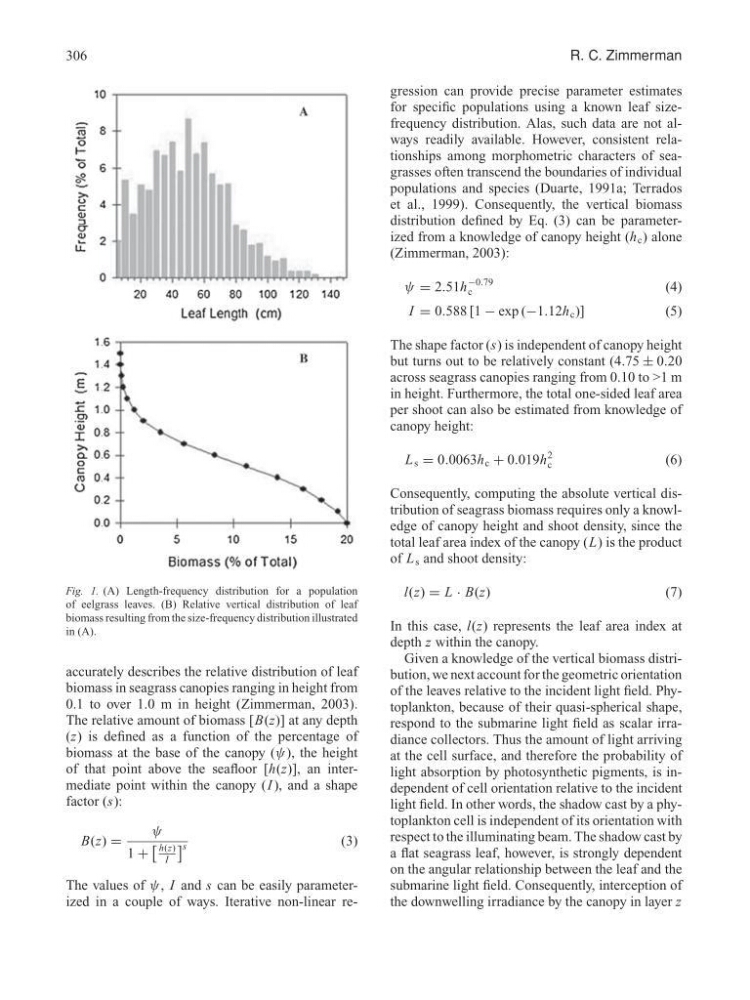
Fig. 1. (A) Length-frequency distribution for a population
of eelgrass leaves. (B) Relative vertical distribution of leaf
biomass resulting from the size-frequency distribution illustrated
in (A).
accurately describes the relative distribution of leaf
biomass in seagrass canopies ranging in height from
0.1 to over 1.0 m in height (Zimmerman, 2003).
The relative amount of biomass [B(z)] at any depth
(z) is defined as a function of the percentage of
biomass at the base of the canopy (ψ), the height
of that point above the seafloor [h(z)], an intermediate point within the canopy (I ), and a shape
factor (s):
B(z) =
ψ
1 +
h(z)
I
s
(3)
The values of ψ, I and s can be easily parameterized in a couple of ways. Iterative non-linear regression can provide precise parameter estimates
for specific populations using a known leaf sizefrequency distribution. Alas, such data are not always readily available. However, consistent relationships among morphometric characters of seagrasses often transcend the boundaries of individual
populations and species (Duarte, 1991a; Terrados
et al., 1999). Consequently, the vertical biomass
distribution defined by Eq. (3) can be parameterized from a knowledge of canopy height (h c ) alone
(Zimmerman, 2003):
ψ = 2.51h
−0.79
c
(4)
I = 0.588 [1 − exp (−1.12h c )]
(5)
The shape factor (s) is independent of canopy height
but turns out to be relatively constant (4.75 ± 0.20
across seagrass canopies ranging from 0.10 to >1 m
in height. Furthermore, the total one-sided leaf area
per shoot can also be estimated from knowledge of
canopy height:
L s = 0.0063h c + 0.019h
2
c
(6)
Consequently, computing the absolute vertical distribution of seagrass biomass requires only a knowledge of canopy height and shoot density, since the
total leaf area index of the canopy (L) is the product
of L s and shoot density:
l(z) = L · B(z)
(7)
In this case, l(z) represents the leaf area index at
depth z within the canopy.
Given a knowledge of the vertical biomass distribution, we next account for the geometric orientation
of the leaves relative to the incident light field. Phytoplankton, because of their quasi-spherical shape,
respond to the submarine light field as scalar irradiance collectors. Thus the amount of light arriving
at the cell surface, and therefore the probability of
light absorption by photosynthetic pigments, is independent of cell orientation relative to the incident
light field. In other words, the shadow cast by a phytoplankton cell is independent of its orientation with
respect to the illuminating beam. The shadow cast by
a flat seagrass leaf, however, is strongly dependent
on the angular relationship between the leaf and the
submarine light field. Consequently, interception of
the downwelling irradiance by the canopy in layer z
R. C. Zimmerman
Fig. 1. (A) Length-frequency distribution for a population
of eelgrass leaves. (B) Relative vertical distribution of leaf
biomass resulting from the size-frequency distribution illustrated
in (A).
accurately describes the relative distribution of leaf
biomass in seagrass canopies ranging in height from
0.1 to over 1.0 m in height (Zimmerman, 2003).
The relative amount of biomass [B(z)] at any depth
(z) is defined as a function of the percentage of
biomass at the base of the canopy (ψ), the height
of that point above the seafloor [h(z)], an intermediate point within the canopy (I ), and a shape
factor (s):
B(z) =
ψ
1 +
h(z)
I
s
(3)
The values of ψ, I and s can be easily parameterized in a couple of ways. Iterative non-linear regression can provide precise parameter estimates
for specific populations using a known leaf sizefrequency distribution. Alas, such data are not always readily available. However, consistent relationships among morphometric characters of seagrasses often transcend the boundaries of individual
populations and species (Duarte, 1991a; Terrados
et al., 1999). Consequently, the vertical biomass
distribution defined by Eq. (3) can be parameterized from a knowledge of canopy height (h c ) alone
(Zimmerman, 2003):
ψ = 2.51h
−0.79
c
(4)
I = 0.588 [1 − exp (−1.12h c )]
(5)
The shape factor (s) is independent of canopy height
but turns out to be relatively constant (4.75 ± 0.20
across seagrass canopies ranging from 0.10 to >1 m
in height. Furthermore, the total one-sided leaf area
per shoot can also be estimated from knowledge of
canopy height:
L s = 0.0063h c + 0.019h
2
c
(6)
Consequently, computing the absolute vertical distribution of seagrass biomass requires only a knowledge of canopy height and shoot density, since the
total leaf area index of the canopy (L) is the product
of L s and shoot density:
l(z) = L · B(z)
(7)
In this case, l(z) represents the leaf area index at
depth z within the canopy.
Given a knowledge of the vertical biomass distribution, we next account for the geometric orientation
of the leaves relative to the incident light field. Phytoplankton, because of their quasi-spherical shape,
respond to the submarine light field as scalar irradiance collectors. Thus the amount of light arriving
at the cell surface, and therefore the probability of
light absorption by photosynthetic pigments, is independent of cell orientation relative to the incident
light field. In other words, the shadow cast by a phytoplankton cell is independent of its orientation with
respect to the illuminating beam. The shadow cast by
a flat seagrass leaf, however, is strongly dependent
on the angular relationship between the leaf and the
submarine light field. Consequently, interception of
the downwelling irradiance by the canopy in layer z