

288
Carlos M. Duarte, James W. Fourqurean, Dorte Krause-Jensen, and Birgit Olesen
1945
1954
1959
1974
1981
1986
1992
1995
1954
1958
1975
1981
1986
1992
1995
1998
1954
1960
1970
1977
1983
1995
1999
Area (ha)
1940 1950 1960 1970 1980 1990 2000
0
4
8
12
16
20
0
10
20
30
40
0
1
2
3
4
5
6
Year
1940 1950 1960 1970 1980 1990 2000
Year
A) Holmstange
B) Boddum
C) Vejle
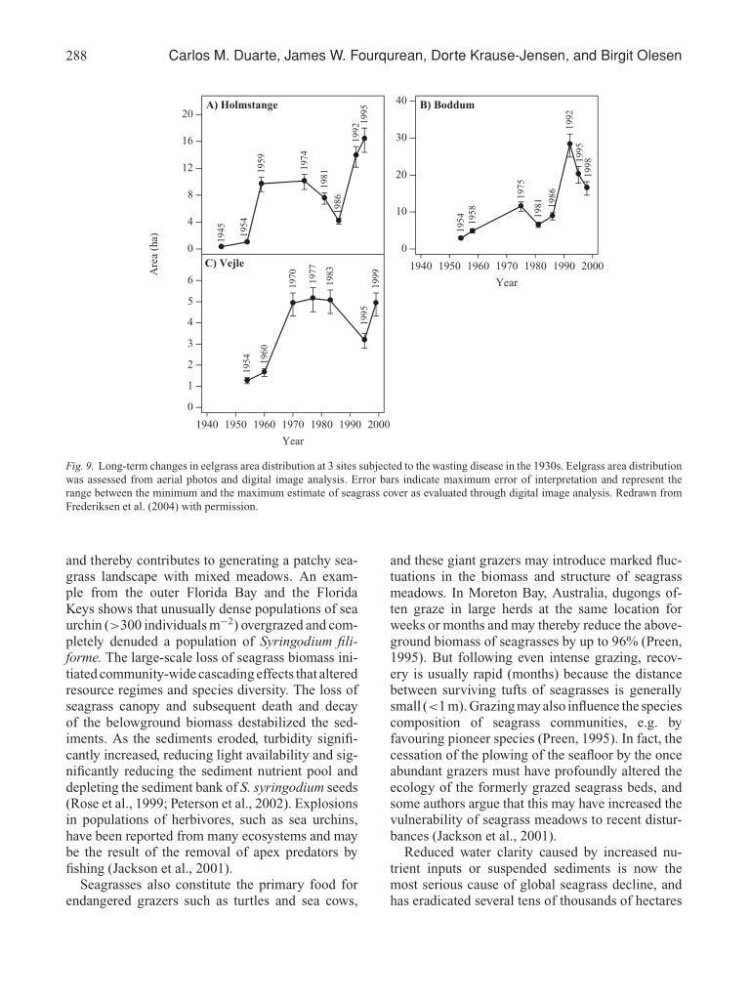
Fig. 9. Long-term changes in eelgrass area distribution at 3 sites subjected to the wasting disease in the 1930s. Eelgrass area distribution
was assessed from aerial photos and digital image analysis. Error bars indicate maximum error of interpretation and represent the
range between the minimum and the maximum estimate of seagrass cover as evaluated through digital image analysis. Redrawn from
Frederiksen et al. (2004) with permission.
and thereby contributes to generating a patchy seagrass landscape with mixed meadows. An example from the outer Florida Bay and the Florida
Keys shows that unusually dense populations of sea
urchin (>300 individuals m
−2 ) overgrazed and completely denuded a population of Syringodium filiforme. The large-scale loss of seagrass biomass initiated community-wide cascading effects that altered
resource regimes and species diversity. The loss of
seagrass canopy and subsequent death and decay
of the belowground biomass destabilized the sediments. As the sediments eroded, turbidity significantly increased, reducing light availability and significantly reducing the sediment nutrient pool and
depleting the sediment bank of S. syringodium seeds
(Rose et al., 1999; Peterson et al., 2002). Explosions
in populations of herbivores, such as sea urchins,
have been reported from many ecosystems and may
be the result of the removal of apex predators by
fishing (Jackson et al., 2001).
Seagrasses also constitute the primary food for
endangered grazers such as turtles and sea cows,
and these giant grazers may introduce marked fluctuations in the biomass and structure of seagrass
meadows. In Moreton Bay, Australia, dugongs often graze in large herds at the same location for
weeks or months and may thereby reduce the aboveground biomass of seagrasses by up to 96% (Preen,
1995). But following even intense grazing, recovery is usually rapid (months) because the distance
between surviving tufts of seagrasses is generally
small (<1 m). Grazing may also influence the species
composition of seagrass communities, e.g. by
favouring pioneer species (Preen, 1995). In fact, the
cessation of the plowing of the seafloor by the once
abundant grazers must have profoundly altered the
ecology of the formerly grazed seagrass beds, and
some authors argue that this may have increased the
vulnerability of seagrass meadows to recent disturbances (Jackson et al., 2001).
Reduced water clarity caused by increased nutrient inputs or suspended sediments is now the
most serious cause of global seagrass decline, and
has eradicated several tens of thousands of hectares
Carlos M. Duarte, James W. Fourqurean, Dorte Krause-Jensen, and Birgit Olesen
1945
1954
1959
1974
1981
1986
1992
1995
1954
1958
1975
1981
1986
1992
1995
1998
1954
1960
1970
1977
1983
1995
1999
Area (ha)
1940 1950 1960 1970 1980 1990 2000
0
4
8
12
16
20
0
10
20
30
40
0
1
2
3
4
5
6
Year
1940 1950 1960 1970 1980 1990 2000
Year
A) Holmstange
B) Boddum
C) Vejle
Fig. 9. Long-term changes in eelgrass area distribution at 3 sites subjected to the wasting disease in the 1930s. Eelgrass area distribution
was assessed from aerial photos and digital image analysis. Error bars indicate maximum error of interpretation and represent the
range between the minimum and the maximum estimate of seagrass cover as evaluated through digital image analysis. Redrawn from
Frederiksen et al. (2004) with permission.
and thereby contributes to generating a patchy seagrass landscape with mixed meadows. An example from the outer Florida Bay and the Florida
Keys shows that unusually dense populations of sea
urchin (>300 individuals m
−2 ) overgrazed and completely denuded a population of Syringodium filiforme. The large-scale loss of seagrass biomass initiated community-wide cascading effects that altered
resource regimes and species diversity. The loss of
seagrass canopy and subsequent death and decay
of the belowground biomass destabilized the sediments. As the sediments eroded, turbidity significantly increased, reducing light availability and significantly reducing the sediment nutrient pool and
depleting the sediment bank of S. syringodium seeds
(Rose et al., 1999; Peterson et al., 2002). Explosions
in populations of herbivores, such as sea urchins,
have been reported from many ecosystems and may
be the result of the removal of apex predators by
fishing (Jackson et al., 2001).
Seagrasses also constitute the primary food for
endangered grazers such as turtles and sea cows,
and these giant grazers may introduce marked fluctuations in the biomass and structure of seagrass
meadows. In Moreton Bay, Australia, dugongs often graze in large herds at the same location for
weeks or months and may thereby reduce the aboveground biomass of seagrasses by up to 96% (Preen,
1995). But following even intense grazing, recovery is usually rapid (months) because the distance
between surviving tufts of seagrasses is generally
small (<1 m). Grazing may also influence the species
composition of seagrass communities, e.g. by
favouring pioneer species (Preen, 1995). In fact, the
cessation of the plowing of the seafloor by the once
abundant grazers must have profoundly altered the
ecology of the formerly grazed seagrass beds, and
some authors argue that this may have increased the
vulnerability of seagrass meadows to recent disturbances (Jackson et al., 2001).
Reduced water clarity caused by increased nutrient inputs or suspended sediments is now the
most serious cause of global seagrass decline, and
has eradicated several tens of thousands of hectares