

272
Carlos M. Duarte, James W. Fourqurean, Dorte Krause-Jensen, and Birgit Olesen
α
branch
leaves
rhizome
roots
apical
meristems
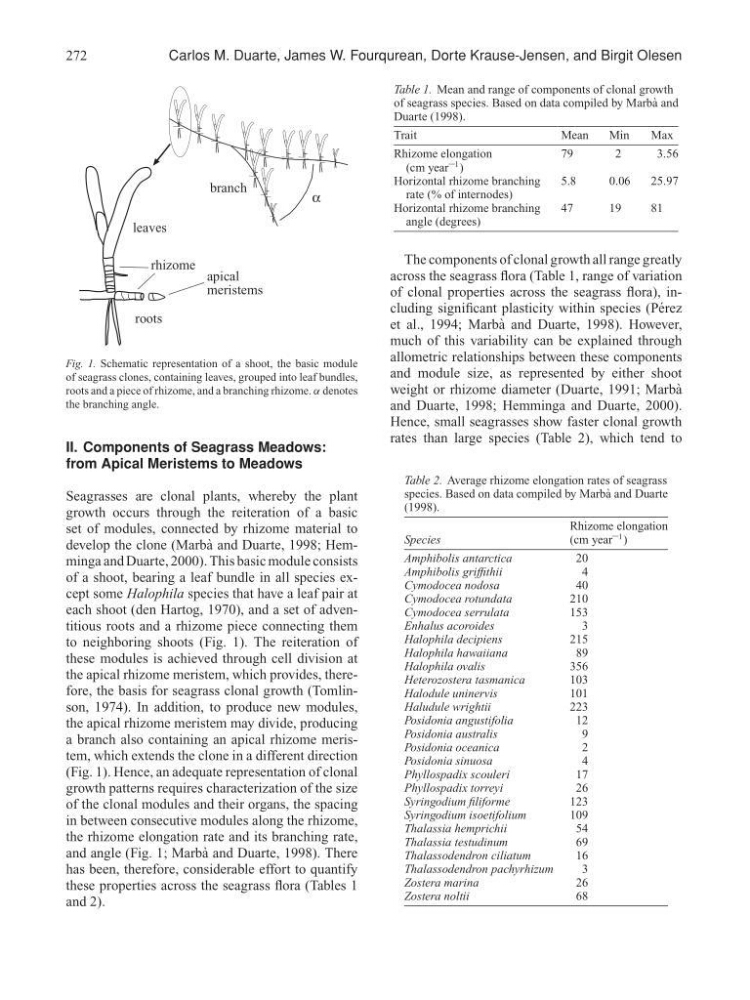
Fig. 1. Schematic representation of a shoot, the basic module
of seagrass clones, containing leaves, grouped into leaf bundles,
roots and a piece of rhizome, and a branching rhizome. α denotes
the branching angle.
II. Components of Seagrass Meadows:
from Apical Meristems to Meadows
Seagrasses are clonal plants, whereby the plant
growth occurs through the reiteration of a basic
set of modules, connected by rhizome material to
develop the clone (Marb` a and Duarte, 1998; Hemminga and Duarte, 2000). This basic module consists
of a shoot, bearing a leaf bundle in all species except some Halophila species that have a leaf pair at
each shoot (den Hartog, 1970), and a set of adventitious roots and a rhizome piece connecting them
to neighboring shoots (Fig. 1). The reiteration of
these modules is achieved through cell division at
the apical rhizome meristem, which provides, therefore, the basis for seagrass clonal growth (Tomlinson, 1974). In addition, to produce new modules,
the apical rhizome meristem may divide, producing
a branch also containing an apical rhizome meristem, which extends the clone in a different direction
(Fig. 1). Hence, an adequate representation of clonal
growth patterns requires characterization of the size
of the clonal modules and their organs, the spacing
in between consecutive modules along the rhizome,
the rhizome elongation rate and its branching rate,
and angle (Fig. 1; Marb` a and Duarte, 1998). There
has been, therefore, considerable effort to quantify
these properties across the seagrass flora (Tables 1
and 2).
Table 1. Mean and range of components of clonal growth
of seagrass species. Based on data compiled by Marb` a and
Duarte (1998).
Trait
Mean
Min
Max
Rhizome elongation
79
2
3.56
(cm year –1 )
Horizontal rhizome branching
5.8
0.06
25.97
rate (% of internodes)
Horizontal rhizome branching
47
19
81
angle (degrees)
The components of clonal growth all range greatly
across the seagrass flora (Table 1, range of variation
of clonal properties across the seagrass flora), including significant plasticity within species (P´ erez
et al., 1994; Marb` a and Duarte, 1998). However,
much of this variability can be explained through
allometric relationships between these components
and module size, as represented by either shoot
weight or rhizome diameter (Duarte, 1991; Marb` a
and Duarte, 1998; Hemminga and Duarte, 2000).
Hence, small seagrasses show faster clonal growth
rates than large species (Table 2), which tend to
Table 2. Average rhizome elongation rates of seagrass
species. Based on data compiled by Marb` a and Duarte
(1998).
Rhizome elongation
Species
(cm year –1 )
Amphibolis antarctica
20
Amphibolis griffithii
4
Cymodocea nodosa
40
Cymodocea rotundata
210
Cymodocea serrulata
153
Enhalus acoroides
3
Halophila decipiens
215
Halophila hawaiiana
89
Halophila ovalis
356
Heterozostera tasmanica
103
Halodule uninervis
101
Haludule wrightii
223
Posidonia angustifolia
12
Posidonia australis
9
Posidonia oceanica
2
Posidonia sinuosa
4
Phyllospadix scouleri
17
Phyllospadix torreyi
26
Syringodium filiforme
123
Syringodium isoetifolium
109
Thalassia hemprichii
54
Thalassia testudinum
69
Thalassodendron ciliatum
16
Thalassodendron pachyrhizum
3
Zostera marina
26
Zostera noltii
68
Carlos M. Duarte, James W. Fourqurean, Dorte Krause-Jensen, and Birgit Olesen
α
branch
leaves
rhizome
roots
apical
meristems
Fig. 1. Schematic representation of a shoot, the basic module
of seagrass clones, containing leaves, grouped into leaf bundles,
roots and a piece of rhizome, and a branching rhizome. α denotes
the branching angle.
II. Components of Seagrass Meadows:
from Apical Meristems to Meadows
Seagrasses are clonal plants, whereby the plant
growth occurs through the reiteration of a basic
set of modules, connected by rhizome material to
develop the clone (Marb` a and Duarte, 1998; Hemminga and Duarte, 2000). This basic module consists
of a shoot, bearing a leaf bundle in all species except some Halophila species that have a leaf pair at
each shoot (den Hartog, 1970), and a set of adventitious roots and a rhizome piece connecting them
to neighboring shoots (Fig. 1). The reiteration of
these modules is achieved through cell division at
the apical rhizome meristem, which provides, therefore, the basis for seagrass clonal growth (Tomlinson, 1974). In addition, to produce new modules,
the apical rhizome meristem may divide, producing
a branch also containing an apical rhizome meristem, which extends the clone in a different direction
(Fig. 1). Hence, an adequate representation of clonal
growth patterns requires characterization of the size
of the clonal modules and their organs, the spacing
in between consecutive modules along the rhizome,
the rhizome elongation rate and its branching rate,
and angle (Fig. 1; Marb` a and Duarte, 1998). There
has been, therefore, considerable effort to quantify
these properties across the seagrass flora (Tables 1
and 2).
Table 1. Mean and range of components of clonal growth
of seagrass species. Based on data compiled by Marb` a and
Duarte (1998).
Trait
Mean
Min
Max
Rhizome elongation
79
2
3.56
(cm year –1 )
Horizontal rhizome branching
5.8
0.06
25.97
rate (% of internodes)
Horizontal rhizome branching
47
19
81
angle (degrees)
The components of clonal growth all range greatly
across the seagrass flora (Table 1, range of variation
of clonal properties across the seagrass flora), including significant plasticity within species (P´ erez
et al., 1994; Marb` a and Duarte, 1998). However,
much of this variability can be explained through
allometric relationships between these components
and module size, as represented by either shoot
weight or rhizome diameter (Duarte, 1991; Marb` a
and Duarte, 1998; Hemminga and Duarte, 2000).
Hence, small seagrasses show faster clonal growth
rates than large species (Table 2), which tend to
Table 2. Average rhizome elongation rates of seagrass
species. Based on data compiled by Marb` a and Duarte
(1998).
Rhizome elongation
Species
(cm year –1 )
Amphibolis antarctica
20
Amphibolis griffithii
4
Cymodocea nodosa
40
Cymodocea rotundata
210
Cymodocea serrulata
153
Enhalus acoroides
3
Halophila decipiens
215
Halophila hawaiiana
89
Halophila ovalis
356
Heterozostera tasmanica
103
Halodule uninervis
101
Haludule wrightii
223
Posidonia angustifolia
12
Posidonia australis
9
Posidonia oceanica
2
Posidonia sinuosa
4
Phyllospadix scouleri
17
Phyllospadix torreyi
26
Syringodium filiforme
123
Syringodium isoetifolium
109
Thalassia hemprichii
54
Thalassia testudinum
69
Thalassodendron ciliatum
16
Thalassodendron pachyrhizum
3
Zostera marina
26
Zostera noltii
68