

258
Jens Borum, Kaj Sand-Jensen, Thomas Binzer, Ole Pedersen and Tina Maria Greve
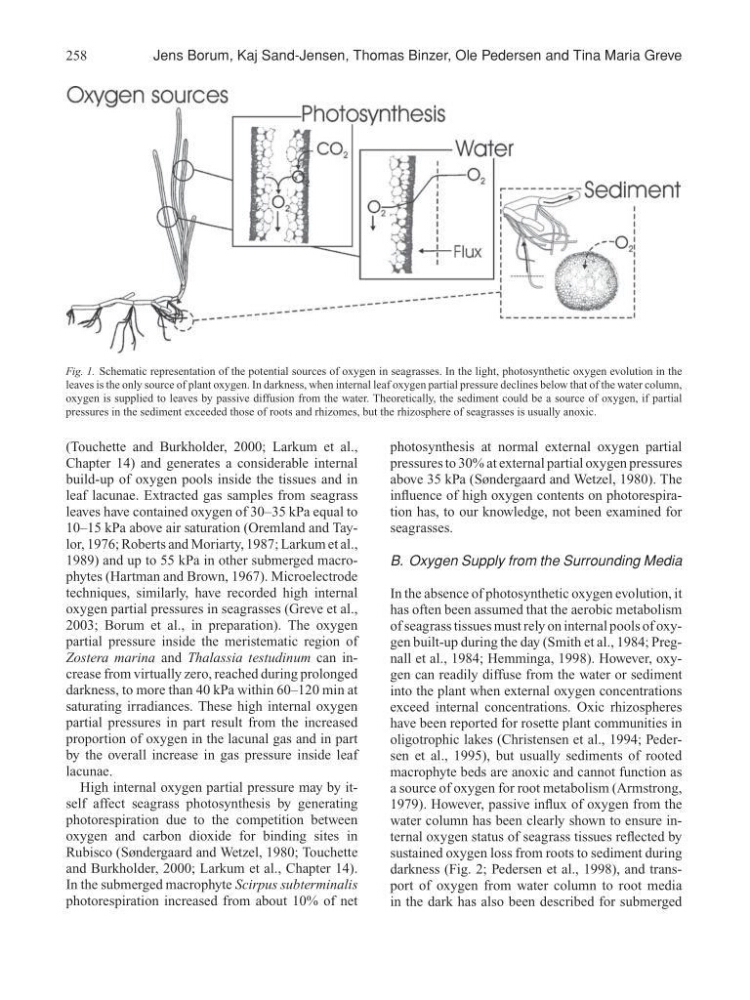
Fig. 1. Schematic representation of the potential sources of oxygen in seagrasses. In the light, photosynthetic oxygen evolution in the
leaves is the only source of plant oxygen. In darkness, when internal leaf oxygen partial pressure declines below that of the water column,
oxygen is supplied to leaves by passive diffusion from the water. Theoretically, the sediment could be a source of oxygen, if partial
pressures in the sediment exceeded those of roots and rhizomes, but the rhizosphere of seagrasses is usually anoxic.
(Touchette and Burkholder, 2000; Larkum et al.,
Chapter 14) and generates a considerable internal
build-up of oxygen pools inside the tissues and in
leaf lacunae. Extracted gas samples from seagrass
leaves have contained oxygen of 30–35 kPa equal to
10–15 kPa above air saturation (Oremland and Taylor, 1976; Roberts and Moriarty, 1987; Larkum et al.,
1989) and up to 55 kPa in other submerged macrophytes (Hartman and Brown, 1967). Microelectrode
techniques, similarly, have recorded high internal
oxygen partial pressures in seagrasses (Greve et al.,
2003; Borum et al., in preparation). The oxygen
partial pressure inside the meristematic region of
Zostera marina and Thalassia testudinum can increase from virtually zero, reached during prolonged
darkness, to more than 40 kPa within 60–120 min at
saturating irradiances. These high internal oxygen
partial pressures in part result from the increased
proportion of oxygen in the lacunal gas and in part
by the overall increase in gas pressure inside leaf
lacunae.
High internal oxygen partial pressure may by itself affect seagrass photosynthesis by generating
photorespiration due to the competition between
oxygen and carbon dioxide for binding sites in
Rubisco (Søndergaard and Wetzel, 1980; Touchette
and Burkholder, 2000; Larkum et al., Chapter 14).
In the submerged macrophyte Scirpus subterminalis
photorespiration increased from about 10% of net
photosynthesis at normal external oxygen partial
pressures to 30% at external partial oxygen pressures
above 35 kPa (Søndergaard and Wetzel, 1980). The
influence of high oxygen contents on photorespiration has, to our knowledge, not been examined for
seagrasses.
B. Oxygen Supply from the Surrounding Media
In the absence of photosynthetic oxygen evolution, it
has often been assumed that the aerobic metabolism
of seagrass tissues must rely on internal pools of oxygen built-up during the day (Smith et al., 1984; Pregnall et al., 1984; Hemminga, 1998). However, oxygen can readily diffuse from the water or sediment
into the plant when external oxygen concentrations
exceed internal concentrations. Oxic rhizospheres
have been reported for rosette plant communities in
oligotrophic lakes (Christensen et al., 1994; Pedersen et al., 1995), but usually sediments of rooted
macrophyte beds are anoxic and cannot function as
a source of oxygen for root metabolism (Armstrong,
1979). However, passive influx of oxygen from the
water column has been clearly shown to ensure internal oxygen status of seagrass tissues reflected by
sustained oxygen loss from roots to sediment during
darkness (Fig. 2; Pedersen et al., 1998), and transport of oxygen from water column to root media
in the dark has also been described for submerged
Jens Borum, Kaj Sand-Jensen, Thomas Binzer, Ole Pedersen and Tina Maria Greve
Fig. 1. Schematic representation of the potential sources of oxygen in seagrasses. In the light, photosynthetic oxygen evolution in the
leaves is the only source of plant oxygen. In darkness, when internal leaf oxygen partial pressure declines below that of the water column,
oxygen is supplied to leaves by passive diffusion from the water. Theoretically, the sediment could be a source of oxygen, if partial
pressures in the sediment exceeded those of roots and rhizomes, but the rhizosphere of seagrasses is usually anoxic.
(Touchette and Burkholder, 2000; Larkum et al.,
Chapter 14) and generates a considerable internal
build-up of oxygen pools inside the tissues and in
leaf lacunae. Extracted gas samples from seagrass
leaves have contained oxygen of 30–35 kPa equal to
10–15 kPa above air saturation (Oremland and Taylor, 1976; Roberts and Moriarty, 1987; Larkum et al.,
1989) and up to 55 kPa in other submerged macrophytes (Hartman and Brown, 1967). Microelectrode
techniques, similarly, have recorded high internal
oxygen partial pressures in seagrasses (Greve et al.,
2003; Borum et al., in preparation). The oxygen
partial pressure inside the meristematic region of
Zostera marina and Thalassia testudinum can increase from virtually zero, reached during prolonged
darkness, to more than 40 kPa within 60–120 min at
saturating irradiances. These high internal oxygen
partial pressures in part result from the increased
proportion of oxygen in the lacunal gas and in part
by the overall increase in gas pressure inside leaf
lacunae.
High internal oxygen partial pressure may by itself affect seagrass photosynthesis by generating
photorespiration due to the competition between
oxygen and carbon dioxide for binding sites in
Rubisco (Søndergaard and Wetzel, 1980; Touchette
and Burkholder, 2000; Larkum et al., Chapter 14).
In the submerged macrophyte Scirpus subterminalis
photorespiration increased from about 10% of net
photosynthesis at normal external oxygen partial
pressures to 30% at external partial oxygen pressures
above 35 kPa (Søndergaard and Wetzel, 1980). The
influence of high oxygen contents on photorespiration has, to our knowledge, not been examined for
seagrasses.
B. Oxygen Supply from the Surrounding Media
In the absence of photosynthetic oxygen evolution, it
has often been assumed that the aerobic metabolism
of seagrass tissues must rely on internal pools of oxygen built-up during the day (Smith et al., 1984; Pregnall et al., 1984; Hemminga, 1998). However, oxygen can readily diffuse from the water or sediment
into the plant when external oxygen concentrations
exceed internal concentrations. Oxic rhizospheres
have been reported for rosette plant communities in
oligotrophic lakes (Christensen et al., 1994; Pedersen et al., 1995), but usually sediments of rooted
macrophyte beds are anoxic and cannot function as
a source of oxygen for root metabolism (Armstrong,
1979). However, passive influx of oxygen from the
water column has been clearly shown to ensure internal oxygen status of seagrass tissues reflected by
sustained oxygen loss from roots to sediment during
darkness (Fig. 2; Pedersen et al., 1998), and transport of oxygen from water column to root media
in the dark has also been described for submerged