

218
E. W. Koch, J. D. Ackerman, J. Verduin and M. van Keulen
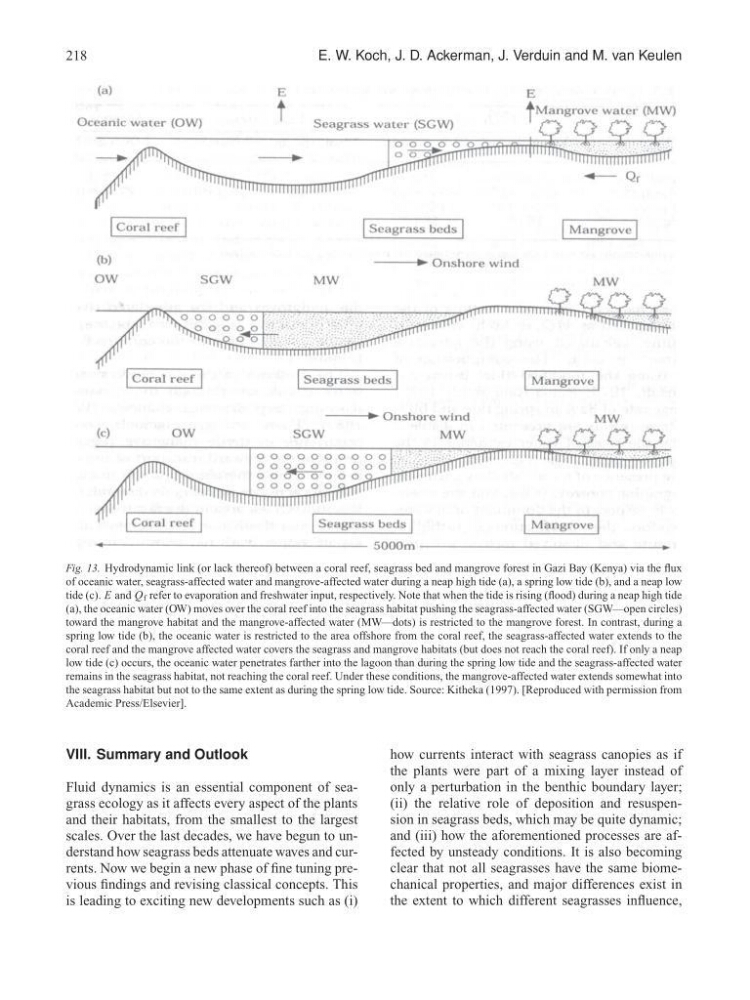
Fig. 13. Hydrodynamic link (or lack thereof) between a coral reef, seagrass bed and mangrove forest in Gazi Bay (Kenya) via the flux
of oceanic water, seagrass-affected water and mangrove-affected water during a neap high tide (a), a spring low tide (b), and a neap low
tide (c). E and Q f refer to evaporation and freshwater input, respectively. Note that when the tide is rising (flood) during a neap high tide
(a), the oceanic water (OW) moves over the coral reef into the seagrass habitat pushing the seagrass-affected water (SGW—open circles)
toward the mangrove habitat and the mangrove-affected water (MW—dots) is restricted to the mangrove forest. In contrast, during a
spring low tide (b), the oceanic water is restricted to the area offshore from the coral reef, the seagrass-affected water extends to the
coral reef and the mangrove affected water covers the seagrass and mangrove habitats (but does not reach the coral reef). If only a neap
low tide (c) occurs, the oceanic water penetrates farther into the lagoon than during the spring low tide and the seagrass-affected water
remains in the seagrass habitat, not reaching the coral reef. Under these conditions, the mangrove-affected water extends somewhat into
the seagrass habitat but not to the same extent as during the spring low tide. Source: Kitheka (1997). [Reproduced with permission from
Academic Press/Elsevier].
VIII. Summary and Outlook
Fluid dynamics is an essential component of seagrass ecology as it affects every aspect of the plants
and their habitats, from the smallest to the largest
scales. Over the last decades, we have begun to understand how seagrass beds attenuate waves and currents. Now we begin a new phase of fine tuning previous findings and revising classical concepts. This
is leading to exciting new developments such as (i)
how currents interact with seagrass canopies as if
the plants were part of a mixing layer instead of
only a perturbation in the benthic boundary layer;
(ii) the relative role of deposition and resuspension in seagrass beds, which may be quite dynamic;
and (iii) how the aforementioned processes are affected by unsteady conditions. It is also becoming
clear that not all seagrasses have the same biomechanical properties, and major differences exist in
the extent to which different seagrasses influence,
E. W. Koch, J. D. Ackerman, J. Verduin and M. van Keulen
Fig. 13. Hydrodynamic link (or lack thereof) between a coral reef, seagrass bed and mangrove forest in Gazi Bay (Kenya) via the flux
of oceanic water, seagrass-affected water and mangrove-affected water during a neap high tide (a), a spring low tide (b), and a neap low
tide (c). E and Q f refer to evaporation and freshwater input, respectively. Note that when the tide is rising (flood) during a neap high tide
(a), the oceanic water (OW) moves over the coral reef into the seagrass habitat pushing the seagrass-affected water (SGW—open circles)
toward the mangrove habitat and the mangrove-affected water (MW—dots) is restricted to the mangrove forest. In contrast, during a
spring low tide (b), the oceanic water is restricted to the area offshore from the coral reef, the seagrass-affected water extends to the
coral reef and the mangrove affected water covers the seagrass and mangrove habitats (but does not reach the coral reef). If only a neap
low tide (c) occurs, the oceanic water penetrates farther into the lagoon than during the spring low tide and the seagrass-affected water
remains in the seagrass habitat, not reaching the coral reef. Under these conditions, the mangrove-affected water extends somewhat into
the seagrass habitat but not to the same extent as during the spring low tide. Source: Kitheka (1997). [Reproduced with permission from
Academic Press/Elsevier].
VIII. Summary and Outlook
Fluid dynamics is an essential component of seagrass ecology as it affects every aspect of the plants
and their habitats, from the smallest to the largest
scales. Over the last decades, we have begun to understand how seagrass beds attenuate waves and currents. Now we begin a new phase of fine tuning previous findings and revising classical concepts. This
is leading to exciting new developments such as (i)
how currents interact with seagrass canopies as if
the plants were part of a mixing layer instead of
only a perturbation in the benthic boundary layer;
(ii) the relative role of deposition and resuspension in seagrass beds, which may be quite dynamic;
and (iii) how the aforementioned processes are affected by unsteady conditions. It is also becoming
clear that not all seagrasses have the same biomechanical properties, and major differences exist in
the extent to which different seagrasses influence,