

Chapter 8 Fluid Dynamics in Seagrass Ecology
213
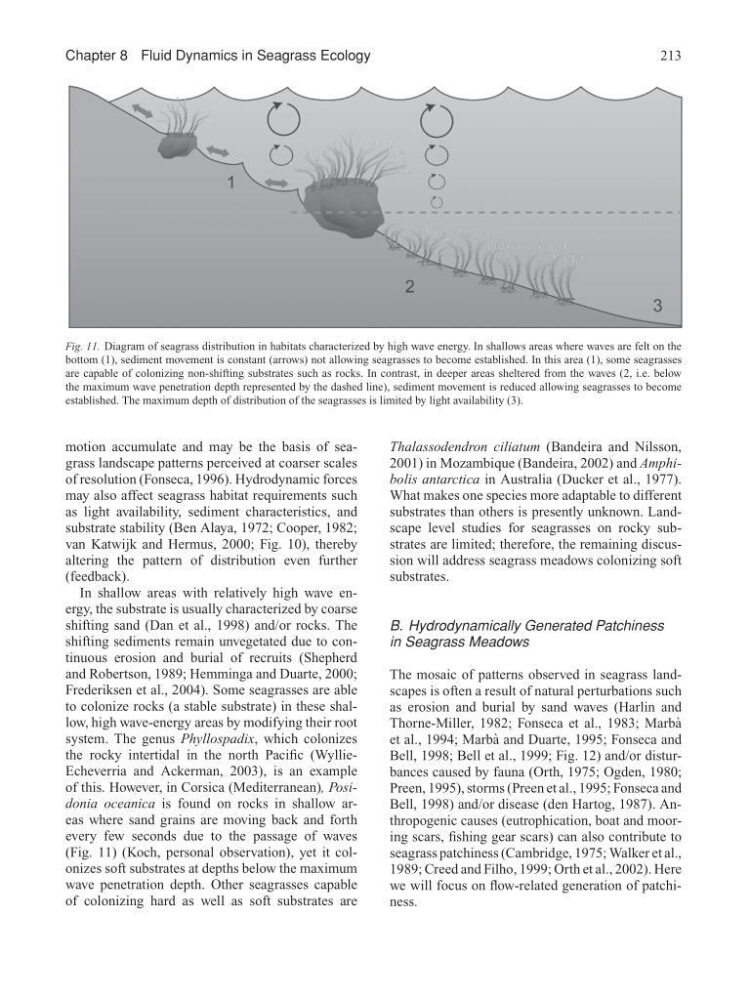
Fig. 11. Diagram of seagrass distribution in habitats characterized by high wave energy. In shallows areas where waves are felt on the
bottom (1), sediment movement is constant (arrows) not allowing seagrasses to become established. In this area (1), some seagrasses
are capable of colonizing non-shifting substrates such as rocks. In contrast, in deeper areas sheltered from the waves (2, i.e. below
the maximum wave penetration depth represented by the dashed line), sediment movement is reduced allowing seagrasses to become
established. The maximum depth of distribution of the seagrasses is limited by light availability (3).
motion accumulate and may be the basis of seagrass landscape patterns perceived at coarser scales
of resolution (Fonseca, 1996). Hydrodynamic forces
may also affect seagrass habitat requirements such
as light availability, sediment characteristics, and
substrate stability (Ben Alaya, 1972; Cooper, 1982;
van Katwijk and Hermus, 2000; Fig. 10), thereby
altering the pattern of distribution even further
(feedback).
In shallow areas with relatively high wave energy, the substrate is usually characterized by coarse
shifting sand (Dan et al., 1998) and/or rocks. The
shifting sediments remain unvegetated due to continuous erosion and burial of recruits (Shepherd
and Robertson, 1989; Hemminga and Duarte, 2000;
Frederiksen et al., 2004). Some seagrasses are able
to colonize rocks (a stable substrate) in these shallow, high wave-energy areas by modifying their root
system. The genus Phyllospadix, which colonizes
the rocky intertidal in the north Pacific (WyllieEcheverria and Ackerman, 2003), is an example
of this. However, in Corsica (Mediterranean), Posidonia oceanica is found on rocks in shallow areas where sand grains are moving back and forth
every few seconds due to the passage of waves
(Fig. 11) (Koch, personal observation), yet it colonizes soft substrates at depths below the maximum
wave penetration depth. Other seagrasses capable
of colonizing hard as well as soft substrates are
Thalassodendron ciliatum (Bandeira and Nilsson,
2001) in Mozambique (Bandeira, 2002) and Amphibolis antarctica in Australia (Ducker et al., 1977).
What makes one species more adaptable to different
substrates than others is presently unknown. Landscape level studies for seagrasses on rocky substrates are limited; therefore, the remaining discussion will address seagrass meadows colonizing soft
substrates.
B. Hydrodynamically Generated Patchiness
in Seagrass Meadows
The mosaic of patterns observed in seagrass landscapes is often a result of natural perturbations such
as erosion and burial by sand waves (Harlin and
Thorne-Miller, 1982; Fonseca et al., 1983; Marb` a
et al., 1994; Marb` a and Duarte, 1995; Fonseca and
Bell, 1998; Bell et al., 1999; Fig. 12) and/or disturbances caused by fauna (Orth, 1975; Ogden, 1980;
Preen, 1995), storms (Preen et al., 1995; Fonseca and
Bell, 1998) and/or disease (den Hartog, 1987). Anthropogenic causes (eutrophication, boat and mooring scars, fishing gear scars) can also contribute to
seagrass patchiness (Cambridge, 1975; Walker et al.,
1989; Creed and Filho, 1999; Orth et al., 2002). Here
we will focus on flow-related generation of patchiness.
213
Fig. 11. Diagram of seagrass distribution in habitats characterized by high wave energy. In shallows areas where waves are felt on the
bottom (1), sediment movement is constant (arrows) not allowing seagrasses to become established. In this area (1), some seagrasses
are capable of colonizing non-shifting substrates such as rocks. In contrast, in deeper areas sheltered from the waves (2, i.e. below
the maximum wave penetration depth represented by the dashed line), sediment movement is reduced allowing seagrasses to become
established. The maximum depth of distribution of the seagrasses is limited by light availability (3).
motion accumulate and may be the basis of seagrass landscape patterns perceived at coarser scales
of resolution (Fonseca, 1996). Hydrodynamic forces
may also affect seagrass habitat requirements such
as light availability, sediment characteristics, and
substrate stability (Ben Alaya, 1972; Cooper, 1982;
van Katwijk and Hermus, 2000; Fig. 10), thereby
altering the pattern of distribution even further
(feedback).
In shallow areas with relatively high wave energy, the substrate is usually characterized by coarse
shifting sand (Dan et al., 1998) and/or rocks. The
shifting sediments remain unvegetated due to continuous erosion and burial of recruits (Shepherd
and Robertson, 1989; Hemminga and Duarte, 2000;
Frederiksen et al., 2004). Some seagrasses are able
to colonize rocks (a stable substrate) in these shallow, high wave-energy areas by modifying their root
system. The genus Phyllospadix, which colonizes
the rocky intertidal in the north Pacific (WyllieEcheverria and Ackerman, 2003), is an example
of this. However, in Corsica (Mediterranean), Posidonia oceanica is found on rocks in shallow areas where sand grains are moving back and forth
every few seconds due to the passage of waves
(Fig. 11) (Koch, personal observation), yet it colonizes soft substrates at depths below the maximum
wave penetration depth. Other seagrasses capable
of colonizing hard as well as soft substrates are
Thalassodendron ciliatum (Bandeira and Nilsson,
2001) in Mozambique (Bandeira, 2002) and Amphibolis antarctica in Australia (Ducker et al., 1977).
What makes one species more adaptable to different
substrates than others is presently unknown. Landscape level studies for seagrasses on rocky substrates are limited; therefore, the remaining discussion will address seagrass meadows colonizing soft
substrates.
B. Hydrodynamically Generated Patchiness
in Seagrass Meadows
The mosaic of patterns observed in seagrass landscapes is often a result of natural perturbations such
as erosion and burial by sand waves (Harlin and
Thorne-Miller, 1982; Fonseca et al., 1983; Marb` a
et al., 1994; Marb` a and Duarte, 1995; Fonseca and
Bell, 1998; Bell et al., 1999; Fig. 12) and/or disturbances caused by fauna (Orth, 1975; Ogden, 1980;
Preen, 1995), storms (Preen et al., 1995; Fonseca and
Bell, 1998) and/or disease (den Hartog, 1987). Anthropogenic causes (eutrophication, boat and mooring scars, fishing gear scars) can also contribute to
seagrass patchiness (Cambridge, 1975; Walker et al.,
1989; Creed and Filho, 1999; Orth et al., 2002). Here
we will focus on flow-related generation of patchiness.