

212
E. W. Koch, J. D. Ackerman, J. Verduin and M. van Keulen
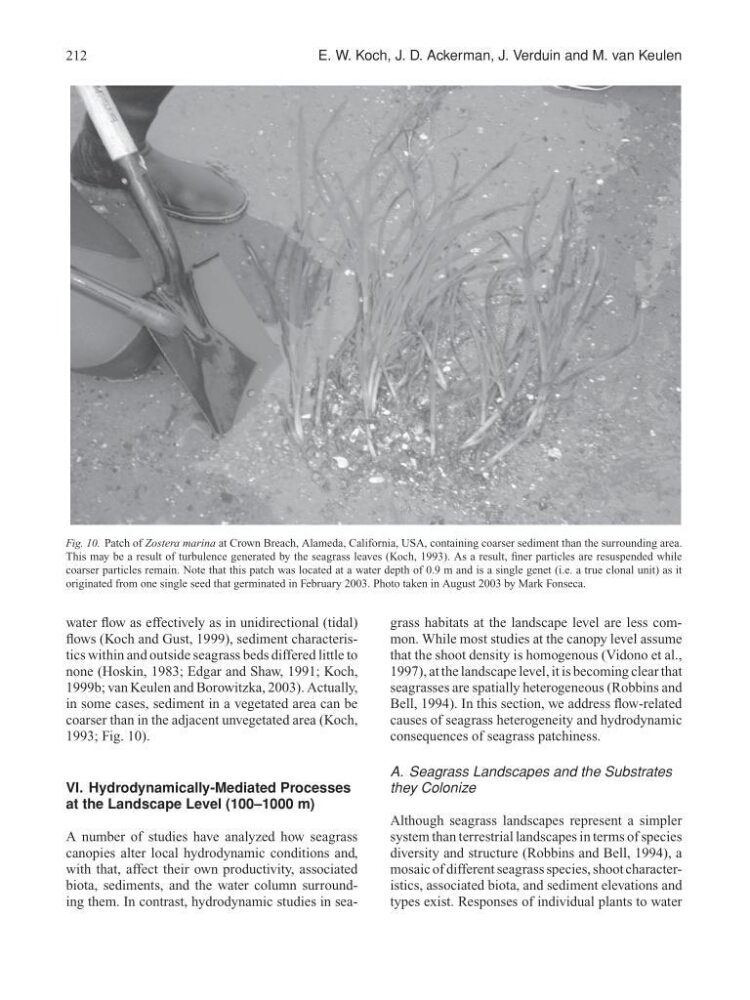
Fig. 10. Patch of Zostera marina at Crown Breach, Alameda, California, USA, containing coarser sediment than the surrounding area.
This may be a result of turbulence generated by the seagrass leaves (Koch, 1993). As a result, finer particles are resuspended while
coarser particles remain. Note that this patch was located at a water depth of 0.9 m and is a single genet (i.e. a true clonal unit) as it
originated from one single seed that germinated in February 2003. Photo taken in August 2003 by Mark Fonseca.
water flow as effectively as in unidirectional (tidal)
flows (Koch and Gust, 1999), sediment characteristics within and outside seagrass beds differed little to
none (Hoskin, 1983; Edgar and Shaw, 1991; Koch,
1999b; van Keulen and Borowitzka, 2003). Actually,
in some cases, sediment in a vegetated area can be
coarser than in the adjacent unvegetated area (Koch,
1993; Fig. 10).
VI. Hydrodynamically-Mediated Processes
at the Landscape Level (100–1000 m)
A number of studies have analyzed how seagrass
canopies alter local hydrodynamic conditions and,
with that, affect their own productivity, associated
biota, sediments, and the water column surrounding them. In contrast, hydrodynamic studies in seagrass habitats at the landscape level are less common. While most studies at the canopy level assume
that the shoot density is homogenous (Vidono et al.,
1997), at the landscape level, it is becoming clear that
seagrasses are spatially heterogeneous (Robbins and
Bell, 1994). In this section, we address flow-related
causes of seagrass heterogeneity and hydrodynamic
consequences of seagrass patchiness.
A. Seagrass Landscapes and the Substrates
they Colonize
Although seagrass landscapes represent a simpler
system than terrestrial landscapes in terms of species
diversity and structure (Robbins and Bell, 1994), a
mosaic of different seagrass species, shoot characteristics, associated biota, and sediment elevations and
types exist. Responses of individual plants to water
E. W. Koch, J. D. Ackerman, J. Verduin and M. van Keulen
Fig. 10. Patch of Zostera marina at Crown Breach, Alameda, California, USA, containing coarser sediment than the surrounding area.
This may be a result of turbulence generated by the seagrass leaves (Koch, 1993). As a result, finer particles are resuspended while
coarser particles remain. Note that this patch was located at a water depth of 0.9 m and is a single genet (i.e. a true clonal unit) as it
originated from one single seed that germinated in February 2003. Photo taken in August 2003 by Mark Fonseca.
water flow as effectively as in unidirectional (tidal)
flows (Koch and Gust, 1999), sediment characteristics within and outside seagrass beds differed little to
none (Hoskin, 1983; Edgar and Shaw, 1991; Koch,
1999b; van Keulen and Borowitzka, 2003). Actually,
in some cases, sediment in a vegetated area can be
coarser than in the adjacent unvegetated area (Koch,
1993; Fig. 10).
VI. Hydrodynamically-Mediated Processes
at the Landscape Level (100–1000 m)
A number of studies have analyzed how seagrass
canopies alter local hydrodynamic conditions and,
with that, affect their own productivity, associated
biota, sediments, and the water column surrounding them. In contrast, hydrodynamic studies in seagrass habitats at the landscape level are less common. While most studies at the canopy level assume
that the shoot density is homogenous (Vidono et al.,
1997), at the landscape level, it is becoming clear that
seagrasses are spatially heterogeneous (Robbins and
Bell, 1994). In this section, we address flow-related
causes of seagrass heterogeneity and hydrodynamic
consequences of seagrass patchiness.
A. Seagrass Landscapes and the Substrates
they Colonize
Although seagrass landscapes represent a simpler
system than terrestrial landscapes in terms of species
diversity and structure (Robbins and Bell, 1994), a
mosaic of different seagrass species, shoot characteristics, associated biota, and sediment elevations and
types exist. Responses of individual plants to water