

206
E. W. Koch, J. D. Ackerman, J. Verduin and M. van Keulen
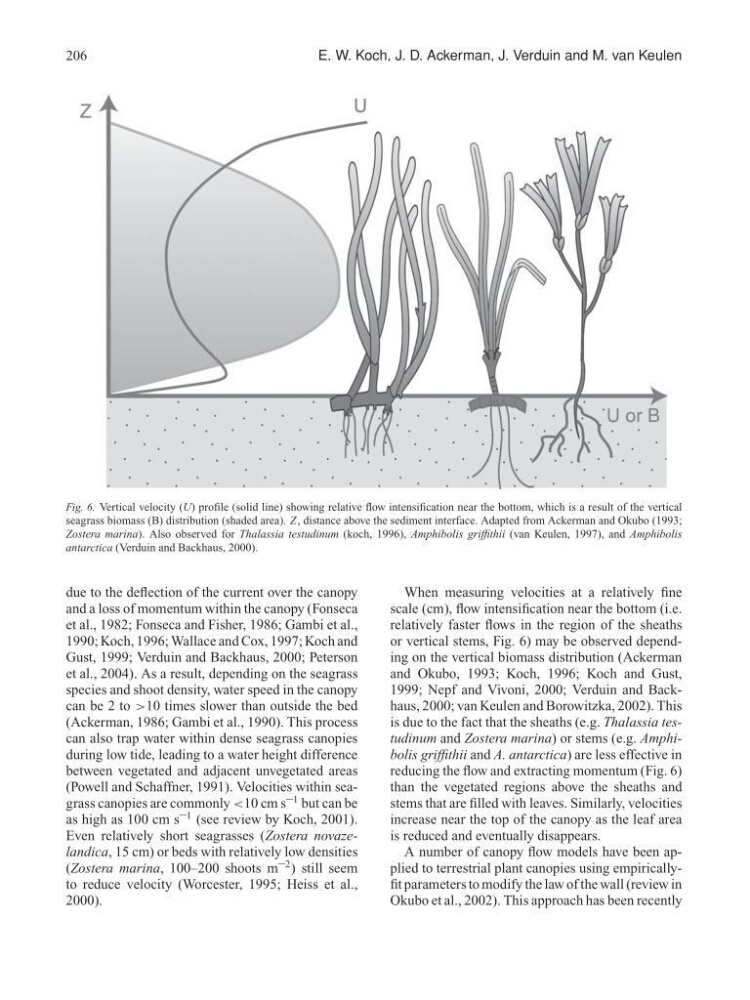
Fig. 6. Vertical velocity (U) profile (solid line) showing relative flow intensification near the bottom, which is a result of the vertical
seagrass biomass (B) distribution (shaded area). Z , distance above the sediment interface. Adapted from Ackerman and Okubo (1993;
Zostera marina). Also observed for Thalassia testudinum (koch, 1996), Amphibolis griffithii (van Keulen, 1997), and Amphibolis
antarctica (Verduin and Backhaus, 2000).
due to the deflection of the current over the canopy
and a loss of momentum within the canopy (Fonseca
et al., 1982; Fonseca and Fisher, 1986; Gambi et al.,
1990; Koch, 1996; Wallace and Cox, 1997; Koch and
Gust, 1999; Verduin and Backhaus, 2000; Peterson
et al., 2004). As a result, depending on the seagrass
species and shoot density, water speed in the canopy
can be 2 to >10 times slower than outside the bed
(Ackerman, 1986; Gambi et al., 1990). This process
can also trap water within dense seagrass canopies
during low tide, leading to a water height difference
between vegetated and adjacent unvegetated areas
(Powell and Schaffner, 1991). Velocities within seagrass canopies are commonly <10 cm s –1 but can be
as high as 100 cm s –1 (see review by Koch, 2001).
Even relatively short seagrasses (Zostera novazelandica, 15 cm) or beds with relatively low densities
(Zostera marina, 100–200 shoots m –2 ) still seem
to reduce velocity (Worcester, 1995; Heiss et al.,
2000).
When measuring velocities at a relatively fine
scale (cm), flow intensification near the bottom (i.e.
relatively faster flows in the region of the sheaths
or vertical stems, Fig. 6) may be observed depending on the vertical biomass distribution (Ackerman
and Okubo, 1993; Koch, 1996; Koch and Gust,
1999; Nepf and Vivoni, 2000; Verduin and Backhaus, 2000; van Keulen and Borowitzka, 2002). This
is due to the fact that the sheaths (e.g. Thalassia testudinum and Zostera marina) or stems (e.g. Amphibolis griffithii and A. antarctica) are less effective in
reducing the flow and extracting momentum (Fig. 6)
than the vegetated regions above the sheaths and
stems that are filled with leaves. Similarly, velocities
increase near the top of the canopy as the leaf area
is reduced and eventually disappears.
A number of canopy flow models have been applied to terrestrial plant canopies using empiricallyfit parameters to modify the law of the wall (review in
Okubo et al., 2002). This approach has been recently
E. W. Koch, J. D. Ackerman, J. Verduin and M. van Keulen
Fig. 6. Vertical velocity (U) profile (solid line) showing relative flow intensification near the bottom, which is a result of the vertical
seagrass biomass (B) distribution (shaded area). Z , distance above the sediment interface. Adapted from Ackerman and Okubo (1993;
Zostera marina). Also observed for Thalassia testudinum (koch, 1996), Amphibolis griffithii (van Keulen, 1997), and Amphibolis
antarctica (Verduin and Backhaus, 2000).
due to the deflection of the current over the canopy
and a loss of momentum within the canopy (Fonseca
et al., 1982; Fonseca and Fisher, 1986; Gambi et al.,
1990; Koch, 1996; Wallace and Cox, 1997; Koch and
Gust, 1999; Verduin and Backhaus, 2000; Peterson
et al., 2004). As a result, depending on the seagrass
species and shoot density, water speed in the canopy
can be 2 to >10 times slower than outside the bed
(Ackerman, 1986; Gambi et al., 1990). This process
can also trap water within dense seagrass canopies
during low tide, leading to a water height difference
between vegetated and adjacent unvegetated areas
(Powell and Schaffner, 1991). Velocities within seagrass canopies are commonly <10 cm s –1 but can be
as high as 100 cm s –1 (see review by Koch, 2001).
Even relatively short seagrasses (Zostera novazelandica, 15 cm) or beds with relatively low densities
(Zostera marina, 100–200 shoots m –2 ) still seem
to reduce velocity (Worcester, 1995; Heiss et al.,
2000).
When measuring velocities at a relatively fine
scale (cm), flow intensification near the bottom (i.e.
relatively faster flows in the region of the sheaths
or vertical stems, Fig. 6) may be observed depending on the vertical biomass distribution (Ackerman
and Okubo, 1993; Koch, 1996; Koch and Gust,
1999; Nepf and Vivoni, 2000; Verduin and Backhaus, 2000; van Keulen and Borowitzka, 2002). This
is due to the fact that the sheaths (e.g. Thalassia testudinum and Zostera marina) or stems (e.g. Amphibolis griffithii and A. antarctica) are less effective in
reducing the flow and extracting momentum (Fig. 6)
than the vegetated regions above the sheaths and
stems that are filled with leaves. Similarly, velocities
increase near the top of the canopy as the leaf area
is reduced and eventually disappears.
A number of canopy flow models have been applied to terrestrial plant canopies using empiricallyfit parameters to modify the law of the wall (review in
Okubo et al., 2002). This approach has been recently