

Chapter 8 Fluid Dynamics in Seagrass Ecology
203
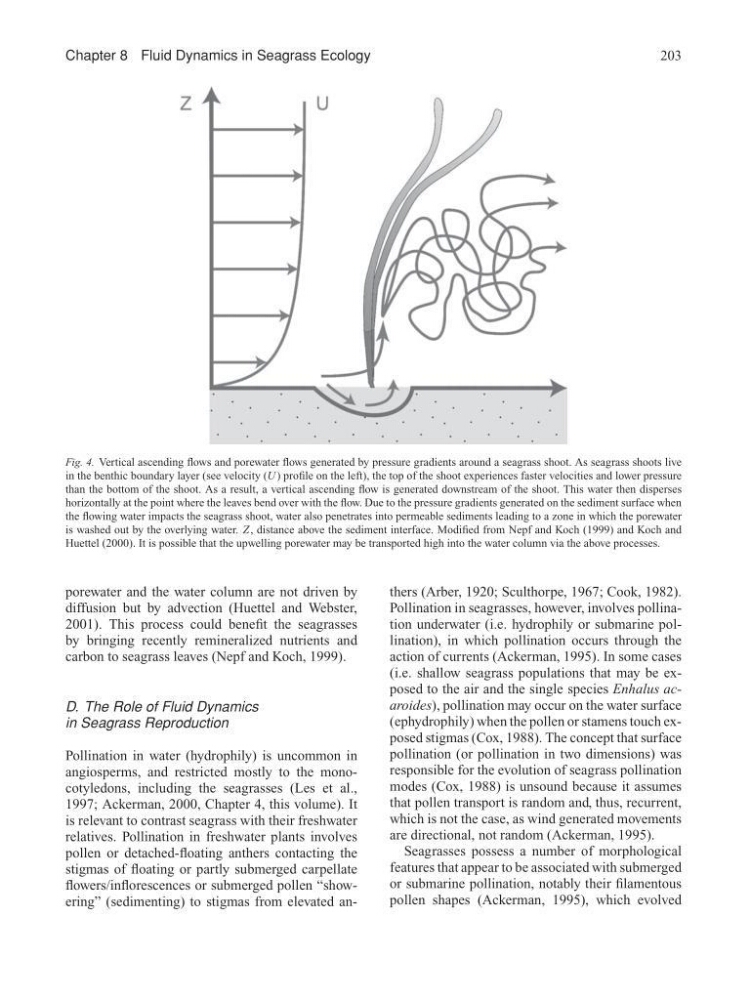
Fig. 4. Vertical ascending flows and porewater flows generated by pressure gradients around a seagrass shoot. As seagrass shoots live
in the benthic boundary layer (see velocity (U ) profile on the left), the top of the shoot experiences faster velocities and lower pressure
than the bottom of the shoot. As a result, a vertical ascending flow is generated downstream of the shoot. This water then disperses
horizontally at the point where the leaves bend over with the flow. Due to the pressure gradients generated on the sediment surface when
the flowing water impacts the seagrass shoot, water also penetrates into permeable sediments leading to a zone in which the porewater
is washed out by the overlying water. Z , distance above the sediment interface. Modified from Nepf and Koch (1999) and Koch and
Huettel (2000). It is possible that the upwelling porewater may be transported high into the water column via the above processes.
porewater and the water column are not driven by
diffusion but by advection (Huettel and Webster,
2001). This process could benefit the seagrasses
by bringing recently remineralized nutrients and
carbon to seagrass leaves (Nepf and Koch, 1999).
D. The Role of Fluid Dynamics
in Seagrass Reproduction
Pollination in water (hydrophily) is uncommon in
angiosperms, and restricted mostly to the monocotyledons, including the seagrasses (Les et al.,
1997; Ackerman, 2000, Chapter 4, this volume). It
is relevant to contrast seagrass with their freshwater
relatives. Pollination in freshwater plants involves
pollen or detached-floating anthers contacting the
stigmas of floating or partly submerged carpellate
flowers/inflorescences or submerged pollen “showering” (sedimenting) to stigmas from elevated anthers (Arber, 1920; Sculthorpe, 1967; Cook, 1982).
Pollination in seagrasses, however, involves pollination underwater (i.e. hydrophily or submarine pollination), in which pollination occurs through the
action of currents (Ackerman, 1995). In some cases
(i.e. shallow seagrass populations that may be exposed to the air and the single species Enhalus acaroides), pollination may occur on the water surface
(ephydrophily) when the pollen or stamens touch exposed stigmas (Cox, 1988). The concept that surface
pollination (or pollination in two dimensions) was
responsible for the evolution of seagrass pollination
modes (Cox, 1988) is unsound because it assumes
that pollen transport is random and, thus, recurrent,
which is not the case, as wind generated movements
are directional, not random (Ackerman, 1995).
Seagrasses possess a number of morphological
features that appear to be associated with submerged
or submarine pollination, notably their filamentous
pollen shapes (Ackerman, 1995), which evolved
203
Fig. 4. Vertical ascending flows and porewater flows generated by pressure gradients around a seagrass shoot. As seagrass shoots live
in the benthic boundary layer (see velocity (U ) profile on the left), the top of the shoot experiences faster velocities and lower pressure
than the bottom of the shoot. As a result, a vertical ascending flow is generated downstream of the shoot. This water then disperses
horizontally at the point where the leaves bend over with the flow. Due to the pressure gradients generated on the sediment surface when
the flowing water impacts the seagrass shoot, water also penetrates into permeable sediments leading to a zone in which the porewater
is washed out by the overlying water. Z , distance above the sediment interface. Modified from Nepf and Koch (1999) and Koch and
Huettel (2000). It is possible that the upwelling porewater may be transported high into the water column via the above processes.
porewater and the water column are not driven by
diffusion but by advection (Huettel and Webster,
2001). This process could benefit the seagrasses
by bringing recently remineralized nutrients and
carbon to seagrass leaves (Nepf and Koch, 1999).
D. The Role of Fluid Dynamics
in Seagrass Reproduction
Pollination in water (hydrophily) is uncommon in
angiosperms, and restricted mostly to the monocotyledons, including the seagrasses (Les et al.,
1997; Ackerman, 2000, Chapter 4, this volume). It
is relevant to contrast seagrass with their freshwater
relatives. Pollination in freshwater plants involves
pollen or detached-floating anthers contacting the
stigmas of floating or partly submerged carpellate
flowers/inflorescences or submerged pollen “showering” (sedimenting) to stigmas from elevated anthers (Arber, 1920; Sculthorpe, 1967; Cook, 1982).
Pollination in seagrasses, however, involves pollination underwater (i.e. hydrophily or submarine pollination), in which pollination occurs through the
action of currents (Ackerman, 1995). In some cases
(i.e. shallow seagrass populations that may be exposed to the air and the single species Enhalus acaroides), pollination may occur on the water surface
(ephydrophily) when the pollen or stamens touch exposed stigmas (Cox, 1988). The concept that surface
pollination (or pollination in two dimensions) was
responsible for the evolution of seagrass pollination
modes (Cox, 1988) is unsound because it assumes
that pollen transport is random and, thus, recurrent,
which is not the case, as wind generated movements
are directional, not random (Ackerman, 1995).
Seagrasses possess a number of morphological
features that appear to be associated with submerged
or submarine pollination, notably their filamentous
pollen shapes (Ackerman, 1995), which evolved