

Chapter 7 Carbon Flux in Seagrasses
185
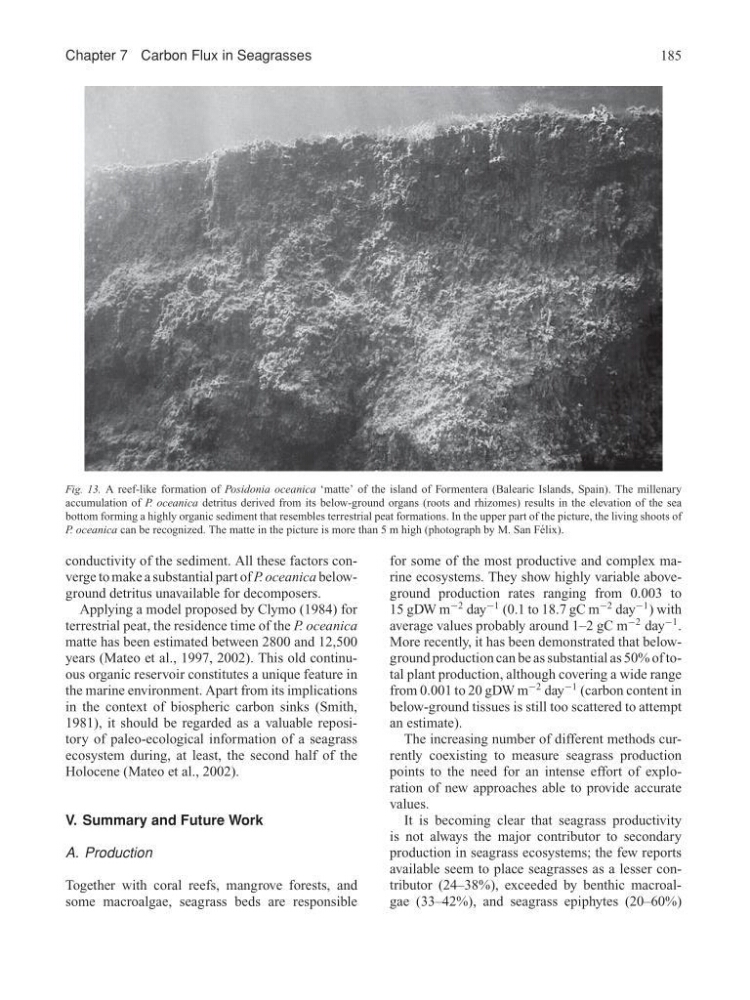
Fig. 13. A reef-like formation of Posidonia oceanica ‘matte’ of the island of Formentera (Balearic Islands, Spain). The millenary
accumulation of P. oceanica detritus derived from its below-ground organs (roots and rhizomes) results in the elevation of the sea
bottom forming a highly organic sediment that resembles terrestrial peat formations. In the upper part of the picture, the living shoots of
P. oceanica can be recognized. The matte in the picture is more than 5 m high (photograph by M. San F´ elix).
conductivity of the sediment. All these factors converge to make a substantial part of P. oceanica belowground detritus unavailable for decomposers.
Applying a model proposed by Clymo (1984) for
terrestrial peat, the residence time of the P. oceanica
matte has been estimated between 2800 and 12,500
years (Mateo et al., 1997, 2002). This old continuous organic reservoir constitutes a unique feature in
the marine environment. Apart from its implications
in the context of biospheric carbon sinks (Smith,
1981), it should be regarded as a valuable repository of paleo-ecological information of a seagrass
ecosystem during, at least, the second half of the
Holocene (Mateo et al., 2002).
V. Summary and Future Work
A. Production
Together with coral reefs, mangrove forests, and
some macroalgae, seagrass beds are responsible
for some of the most productive and complex marine ecosystems. They show highly variable aboveground production rates ranging from 0.003 to
15 gDW m
−2 day
−1 (0.1 to 18.7 gC m
−2 day
−1 ) with
average values probably around 1–2 gC m
−2 day
−1 .
More recently, it has been demonstrated that belowground production can be as substantial as 50% of total plant production, although covering a wide range
from 0.001 to 20 gDW m
−2 day
−1 (carbon content in
below-ground tissues is still too scattered to attempt
an estimate).
The increasing number of different methods currently coexisting to measure seagrass production
points to the need for an intense effort of exploration of new approaches able to provide accurate
values.
It is becoming clear that seagrass productivity
is not always the major contributor to secondary
production in seagrass ecosystems; the few reports
available seem to place seagrasses as a lesser contributor (24–38%), exceeded by benthic macroalgae (33–42%), and seagrass epiphytes (20–60%)
185
Fig. 13. A reef-like formation of Posidonia oceanica ‘matte’ of the island of Formentera (Balearic Islands, Spain). The millenary
accumulation of P. oceanica detritus derived from its below-ground organs (roots and rhizomes) results in the elevation of the sea
bottom forming a highly organic sediment that resembles terrestrial peat formations. In the upper part of the picture, the living shoots of
P. oceanica can be recognized. The matte in the picture is more than 5 m high (photograph by M. San F´ elix).
conductivity of the sediment. All these factors converge to make a substantial part of P. oceanica belowground detritus unavailable for decomposers.
Applying a model proposed by Clymo (1984) for
terrestrial peat, the residence time of the P. oceanica
matte has been estimated between 2800 and 12,500
years (Mateo et al., 1997, 2002). This old continuous organic reservoir constitutes a unique feature in
the marine environment. Apart from its implications
in the context of biospheric carbon sinks (Smith,
1981), it should be regarded as a valuable repository of paleo-ecological information of a seagrass
ecosystem during, at least, the second half of the
Holocene (Mateo et al., 2002).
V. Summary and Future Work
A. Production
Together with coral reefs, mangrove forests, and
some macroalgae, seagrass beds are responsible
for some of the most productive and complex marine ecosystems. They show highly variable aboveground production rates ranging from 0.003 to
15 gDW m
−2 day
−1 (0.1 to 18.7 gC m
−2 day
−1 ) with
average values probably around 1–2 gC m
−2 day
−1 .
More recently, it has been demonstrated that belowground production can be as substantial as 50% of total plant production, although covering a wide range
from 0.001 to 20 gDW m
−2 day
−1 (carbon content in
below-ground tissues is still too scattered to attempt
an estimate).
The increasing number of different methods currently coexisting to measure seagrass production
points to the need for an intense effort of exploration of new approaches able to provide accurate
values.
It is becoming clear that seagrass productivity
is not always the major contributor to secondary
production in seagrass ecosystems; the few reports
available seem to place seagrasses as a lesser contributor (24–38%), exceeded by benthic macroalgae (33–42%), and seagrass epiphytes (20–60%)