

166
M. A. Mateo, J. Cebri ´
an, K. Dunton, and T. Mutchler
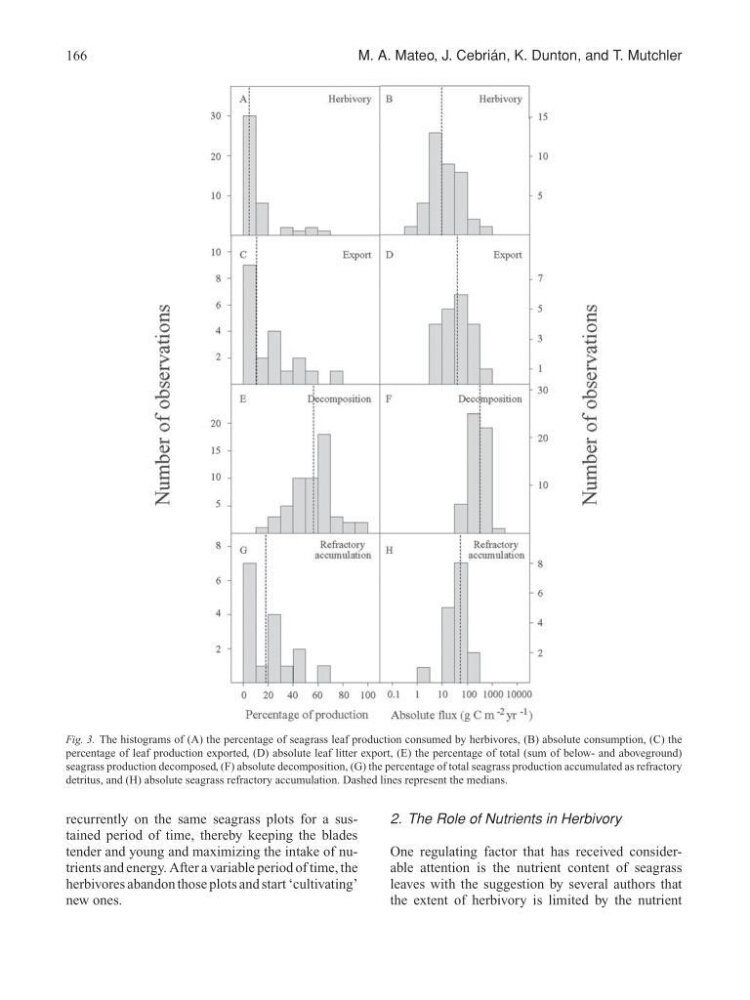
Fig. 3. The histograms of (A) the percentage of seagrass leaf production consumed by herbivores, (B) absolute consumption, (C) the
percentage of leaf production exported, (D) absolute leaf litter export, (E) the percentage of total (sum of below- and aboveground)
seagrass production decomposed, (F) absolute decomposition, (G) the percentage of total seagrass production accumulated as refractory
detritus, and (H) absolute seagrass refractory accumulation. Dashed lines represent the medians.
recurrently on the same seagrass plots for a sustained period of time, thereby keeping the blades
tender and young and maximizing the intake of nutrients and energy. After a variable period of time, the
herbivores abandon those plots and start ‘cultivating’
new ones.
2. The Role of Nutrients in Herbivory
One regulating factor that has received considerable attention is the nutrient content of seagrass
leaves with the suggestion by several authors that
the extent of herbivory is limited by the nutrient
M. A. Mateo, J. Cebri ´
an, K. Dunton, and T. Mutchler
Fig. 3. The histograms of (A) the percentage of seagrass leaf production consumed by herbivores, (B) absolute consumption, (C) the
percentage of leaf production exported, (D) absolute leaf litter export, (E) the percentage of total (sum of below- and aboveground)
seagrass production decomposed, (F) absolute decomposition, (G) the percentage of total seagrass production accumulated as refractory
detritus, and (H) absolute seagrass refractory accumulation. Dashed lines represent the medians.
recurrently on the same seagrass plots for a sustained period of time, thereby keeping the blades
tender and young and maximizing the intake of nutrients and energy. After a variable period of time, the
herbivores abandon those plots and start ‘cultivating’
new ones.
2. The Role of Nutrients in Herbivory
One regulating factor that has received considerable attention is the nutrient content of seagrass
leaves with the suggestion by several authors that
the extent of herbivory is limited by the nutrient