

146
N. Marb `
a, M. Holmer, and E. Gacia
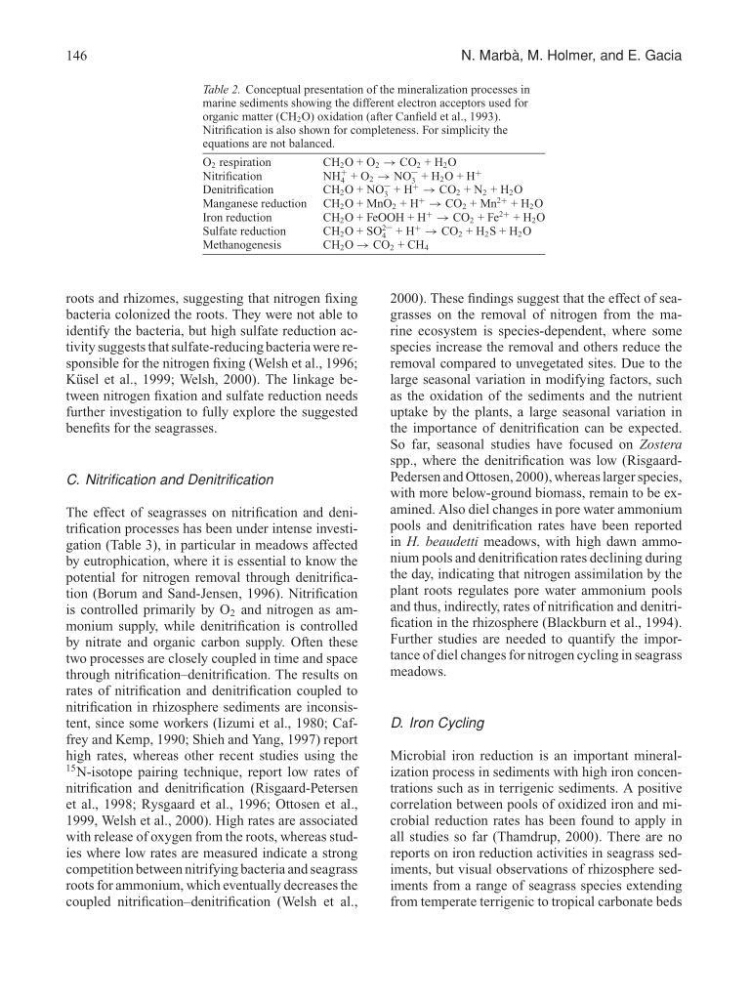
Table 2. Conceptual presentation of the mineralization processes in
marine sediments showing the different electron acceptors used for
organic matter (CH 2 O) oxidation (after Canfield et al., 1993).
Nitrification is also shown for completeness. For simplicity the
equations are not balanced.
O 2 respiration
CH 2 O + O 2 → CO 2 + H 2 O
Nitrification
NH
+
4 + O 2 → NO –
3 + H 2 O + H
+
Denitrification
CH 2 O + NO –
3 + H
+
→ CO 2 + N 2 + H 2 O
Manganese reduction CH 2 O + MnO 2 + H
+
→ CO 2 + Mn
2+ + H 2 O
Iron reduction
CH 2 O + FeOOH + H
+
→ CO 2 + Fe
2+ + H 2 O
Sulfate reduction
CH 2 O + SO
2–
4 + H
+
→ CO 2 + H 2 S + H 2 O
Methanogenesis
CH 2 O → CO 2 + CH 4
roots and rhizomes, suggesting that nitrogen fixing
bacteria colonized the roots. They were not able to
identify the bacteria, but high sulfate reduction activity suggests that sulfate-reducing bacteria were responsible for the nitrogen fixing (Welsh et al., 1996;
K¨ usel et al., 1999; Welsh, 2000). The linkage between nitrogen fixation and sulfate reduction needs
further investigation to fully explore the suggested
benefits for the seagrasses.
C. Nitrification and Denitrification
The effect of seagrasses on nitrification and denitrification processes has been under intense investigation (Table 3), in particular in meadows affected
by eutrophication, where it is essential to know the
potential for nitrogen removal through denitrification (Borum and Sand-Jensen, 1996). Nitrification
is controlled primarily by O 2 and nitrogen as ammonium supply, while denitrification is controlled
by nitrate and organic carbon supply. Often these
two processes are closely coupled in time and space
through nitrification–denitrification. The results on
rates of nitrification and denitrification coupled to
nitrification in rhizosphere sediments are inconsistent, since some workers (Iizumi et al., 1980; Caffrey and Kemp, 1990; Shieh and Yang, 1997) report
high rates, whereas other recent studies using the
15 N-isotope pairing technique, report low rates of
nitrification and denitrification (Risgaard-Petersen
et al., 1998; Rysgaard et al., 1996; Ottosen et al.,
1999, Welsh et al., 2000). High rates are associated
with release of oxygen from the roots, whereas studies where low rates are measured indicate a strong
competition between nitrifying bacteria and seagrass
roots for ammonium, which eventually decreases the
coupled nitrification–denitrification (Welsh et al.,
2000). These findings suggest that the effect of seagrasses on the removal of nitrogen from the marine ecosystem is species-dependent, where some
species increase the removal and others reduce the
removal compared to unvegetated sites. Due to the
large seasonal variation in modifying factors, such
as the oxidation of the sediments and the nutrient
uptake by the plants, a large seasonal variation in
the importance of denitrification can be expected.
So far, seasonal studies have focused on Zostera
spp., where the denitrification was low (RisgaardPedersen and Ottosen, 2000), whereas larger species,
with more below-ground biomass, remain to be examined. Also diel changes in pore water ammonium
pools and denitrification rates have been reported
in H. beaudetti meadows, with high dawn ammonium pools and denitrification rates declining during
the day, indicating that nitrogen assimilation by the
plant roots regulates pore water ammonium pools
and thus, indirectly, rates of nitrification and denitrification in the rhizosphere (Blackburn et al., 1994).
Further studies are needed to quantify the importance of diel changes for nitrogen cycling in seagrass
meadows.
D. Iron Cycling
Microbial iron reduction is an important mineralization process in sediments with high iron concentrations such as in terrigenic sediments. A positive
correlation between pools of oxidized iron and microbial reduction rates has been found to apply in
all studies so far (Thamdrup, 2000). There are no
reports on iron reduction activities in seagrass sediments, but visual observations of rhizosphere sediments from a range of seagrass species extending
from temperate terrigenic to tropical carbonate beds
N. Marb `
a, M. Holmer, and E. Gacia
Table 2. Conceptual presentation of the mineralization processes in
marine sediments showing the different electron acceptors used for
organic matter (CH 2 O) oxidation (after Canfield et al., 1993).
Nitrification is also shown for completeness. For simplicity the
equations are not balanced.
O 2 respiration
CH 2 O + O 2 → CO 2 + H 2 O
Nitrification
NH
+
4 + O 2 → NO –
3 + H 2 O + H
+
Denitrification
CH 2 O + NO –
3 + H
+
→ CO 2 + N 2 + H 2 O
Manganese reduction CH 2 O + MnO 2 + H
+
→ CO 2 + Mn
2+ + H 2 O
Iron reduction
CH 2 O + FeOOH + H
+
→ CO 2 + Fe
2+ + H 2 O
Sulfate reduction
CH 2 O + SO
2–
4 + H
+
→ CO 2 + H 2 S + H 2 O
Methanogenesis
CH 2 O → CO 2 + CH 4
roots and rhizomes, suggesting that nitrogen fixing
bacteria colonized the roots. They were not able to
identify the bacteria, but high sulfate reduction activity suggests that sulfate-reducing bacteria were responsible for the nitrogen fixing (Welsh et al., 1996;
K¨ usel et al., 1999; Welsh, 2000). The linkage between nitrogen fixation and sulfate reduction needs
further investigation to fully explore the suggested
benefits for the seagrasses.
C. Nitrification and Denitrification
The effect of seagrasses on nitrification and denitrification processes has been under intense investigation (Table 3), in particular in meadows affected
by eutrophication, where it is essential to know the
potential for nitrogen removal through denitrification (Borum and Sand-Jensen, 1996). Nitrification
is controlled primarily by O 2 and nitrogen as ammonium supply, while denitrification is controlled
by nitrate and organic carbon supply. Often these
two processes are closely coupled in time and space
through nitrification–denitrification. The results on
rates of nitrification and denitrification coupled to
nitrification in rhizosphere sediments are inconsistent, since some workers (Iizumi et al., 1980; Caffrey and Kemp, 1990; Shieh and Yang, 1997) report
high rates, whereas other recent studies using the
15 N-isotope pairing technique, report low rates of
nitrification and denitrification (Risgaard-Petersen
et al., 1998; Rysgaard et al., 1996; Ottosen et al.,
1999, Welsh et al., 2000). High rates are associated
with release of oxygen from the roots, whereas studies where low rates are measured indicate a strong
competition between nitrifying bacteria and seagrass
roots for ammonium, which eventually decreases the
coupled nitrification–denitrification (Welsh et al.,
2000). These findings suggest that the effect of seagrasses on the removal of nitrogen from the marine ecosystem is species-dependent, where some
species increase the removal and others reduce the
removal compared to unvegetated sites. Due to the
large seasonal variation in modifying factors, such
as the oxidation of the sediments and the nutrient
uptake by the plants, a large seasonal variation in
the importance of denitrification can be expected.
So far, seasonal studies have focused on Zostera
spp., where the denitrification was low (RisgaardPedersen and Ottosen, 2000), whereas larger species,
with more below-ground biomass, remain to be examined. Also diel changes in pore water ammonium
pools and denitrification rates have been reported
in H. beaudetti meadows, with high dawn ammonium pools and denitrification rates declining during
the day, indicating that nitrogen assimilation by the
plant roots regulates pore water ammonium pools
and thus, indirectly, rates of nitrification and denitrification in the rhizosphere (Blackburn et al., 1994).
Further studies are needed to quantify the importance of diel changes for nitrogen cycling in seagrass
meadows.
D. Iron Cycling
Microbial iron reduction is an important mineralization process in sediments with high iron concentrations such as in terrigenic sediments. A positive
correlation between pools of oxidized iron and microbial reduction rates has been found to apply in
all studies so far (Thamdrup, 2000). There are no
reports on iron reduction activities in seagrass sediments, but visual observations of rhizosphere sediments from a range of seagrass species extending
from temperate terrigenic to tropical carbonate beds