

Chapter 5 Seagrass Seeds and Dispersal Strategies
115
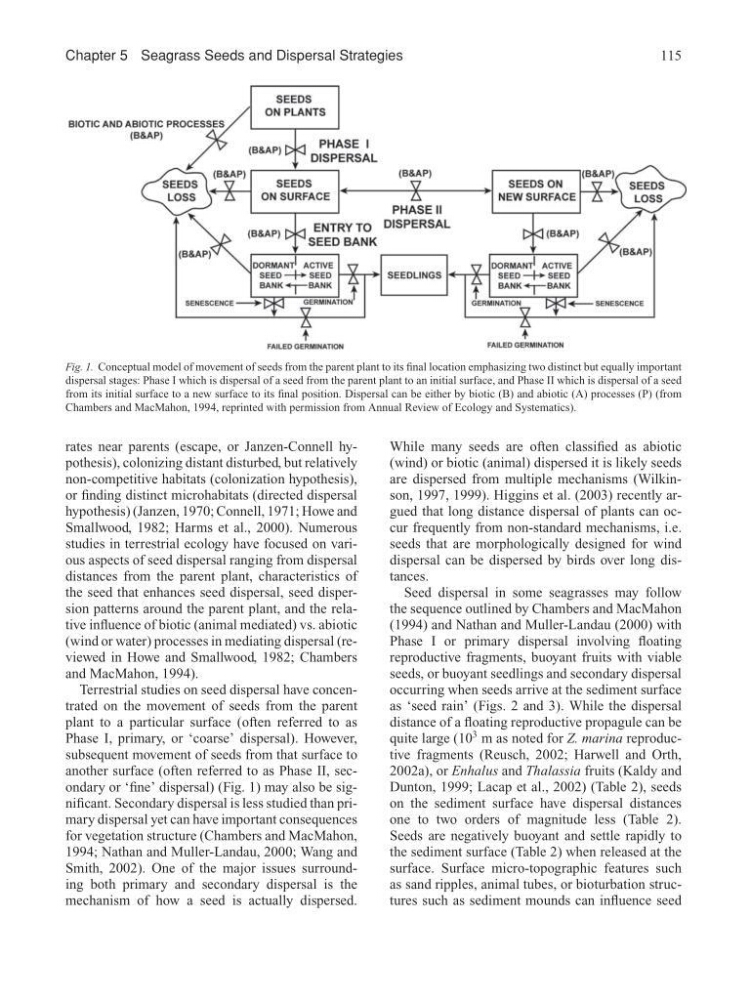
Fig. 1. Conceptual model of movement of seeds from the parent plant to its final location emphasizing two distinct but equally important
dispersal stages: Phase I which is dispersal of a seed from the parent plant to an initial surface, and Phase II which is dispersal of a seed
from its initial surface to a new surface to its final position. Dispersal can be either by biotic (B) and abiotic (A) processes (P) (from
Chambers and MacMahon, 1994, reprinted with permission from Annual Review of Ecology and Systematics).
rates near parents (escape, or Janzen-Connell hypothesis), colonizing distant disturbed, but relatively
non-competitive habitats (colonization hypothesis),
or finding distinct microhabitats (directed dispersal
hypothesis) (Janzen, 1970; Connell, 1971; Howe and
Smallwood, 1982; Harms et al., 2000). Numerous
studies in terrestrial ecology have focused on various aspects of seed dispersal ranging from dispersal
distances from the parent plant, characteristics of
the seed that enhances seed dispersal, seed dispersion patterns around the parent plant, and the relative influence of biotic (animal mediated) vs. abiotic
(wind or water) processes in mediating dispersal (reviewed in Howe and Smallwood, 1982; Chambers
and MacMahon, 1994).
Terrestrial studies on seed dispersal have concentrated on the movement of seeds from the parent
plant to a particular surface (often referred to as
Phase I, primary, or ‘coarse’ dispersal). However,
subsequent movement of seeds from that surface to
another surface (often referred to as Phase II, secondary or ‘fine’ dispersal) (Fig. 1) may also be significant. Secondary dispersal is less studied than primary dispersal yet can have important consequences
for vegetation structure (Chambers and MacMahon,
1994; Nathan and Muller-Landau, 2000; Wang and
Smith, 2002). One of the major issues surrounding both primary and secondary dispersal is the
mechanism of how a seed is actually dispersed.
While many seeds are often classified as abiotic
(wind) or biotic (animal) dispersed it is likely seeds
are dispersed from multiple mechanisms (Wilkinson, 1997, 1999). Higgins et al. (2003) recently argued that long distance dispersal of plants can occur frequently from non-standard mechanisms, i.e.
seeds that are morphologically designed for wind
dispersal can be dispersed by birds over long distances.
Seed dispersal in some seagrasses may follow
the sequence outlined by Chambers and MacMahon
(1994) and Nathan and Muller-Landau (2000) with
Phase I or primary dispersal involving floating
reproductive fragments, buoyant fruits with viable
seeds, or buoyant seedlings and secondary dispersal
occurring when seeds arrive at the sediment surface
as ‘seed rain’ (Figs. 2 and 3). While the dispersal
distance of a floating reproductive propagule can be
quite large (10
3 m as noted for Z. marina reproductive fragments (Reusch, 2002; Harwell and Orth,
2002a), or Enhalus and Thalassia fruits (Kaldy and
Dunton, 1999; Lacap et al., 2002) (Table 2), seeds
on the sediment surface have dispersal distances
one to two orders of magnitude less (Table 2).
Seeds are negatively buoyant and settle rapidly to
the sediment surface (Table 2) when released at the
surface. Surface micro-topographic features such
as sand ripples, animal tubes, or bioturbation structures such as sediment mounds can influence seed
115
Fig. 1. Conceptual model of movement of seeds from the parent plant to its final location emphasizing two distinct but equally important
dispersal stages: Phase I which is dispersal of a seed from the parent plant to an initial surface, and Phase II which is dispersal of a seed
from its initial surface to a new surface to its final position. Dispersal can be either by biotic (B) and abiotic (A) processes (P) (from
Chambers and MacMahon, 1994, reprinted with permission from Annual Review of Ecology and Systematics).
rates near parents (escape, or Janzen-Connell hypothesis), colonizing distant disturbed, but relatively
non-competitive habitats (colonization hypothesis),
or finding distinct microhabitats (directed dispersal
hypothesis) (Janzen, 1970; Connell, 1971; Howe and
Smallwood, 1982; Harms et al., 2000). Numerous
studies in terrestrial ecology have focused on various aspects of seed dispersal ranging from dispersal
distances from the parent plant, characteristics of
the seed that enhances seed dispersal, seed dispersion patterns around the parent plant, and the relative influence of biotic (animal mediated) vs. abiotic
(wind or water) processes in mediating dispersal (reviewed in Howe and Smallwood, 1982; Chambers
and MacMahon, 1994).
Terrestrial studies on seed dispersal have concentrated on the movement of seeds from the parent
plant to a particular surface (often referred to as
Phase I, primary, or ‘coarse’ dispersal). However,
subsequent movement of seeds from that surface to
another surface (often referred to as Phase II, secondary or ‘fine’ dispersal) (Fig. 1) may also be significant. Secondary dispersal is less studied than primary dispersal yet can have important consequences
for vegetation structure (Chambers and MacMahon,
1994; Nathan and Muller-Landau, 2000; Wang and
Smith, 2002). One of the major issues surrounding both primary and secondary dispersal is the
mechanism of how a seed is actually dispersed.
While many seeds are often classified as abiotic
(wind) or biotic (animal) dispersed it is likely seeds
are dispersed from multiple mechanisms (Wilkinson, 1997, 1999). Higgins et al. (2003) recently argued that long distance dispersal of plants can occur frequently from non-standard mechanisms, i.e.
seeds that are morphologically designed for wind
dispersal can be dispersed by birds over long distances.
Seed dispersal in some seagrasses may follow
the sequence outlined by Chambers and MacMahon
(1994) and Nathan and Muller-Landau (2000) with
Phase I or primary dispersal involving floating
reproductive fragments, buoyant fruits with viable
seeds, or buoyant seedlings and secondary dispersal
occurring when seeds arrive at the sediment surface
as ‘seed rain’ (Figs. 2 and 3). While the dispersal
distance of a floating reproductive propagule can be
quite large (10
3 m as noted for Z. marina reproductive fragments (Reusch, 2002; Harwell and Orth,
2002a), or Enhalus and Thalassia fruits (Kaldy and
Dunton, 1999; Lacap et al., 2002) (Table 2), seeds
on the sediment surface have dispersal distances
one to two orders of magnitude less (Table 2).
Seeds are negatively buoyant and settle rapidly to
the sediment surface (Table 2) when released at the
surface. Surface micro-topographic features such
as sand ripples, animal tubes, or bioturbation structures such as sediment mounds can influence seed