

The Management of Eutrophicated Waters
57
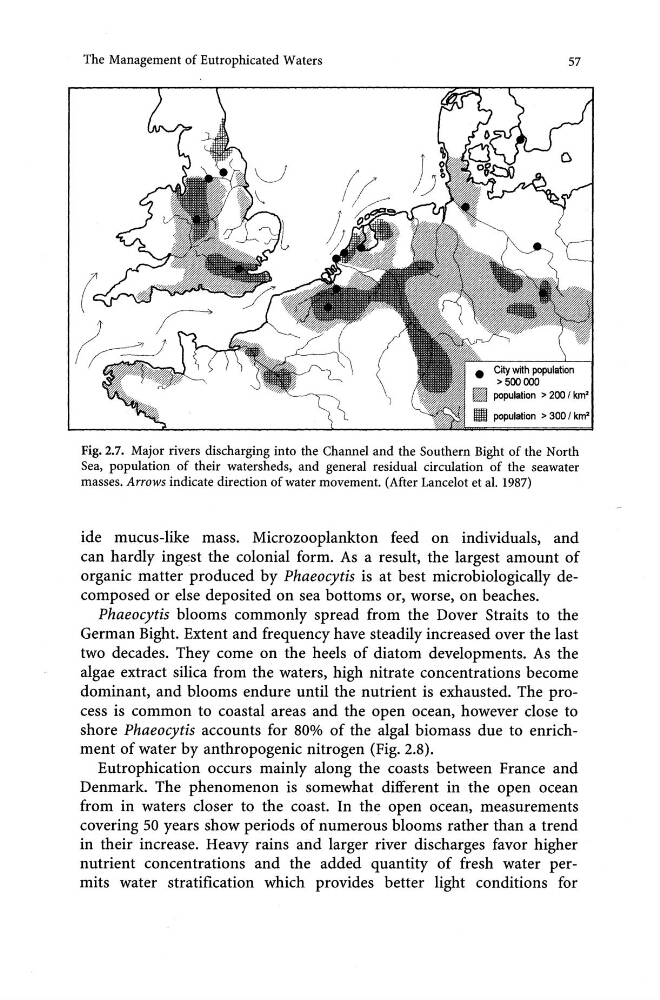
Fig. 2.7. Major rivers discharging into the Channel and the Southern Bight of the North
Sea, population of their watersheds, and general residual circulation of the seawater
masses. Arrows indicate direction of water movement. (After Lancelot et al. 1987)
ide mucus-like mass. Microzooplankton feed on individuals, and
can hardly ingest the colonial form. As a result, the largest amount of
organic matter produced by Phaeocytis is at best microbiologically decomposed or else deposited on sea bottoms or, worse, on beaches.
Phaeocytis blooms commonly spread from the Dover Straits to the
German Bight. Extent and frequency have steadily increased over the last
two decades. They come on the heels of diatom developments. As the
algae extract silica from the waters, high nitrate concentrations become
dominant, and blooms endure until the nutrient is exhausted. The process is common to coastal areas and the open ocean, however close to
shore Phaeocytis accounts for 80% of the algal biomass due to enrichment of water by anthropogenic nitrogen (Fig. 2.8).
Eutrophication occurs mainly along the coasts between France and
Denmark. The phenomenon is somewhat different in the open ocean
from in waters closer to the coast. In the open ocean, measurements
covering 50 years show periods of numerous blooms rather than a trend
in their increase. Heavy rains and larger river discharges favor higher
nutrient concentrations and the added quantity of fresh water permits water stratification which provides better light conditions for
57
Fig. 2.7. Major rivers discharging into the Channel and the Southern Bight of the North
Sea, population of their watersheds, and general residual circulation of the seawater
masses. Arrows indicate direction of water movement. (After Lancelot et al. 1987)
ide mucus-like mass. Microzooplankton feed on individuals, and
can hardly ingest the colonial form. As a result, the largest amount of
organic matter produced by Phaeocytis is at best microbiologically decomposed or else deposited on sea bottoms or, worse, on beaches.
Phaeocytis blooms commonly spread from the Dover Straits to the
German Bight. Extent and frequency have steadily increased over the last
two decades. They come on the heels of diatom developments. As the
algae extract silica from the waters, high nitrate concentrations become
dominant, and blooms endure until the nutrient is exhausted. The process is common to coastal areas and the open ocean, however close to
shore Phaeocytis accounts for 80% of the algal biomass due to enrichment of water by anthropogenic nitrogen (Fig. 2.8).
Eutrophication occurs mainly along the coasts between France and
Denmark. The phenomenon is somewhat different in the open ocean
from in waters closer to the coast. In the open ocean, measurements
covering 50 years show periods of numerous blooms rather than a trend
in their increase. Heavy rains and larger river discharges favor higher
nutrient concentrations and the added quantity of fresh water permits water stratification which provides better light conditions for