

442
Cape Midia
! Cystoseira bell
, "'
f ~ before 1973
I ri
I after 1989
F. Vasiliu
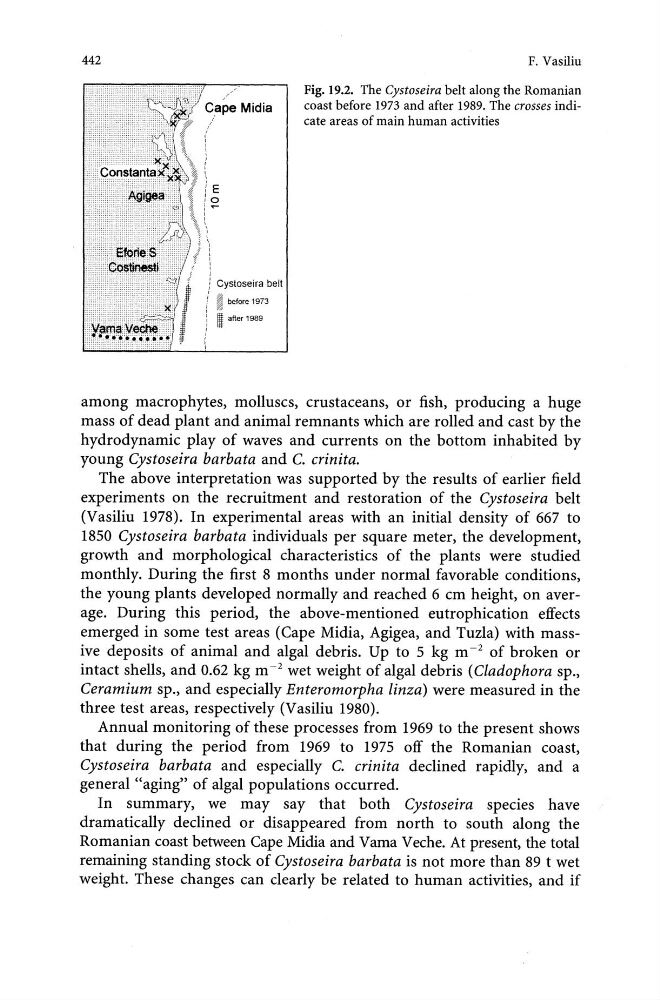
Fig. 19.2. The Cystoseira belt along the Romanian
coast before 1973 and after 1989. The crosses indicate areas of main human activities
among macrophytes, molluscs, crustaceans, or fish, producing a huge
mass of dead plant and animal remnants which are rolled and cast by the
hydrodynamic play of waves and currents on the bottom inhabited by
young Cystoseira barbata and C. crinita.
The above interpretation was supported by the results of earlier field
experiments on the recruitment and restoration of the Cystoseira belt
(Vasiliu 1978). In experimental areas with an initial density of 667 to
1850 Cystoseira barbata individuals per square meter, the development,
growth and morphological characteristics of the plants were studied
monthly. During the first 8 months under normal favorable conditions,
the young plants developed normally and reached 6 cm height, on average. During this period, the above-mentioned eutrophication effects
emerged in some test areas (Cape Midia, Agigea, and Tuzla) with massive deposits of animal and algal debris. Up to 5 kg m -2 of broken or
intact shells, and 0.62 kg m- 2 wet weight of algal debris (Cladophora sp.,
Ceramium sp., and especially Enteromorpha linza) were measured in the
three test areas, respectively (Vasiliu 1980).
Annual monitoring of these processes from 1969 to the present shows
that during the period from 1969 to 1975 off the Romanian coast,
Cystoseira barbata and especially C. crinita declined rapidly, and a
general "aging" of algal populations occurred.
In summary, we may say that both Cystoseira species have
dramatically declined or disappeared from north to south along the
Romanian coast between Cape Midia and Varna Veche. At present, the total
remaining standing stock of Cystoseira barbata is not more than 89 t wet
weight. These changes can clearly be related to human activities, and if
Cape Midia
! Cystoseira bell
, "'
f ~ before 1973
I ri
I after 1989
F. Vasiliu
Fig. 19.2. The Cystoseira belt along the Romanian
coast before 1973 and after 1989. The crosses indicate areas of main human activities
among macrophytes, molluscs, crustaceans, or fish, producing a huge
mass of dead plant and animal remnants which are rolled and cast by the
hydrodynamic play of waves and currents on the bottom inhabited by
young Cystoseira barbata and C. crinita.
The above interpretation was supported by the results of earlier field
experiments on the recruitment and restoration of the Cystoseira belt
(Vasiliu 1978). In experimental areas with an initial density of 667 to
1850 Cystoseira barbata individuals per square meter, the development,
growth and morphological characteristics of the plants were studied
monthly. During the first 8 months under normal favorable conditions,
the young plants developed normally and reached 6 cm height, on average. During this period, the above-mentioned eutrophication effects
emerged in some test areas (Cape Midia, Agigea, and Tuzla) with massive deposits of animal and algal debris. Up to 5 kg m -2 of broken or
intact shells, and 0.62 kg m- 2 wet weight of algal debris (Cladophora sp.,
Ceramium sp., and especially Enteromorpha linza) were measured in the
three test areas, respectively (Vasiliu 1980).
Annual monitoring of these processes from 1969 to the present shows
that during the period from 1969 to 1975 off the Romanian coast,
Cystoseira barbata and especially C. crinita declined rapidly, and a
general "aging" of algal populations occurred.
In summary, we may say that both Cystoseira species have
dramatically declined or disappeared from north to south along the
Romanian coast between Cape Midia and Varna Veche. At present, the total
remaining standing stock of Cystoseira barbata is not more than 89 t wet
weight. These changes can clearly be related to human activities, and if