

198
/)
NORTH SEA
DRNISH
WADDEN
SEA
GERMAN
WADDEN
SEA
•••••••••• <
...
...........
. . .. . " .
:::::.DE.I;i~~~k:
P.H. Nienhuis
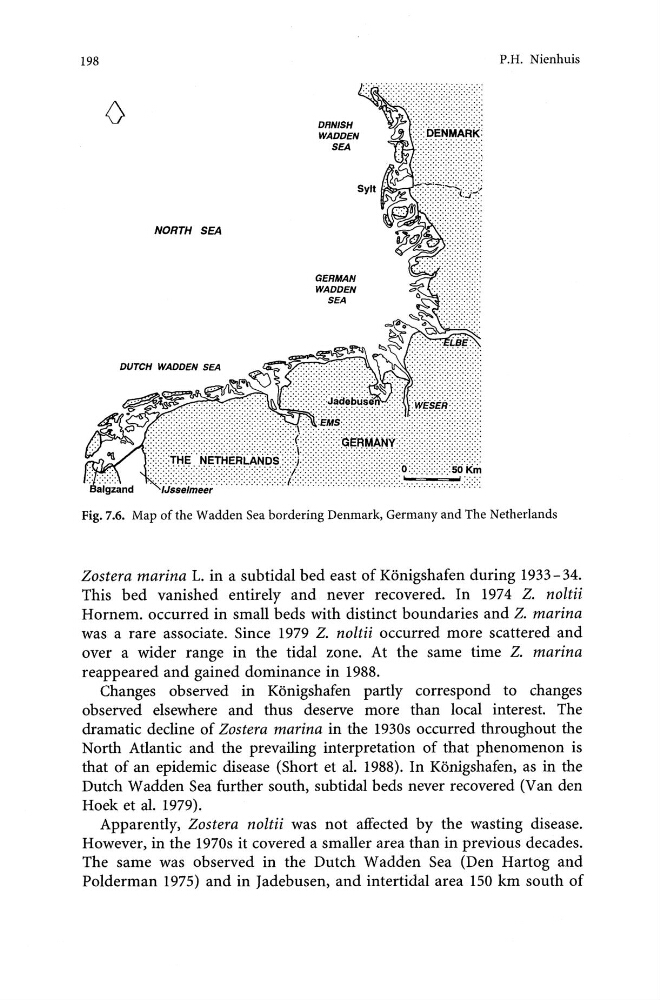
Fig.7.6. Map of the Wadden Sea bordering Denmark, Germany and The Netherlands
Zostera marina 1. in a subtidal bed east of Konigshafen during 1933-34.
This bed vanished entirely and never recovered. In 1974 Z. noltii
Hornem. occurred in small beds with distinct boundaries and Z. marina
was a rare associate. Since 1979 Z. noltii occurred more scattered and
over a wider range in the tidal zone. At the same time Z. marina
reappeared and gained dominance in 1988.
Changes observed in Konigshafen partly correspond to changes
observed elsewhere and thus deserve more than local interest. The
dramatic decline of Zostera marina in the 1930s occurred throughout the
North Atlantic and the prevailing interpretation of that phenomenon is
that of an epidemic disease (Short et al. 1988). In Konigshafen, as in the
Dutch Wadden Sea further south, subtidal beds never recovered (Van den
Hoek et al. 1979).
Apparently, Zostera noltii was not affected by the wasting disease.
However, in the 1970s it covered a smaller area than in previous decades.
The same was observed in the Dutch Wadden Sea (Den Hartog and
Polderman 1975) and in Jadebusen, and intertidal area 150 km south of
/)
NORTH SEA
DRNISH
WADDEN
SEA
GERMAN
WADDEN
SEA
•••••••••• <
...
...........
. . .. . " .
:::::.DE.I;i~~~k:
P.H. Nienhuis
Fig.7.6. Map of the Wadden Sea bordering Denmark, Germany and The Netherlands
Zostera marina 1. in a subtidal bed east of Konigshafen during 1933-34.
This bed vanished entirely and never recovered. In 1974 Z. noltii
Hornem. occurred in small beds with distinct boundaries and Z. marina
was a rare associate. Since 1979 Z. noltii occurred more scattered and
over a wider range in the tidal zone. At the same time Z. marina
reappeared and gained dominance in 1988.
Changes observed in Konigshafen partly correspond to changes
observed elsewhere and thus deserve more than local interest. The
dramatic decline of Zostera marina in the 1930s occurred throughout the
North Atlantic and the prevailing interpretation of that phenomenon is
that of an epidemic disease (Short et al. 1988). In Konigshafen, as in the
Dutch Wadden Sea further south, subtidal beds never recovered (Van den
Hoek et al. 1979).
Apparently, Zostera noltii was not affected by the wasting disease.
However, in the 1970s it covered a smaller area than in previous decades.
The same was observed in the Dutch Wadden Sea (Den Hartog and
Polderman 1975) and in Jadebusen, and intertidal area 150 km south of