

146
W. Schramm
cover (%)
50
10
10
50
5
10
1943 1944
1984
n=9
n:: 10
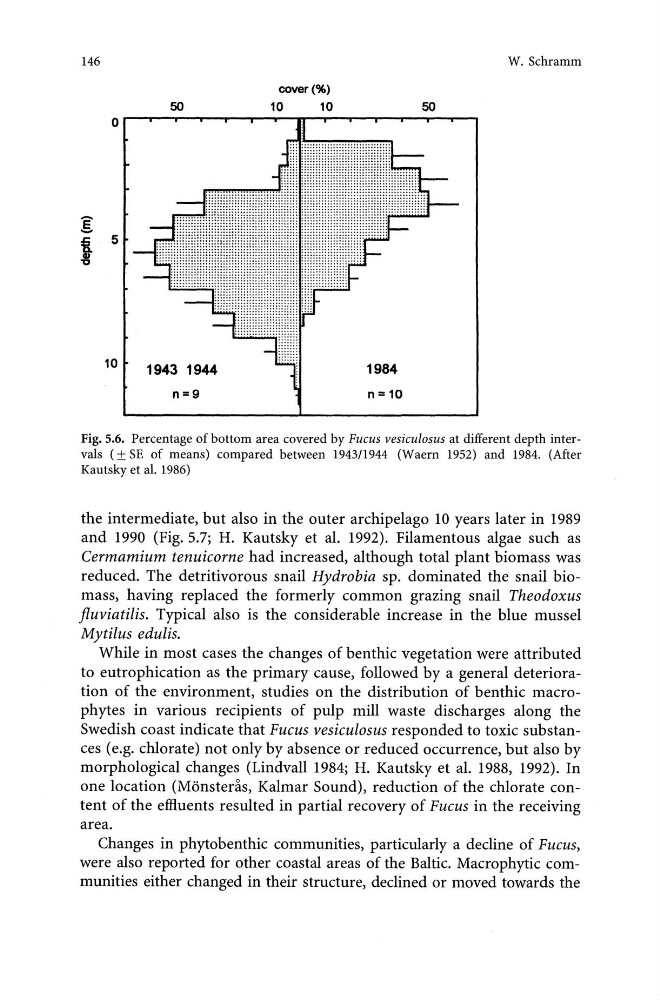
Fig. 5.6. Percentage of bottom area covered by Fucus vesiculosus at different depth intervals (± SE of means) compared between 194311944 (Waern 1952) and 1984. (After
Kautskyet al. 1986)
the intermediate, but also in the outer archipelago 10 years later in 1989
and 1990 (Fig. 5.7; H. Kautsky et al. 1992). Filamentous algae such as
Cermamium tenuicorne had increased, although total plant biomass was
reduced. The detritivorous snail Hydrobia sp. dominated the snail biomass, having replaced the formerly common grazing snail Theodoxus
fluviatilis. Typical also is the considerable increase in the blue mussel
Mytilus edulis.
While in most cases the changes of benthic vegetation were attributed
to eutrophication as the primary cause, followed by a general deterioration of the environment, studies on the distribution of benthic macrophytes in various recipients of pulp mill waste discharges along the
Swedish coast indicate that Fucus vesiculosus responded to toxic substances (e.g. chlorate) not only by absence or reduced occurrence, but also by
morphological changes (Lindvall 1984; H. Kautsky et al. 1988, 1992). In
one location (M6nsteras, Kalmar Sound), reduction of the chlorate content of the effluents resulted in partial recovery of Fucus in the receiving
area.
Changes in phytobenthic communities, particularly a decline of Fucus,
were also reported for other coastal areas of the Baltic. Macrophytic communities either changed in their structure, declined or moved towards the
W. Schramm
cover (%)
50
10
10
50
5
10
1943 1944
1984
n=9
n:: 10
Fig. 5.6. Percentage of bottom area covered by Fucus vesiculosus at different depth intervals (± SE of means) compared between 194311944 (Waern 1952) and 1984. (After
Kautskyet al. 1986)
the intermediate, but also in the outer archipelago 10 years later in 1989
and 1990 (Fig. 5.7; H. Kautsky et al. 1992). Filamentous algae such as
Cermamium tenuicorne had increased, although total plant biomass was
reduced. The detritivorous snail Hydrobia sp. dominated the snail biomass, having replaced the formerly common grazing snail Theodoxus
fluviatilis. Typical also is the considerable increase in the blue mussel
Mytilus edulis.
While in most cases the changes of benthic vegetation were attributed
to eutrophication as the primary cause, followed by a general deterioration of the environment, studies on the distribution of benthic macrophytes in various recipients of pulp mill waste discharges along the
Swedish coast indicate that Fucus vesiculosus responded to toxic substances (e.g. chlorate) not only by absence or reduced occurrence, but also by
morphological changes (Lindvall 1984; H. Kautsky et al. 1988, 1992). In
one location (M6nsteras, Kalmar Sound), reduction of the chlorate content of the effluents resulted in partial recovery of Fucus in the receiving
area.
Changes in phytobenthic communities, particularly a decline of Fucus,
were also reported for other coastal areas of the Baltic. Macrophytic communities either changed in their structure, declined or moved towards the