

(polyvinyl chloride) material that was cheaper and easier to use.
The Niskin bottle is currently the most commonly used device
for all hydrology work. The simplest bottle is a PVC cylinder
that can be hermetically sealed at both ends by removable valve
systems and that have systems for attaching them to a cable
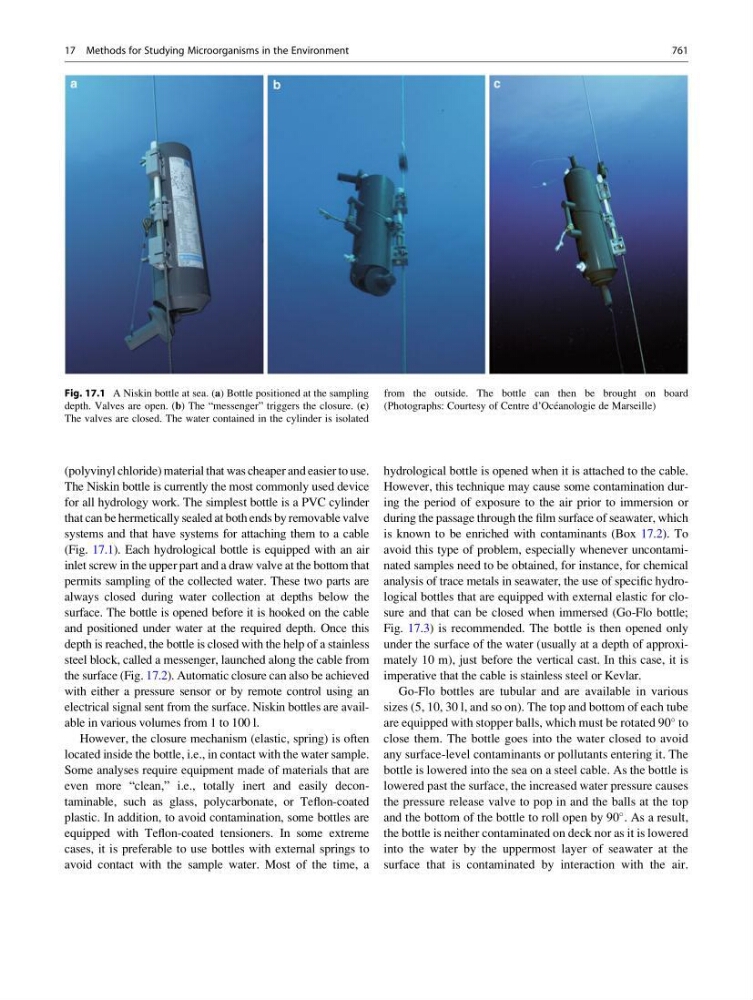
(Fig. 17.1). Each hydrological bottle is equipped with an air
inlet screw in the upper part and a draw valve at the bottom that
permits sampling of the collected water. These two parts are
always closed during water collection at depths below the
surface. The bottle is opened before it is hooked on the cable
and positioned under water at the required depth. Once this
depth is reached, the bottle is closed with the help of a stainless
steel block, called a messenger, launched along the cable from
the surface (Fig. 17.2). Automatic closure can also be achieved
with either a pressure sensor or by remote control using an
electrical signal sent from the surface. Niskin bottles are available in various volumes from 1 to 100 l.
However, the closure mechanism (elastic, spring) is often
located inside the bottle, i.e., in contact with the water sample.
Some analyses require equipment made of materials that are
even more “clean,” i.e., totally inert and easily decontaminable, such as glass, polycarbonate, or Teflon-coated
plastic. In addition, to avoid contamination, some bottles are
equipped with Teflon-coated tensioners. In some extreme
cases, it is preferable to use bottles with external springs to
avoid contact with the sample water. Most of the time, a
hydrological bottle is opened when it is attached to the cable.
However, this technique may cause some contamination during the period of exposure to the air prior to immersion or
during the passage through the film surface of seawater, which
is known to be enriched with contaminants (Box 17.2). To
avoid this type of problem, especially whenever uncontaminated samples need to be obtained, for instance, for chemical
analysis of trace metals in seawater, the use of specific hydrological bottles that are equipped with external elastic for closure and that can be closed when immersed (Go-Flo bottle;
Fig. 17.3) is recommended. The bottle is then opened only
under the surface of the water (usually at a depth of approximately 10 m), just before the vertical cast. In this case, it is
imperative that the cable is stainless steel or Kevlar.
Go-Flo bottles are tubular and are available in various
sizes (5, 10, 30 l, and so on). The top and bottom of each tube
are equipped with stopper balls, which must be rotated 90
to
close them. The bottle goes into the water closed to avoid
any surface-level contaminants or pollutants entering it. The
bottle is lowered into the sea on a steel cable. As the bottle is
lowered past the surface, the increased water pressure causes
the pressure release valve to pop in and the balls at the top
and the bottom of the bottle to roll open by 90
. As a result,
the bottle is neither contaminated on deck nor as it is lowered
into the water by the uppermost layer of seawater at the
surface that is contaminated by interaction with the air.
Fig. 17.1 A Niskin bottle at sea. (a) Bottle positioned at the sampling
depth. Valves are open. (b) The “messenger” triggers the closure. (c)
The valves are closed. The water contained in the cylinder is isolated
from the outside. The bottle can then be brought on board
(Photographs: Courtesy of Centre d’Oce ´anologie de Marseille)
17 Methods for Studying Microorganisms in the Environment
761