

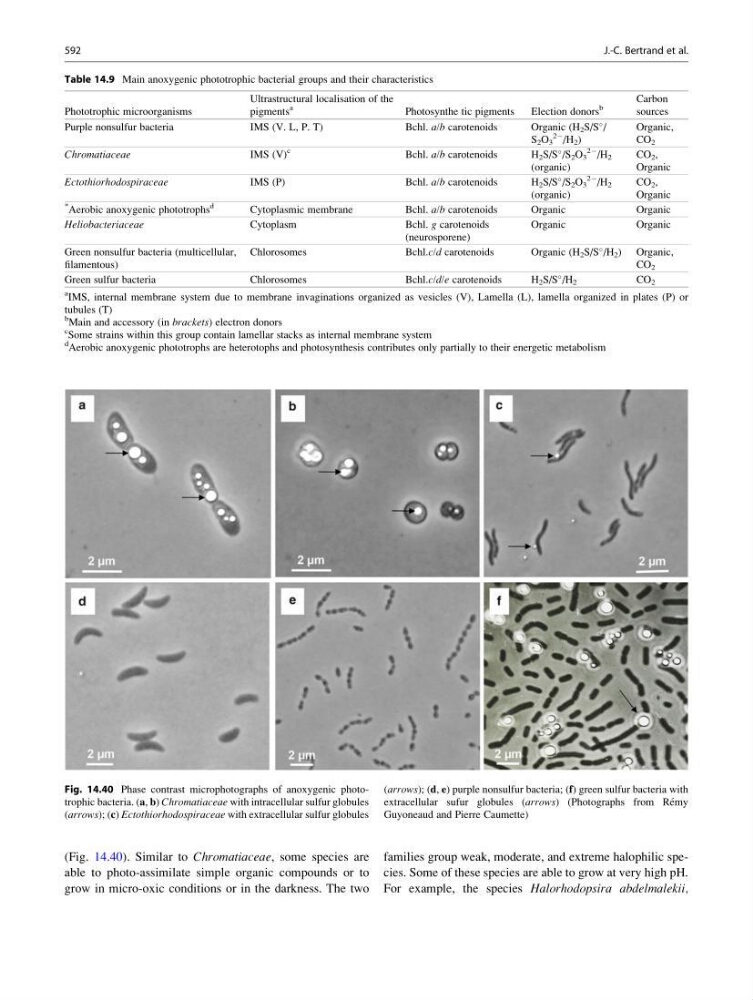
(Fig. 14.40). Similar to Chromatiaceae, some species are
able to photo-assimilate simple organic compounds or to
grow in micro-oxic conditions or in the darkness. The two
families group weak, moderate, and extreme halophilic species. Some of these species are able to grow at very high pH.
For example, the species Halorhodopsira abdelmalekii,
Table 14.9 Main anoxygenic phototrophic bacterial groups and their characteristics
Phototrophic microorganisms
Ultrastructural localisation of the
pigments
a
Photosynthe tic pigments
Election donors
b
Carbon
sources
Purple nonsulfur bacteria
IMS (V. L, P. T)
Bchl. a/b carotenoids
Organic (H 2 S/S
/
S 2 O 3
2À
/H 2 )
Organic,
CO 2
Chromatiaceae
IMS (V)
c
Bchl. a/b carotenoids
H 2 S/S
/S 2 O 3
2À
/H 2
(organic)
CO 2 ,
Organic
Ectothiorhodospiraceae
IMS (P)
Bchl. a/b carotenoids
H 2 S/S
/S 2 O 3
2À
/H 2
(organic)
CO 2 ,
Organic
*
Aerobic anoxygenic phototrophs
d
Cytoplasmic membrane
Bchl. a/b carotenoids
Organic
Organic
Heliobacteriaceae
Cytoplasm
Bchl. g carotenoids
(neurosporene)
Organic
Organic
Green nonsulfur bacteria (multicellular,
filamentous)
Chlorosomes
Bchl.c/d carotenoids
Organic (H 2 S/S
/H 2 ) Organic,
CO 2
Green sulfur bacteria
Chlorosomes
Bchl.c/d/e carotenoids
H 2 S/S
/H 2
CO 2
a
IMS, internal membrane system due to membrane invaginations organized as vesicles (V), Lamella (L), lamella organized in plates (P) or
tubules (T)
b
Main and accessory (in brackets) electron donors
c
Some strains within this group contain lamellar stacks as internal membrane system
d
Aerobic anoxygenic phototrophs are heterotophs and photosynthesis contributes only partially to their energetic metabolism
Fig. 14.40 Phase contrast microphotographs of anoxygenic phototrophic bacteria. (a, b) Chromatiaceae with intracellular sulfur globules
(arrows); (c) Ectothiorhodospiraceae with extracellular sulfur globules
(arrows); (d, e) purple nonsulfur bacteria; (f) green sulfur bacteria with
extracellular sufur globules (arrows) (Photographs from Re ´my
Guyoneaud and Pierre Caumette)
592
J.-C. Bertrand et al.