

can oxidize ammonium anaerobically using nitrite or
tetraoxide nitrogen (N 2 O 4 ) as electrons acceptor; denitrification in these oxygen-limiting conditions thus also allows
energy production in both nitrating and denitrifying bacteria
(Schmidt et al. 2004). The importance of this process
remains poorly known neither at the ecosystem level nor at
the physiology level for growth and survival of specific
nitrifying organisms. This needs to be further investigated,
considering the ecological role of nitrous oxide as a greenhouse gas.
Nitification is often attributed to chemiolitho-autotrophic
microorganisms in the genera Nitrosomonas or
Nitrosobacter. However, although there is little information
on this process, heterotrophic nitrification performed by
microorganisms (Fungi and prokaryotes) is known for long
time (Pedersen et al. 2002) but often been considered as a
minor process. Studies on a limited number of bacteria show
that heterotrophic nitrifying bacteria use similar mechanisms
to those of autotrophic bacteria. In contrast, heterotrophic
nitrification by Fungi uses different mechanisms. Targeted
studies on the competition between Paracoccus denitrificans
(nitrifying heterotroph, sometimes also called Thiospora
pantotropha) and Nitrosomonas, conducted in varying oxygen conditions and different C:N ratios, show that under
limiting oxygenation conditions with high C:N ratios (10),
heterotrophic nitrification becomes the dominant process
and can contribute up to 60 % of the total nitrification (Jetten
et al. 1997).
Many environmental factors influence the reactions
involved in nitrification. The presence of oxygen is essential
for the development of these microorganisms that carry out
aerobic respiration. The oxidation of nitrite is reduced in the
presence of light, but the mechanisms involved remain
poorly understood. pH (optimum between 7.5 and 8) and
temperature are also important factors because they can
affect the affinity of the enzyme for its substrate. Salinity
seems to have a very marked effect on the structure of the
nitrifying community.
Assimilation of organic carbon has been demonstrated in
different AOB, but does not seem to confer an advantage on
the growth of these microorganisms. The AOB could play an
important role in the degradation of organic pollutants in
oligotrophic environments. The low specificity of ammonium monooxygenase would allow oxidation of compounds
such as methanol, bromoethane, cyclohexane, benzene, propylene, or phenol. In contrast, AOB can grow under
mixotrophic conditions. This could explain the abundance
and the ubiquity of these microorganisms, and the absence of
nitrite accumulation of in most ecosystems.
14.3.5 Production of Dinitrogen
For a long time, denitrification has been considered as the
only process leading to the production of dinitrogen and
responsible of the net loss of nitrogen from the ecosystems.
Another process producing dinitrogen called anammox (acronym for “anaerobic ammonium oxidation ”(Fig. 14.25)) was
discovered in wastewater treatment systems. This process
allows the anaerobic conversion of ammonium and nitrite
into molecular nitrogen.
14.3.5.1 Denitrification
Denitrification is the anaerobic process of microbial respiration, alternative to the respiration of oxygen, where nitrate
instead of oxygen is used as the terminal acceptor of
electrons in the anaerobic mineralization of organic matter.
Denitrification corresponds to a dissimilatory reduction of
nitrate, as opposed to the assimilation of nitrogenous
compounds which leads to the synthesis of organic matter.
Nitrous oxide and dinitrogen are the end products of
denitrification whereas ammonium is the end product of
the dissimilatory nitrate reduction to ammonium (DNRA).
The reduction of nitrate to nitrite is common to both
metabolisms, but in the case of DNRA, nitrite formed is
then reduced to ammonium which is not a gas. However,
some denitrifying bacteria can only achieve some steps:
reduction of nitrate to nitrite (nitrate reduction) and reduction of nitrous oxide to dinitrogen. In these cases, denitrification is known as incomplete denitrification.
Ammonium oxidation (Nitrosococcus)
NH 3 + O 2
Cyt C 554
Aerobiosis
[NH 2 OH]
2H + + 2e -
H 2 O
Ammoniac
Mono-oxygenase
NO 2
-
5H + + 4e -
Hydroxylamine
oxidoreductase
Respiratory chain
2e -
ADP + Pi
O 2
2H 2 O
ATP
Nitrite oxidation (Nitrococcus)
Nitrite
oxidoreductase
NO 2
- + H 2 O
Aerobiosis
2e - + 2H +
[N(OH) 2 ]
NO 3
-
Respiratory chain
ATP
ADP + Pi
O 2
2H 2 O
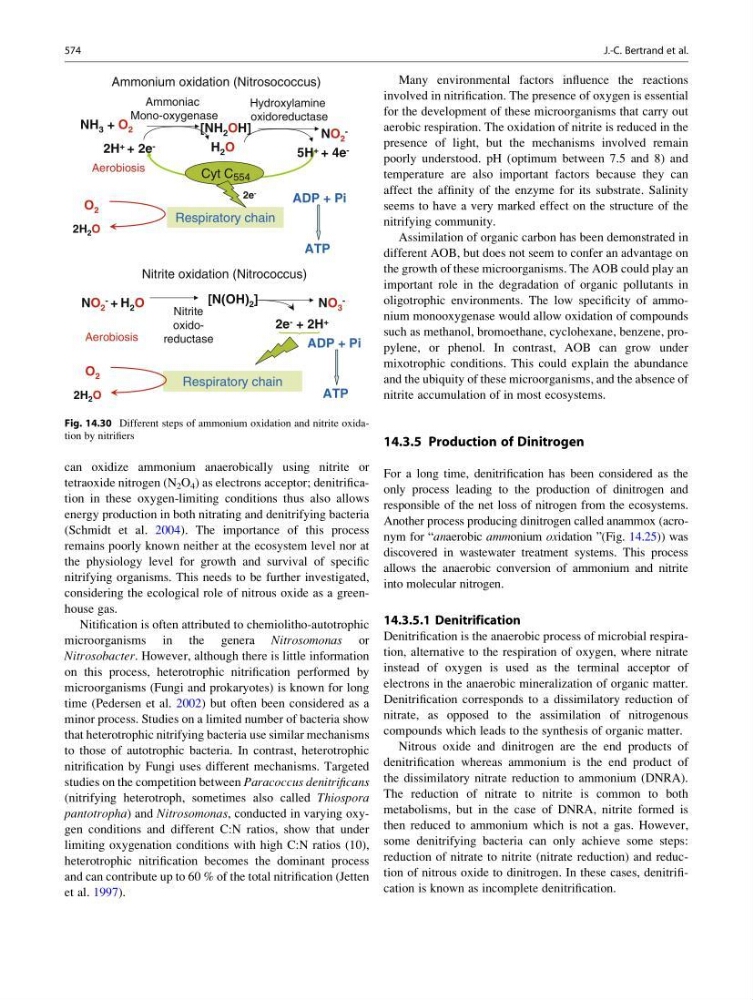
Fig. 14.30 Different steps of ammonium oxidation and nitrite oxidation by nitrifiers
574
J.-C. Bertrand et al.