

Model outputs are generally compared with in situ determination of production made by using the
14 C method,
whose limits will be discussed later (cf. Sect. 17.4.2).
The various estimates of global oceanic NPP vary from 45
to 57 Pg C year
À1
, about half of the world NPP (Table 14.2). It
is important to note that these estimates do not take into
account the highly productive coastal waters. This is partially
explained by the inability to infer chlorophyll concentrations
from ocean color data from these regions.
With a biomass less than 1 Pg C, phytoplankton
represents less than 1 % of the total biomass of the Earth
primary producers but is responsible for about 45 % of the
global NPP. The turnover of marine plant organic matter is
of the order of 1 week. The contrast with the continental
domain is important because the biomass of terrestrial plants
(which includes wood) is of the order of 650 Pg C for a NPP
of the order of 56.4 Pg C year
À1 , implying a turnover of
approximately 10 years.
Respiration
“Respiration” is a generic term that groups together very
different biochemical mechanisms (cf. Sect. 3.2.2). For
example, aquatic photolithotrophs exhibit at least six different metabolic pathways that consume dioxygen: Mehler
Table 14.2 Seasonal and annual net primary production (Pg C year
À1
,
According to Field et al. 1998). Biogeographic zones are distinguished
by their chlorophyll a concentration <0.1 mg m
À3 (oligotrophic),
0.1–1 mg m
À3 (mesotrophic) and >1 mg m
À3 (eutrophic). Macrophytes
(obviously benthic) are shown to provide an overall estimate of NPP
Ocean
Continent
Seasonal averages
April–June
10.9
July–September
13.0
October–December
12.3
January–March
11.3
Annual averages by biogeographic zone
Oligotrophic
11.0
Mesotrophic
27.4
Eutrophic
9.1
Macrophytes
1.0
Total
48.5
56.4
Photic layer
Aphotic layer
Sediments
~ 100 m
~ 3700 m
CO 2
CO 2
CO 2
Rh
GPP
EP
NPP
Rh
GPB
NPP
Ra
GPB
Ra
Ra
NPP
Rh
PE
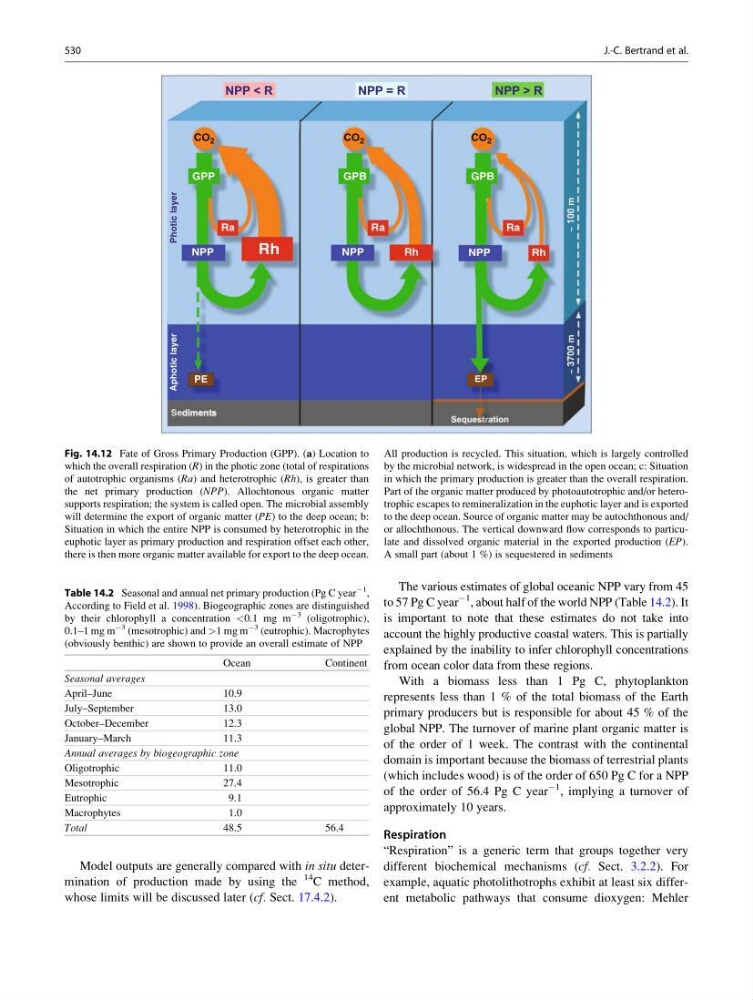
Fig. 14.12 Fate of Gross Primary Production (GPP). (a) Location to
which the overall respiration (R) in the photic zone (total of respirations
of autotrophic organisms (Ra) and heterotrophic (Rh), is greater than
the net primary production (NPP). Allochtonous organic matter
supports respiration; the system is called open. The microbial assembly
will determine the export of organic matter (PE) to the deep ocean; b:
Situation in which the entire NPP is consumed by heterotrophic in the
euphotic layer as primary production and respiration offset each other,
there is then more organic matter available for export to the deep ocean.
All production is recycled. This situation, which is largely controlled
by the microbial network, is widespread in the open ocean; c: Situation
in which the primary production is greater than the overall respiration.
Part of the organic matter produced by photoautotrophic and/or heterotrophic escapes to remineralization in the euphotic layer and is exported
to the deep ocean. Source of organic matter may be autochthonous and/
or allochthonous. The vertical downward flow corresponds to particulate and dissolved organic material in the exported production (EP).
A small part (about 1 %) is sequestered in sediments
530
J.-C. Bertrand et al.
14 C method,
whose limits will be discussed later (cf. Sect. 17.4.2).
The various estimates of global oceanic NPP vary from 45
to 57 Pg C year
À1
, about half of the world NPP (Table 14.2). It
is important to note that these estimates do not take into
account the highly productive coastal waters. This is partially
explained by the inability to infer chlorophyll concentrations
from ocean color data from these regions.
With a biomass less than 1 Pg C, phytoplankton
represents less than 1 % of the total biomass of the Earth
primary producers but is responsible for about 45 % of the
global NPP. The turnover of marine plant organic matter is
of the order of 1 week. The contrast with the continental
domain is important because the biomass of terrestrial plants
(which includes wood) is of the order of 650 Pg C for a NPP
of the order of 56.4 Pg C year
À1 , implying a turnover of
approximately 10 years.
Respiration
“Respiration” is a generic term that groups together very
different biochemical mechanisms (cf. Sect. 3.2.2). For
example, aquatic photolithotrophs exhibit at least six different metabolic pathways that consume dioxygen: Mehler
Table 14.2 Seasonal and annual net primary production (Pg C year
À1
,
According to Field et al. 1998). Biogeographic zones are distinguished
by their chlorophyll a concentration <0.1 mg m
À3 (oligotrophic),
0.1–1 mg m
À3 (mesotrophic) and >1 mg m
À3 (eutrophic). Macrophytes
(obviously benthic) are shown to provide an overall estimate of NPP
Ocean
Continent
Seasonal averages
April–June
10.9
July–September
13.0
October–December
12.3
January–March
11.3
Annual averages by biogeographic zone
Oligotrophic
11.0
Mesotrophic
27.4
Eutrophic
9.1
Macrophytes
1.0
Total
48.5
56.4
Photic layer
Aphotic layer
Sediments
~ 100 m
~ 3700 m
CO 2
CO 2
CO 2
Rh
GPP
EP
NPP
Rh
GPB
NPP
Ra
GPB
Ra
Ra
NPP
Rh
PE
Fig. 14.12 Fate of Gross Primary Production (GPP). (a) Location to
which the overall respiration (R) in the photic zone (total of respirations
of autotrophic organisms (Ra) and heterotrophic (Rh), is greater than
the net primary production (NPP). Allochtonous organic matter
supports respiration; the system is called open. The microbial assembly
will determine the export of organic matter (PE) to the deep ocean; b:
Situation in which the entire NPP is consumed by heterotrophic in the
euphotic layer as primary production and respiration offset each other,
there is then more organic matter available for export to the deep ocean.
All production is recycled. This situation, which is largely controlled
by the microbial network, is widespread in the open ocean; c: Situation
in which the primary production is greater than the overall respiration.
Part of the organic matter produced by photoautotrophic and/or heterotrophic escapes to remineralization in the euphotic layer and is exported
to the deep ocean. Source of organic matter may be autochthonous and/
or allochthonous. The vertical downward flow corresponds to particulate and dissolved organic material in the exported production (EP).
A small part (about 1 %) is sequestered in sediments
530
J.-C. Bertrand et al.