

systems is underlined by the fact that most prokaryotic
genomes encode them. Moreover, many genomes encode
several different M/R systems. For example, the genome of
H. pylori contains eleven M/R systems, representing ~1 % of
its genes. Despite being highly efficient, M/R systems are not
infallible. For instance, if the exogenous DNA harbors methylation patterns similar to those of the recipient cell, it will not
be degraded by the restriction system. When the foreign DNA
is not methylated, it could be methylated by the methylases
before being degraded by the endonucleases. If the exogenous
DNA is single-stranded (as in the case of transformation), the
synthesis of the complementary strand by the replication
machinery of the recipient cell may allow it to escape to the
M/R system of the host. Phages and plasmids have developed
strategies to escape to the M/R systems. These include (1) the
presence of specific modifications in their DNA that prevent
the action of endonucleases, (2) the underrepresentation of
sequences recognized by endonucleases, and (3) the presence
of genes encoding proteins that interfere with the M/R
systems.
The endonucleases of the M/S systems cut the exogenous
double-stranded DNA. The ends of DNA resulting from the
action of these endonucleases are then degraded by
exonucleases. Eventually, these two processes lead to a
significant reduction of the size of the exogenous DNA,
preventing its integration in the genome of the host. Alternative systems of exogenous DNA recognition exist but will
not be described here. Despite their effectiveness, it can
happen that exogenous DNA fragments escape the defensive
M/R systems of the cells.
The integration of exogenous DNA into the chromosome
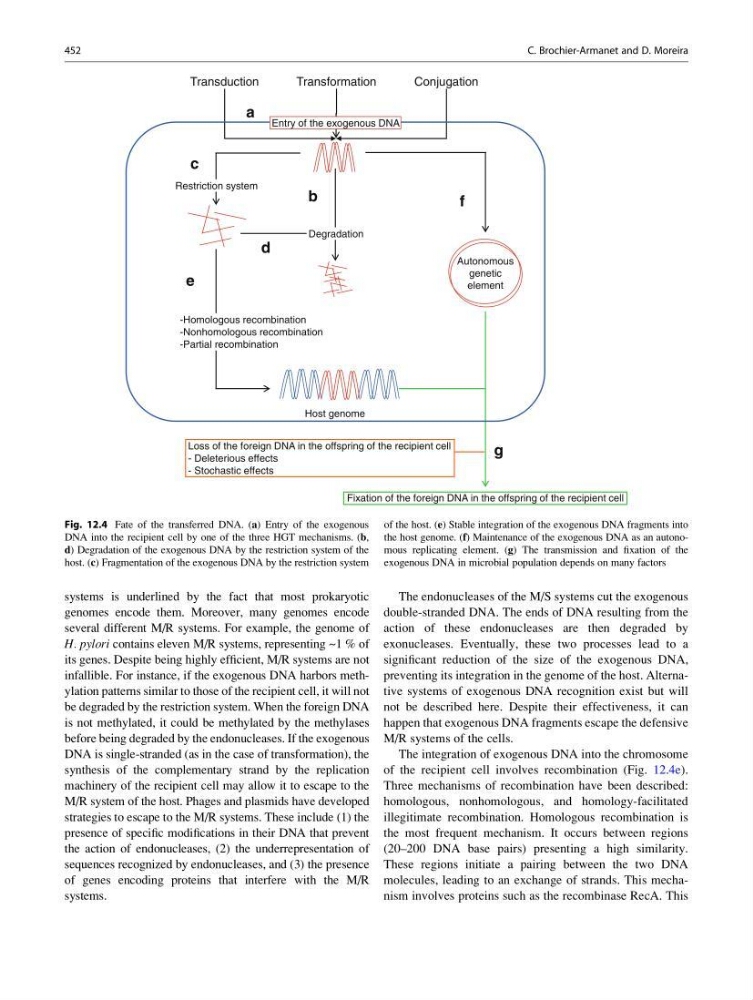
of the recipient cell involves recombination (Fig. 12.4e).
Three mechanisms of recombination have been described:
homologous, nonhomologous, and homology-facilitated
illegitimate recombination. Homologous recombination is
the most frequent mechanism. It occurs between regions
(20–200 DNA base pairs) presenting a high similarity.
These regions initiate a pairing between the two DNA
molecules, leading to an exchange of strands. This mechanism involves proteins such as the recombinase RecA. This
Transduction
Transformation
Conjugation
Host genome
Entry of the exogenous DNA
Restriction system
Autonomous
genetic
element
-Homologous recombination
-Nonhomologous recombination
-Partial recombination
Degradation
Fixation of the foreign DNA in the offspring of the recipient cell
Loss of the foreign DNA in the offspring of the recipient cell
- Deleterious effects
- Stochastic effects
a
c
d
e
f
b
g
Fig. 12.4 Fate of the transferred DNA. (a) Entry of the exogenous
DNA into the recipient cell by one of the three HGT mechanisms. (b,
d) Degradation of the exogenous DNA by the restriction system of the
host. (c) Fragmentation of the exogenous DNA by the restriction system
of the host. (e) Stable integration of the exogenous DNA fragments into
the host genome. (f) Maintenance of the exogenous DNA as an autonomous replicating element. (g) The transmission and fixation of the
exogenous DNA in microbial population depends on many factors
452
C. Brochier-Armanet and D. Moreira
genomes encode them. Moreover, many genomes encode
several different M/R systems. For example, the genome of
H. pylori contains eleven M/R systems, representing ~1 % of
its genes. Despite being highly efficient, M/R systems are not
infallible. For instance, if the exogenous DNA harbors methylation patterns similar to those of the recipient cell, it will not
be degraded by the restriction system. When the foreign DNA
is not methylated, it could be methylated by the methylases
before being degraded by the endonucleases. If the exogenous
DNA is single-stranded (as in the case of transformation), the
synthesis of the complementary strand by the replication
machinery of the recipient cell may allow it to escape to the
M/R system of the host. Phages and plasmids have developed
strategies to escape to the M/R systems. These include (1) the
presence of specific modifications in their DNA that prevent
the action of endonucleases, (2) the underrepresentation of
sequences recognized by endonucleases, and (3) the presence
of genes encoding proteins that interfere with the M/R
systems.
The endonucleases of the M/S systems cut the exogenous
double-stranded DNA. The ends of DNA resulting from the
action of these endonucleases are then degraded by
exonucleases. Eventually, these two processes lead to a
significant reduction of the size of the exogenous DNA,
preventing its integration in the genome of the host. Alternative systems of exogenous DNA recognition exist but will
not be described here. Despite their effectiveness, it can
happen that exogenous DNA fragments escape the defensive
M/R systems of the cells.
The integration of exogenous DNA into the chromosome
of the recipient cell involves recombination (Fig. 12.4e).
Three mechanisms of recombination have been described:
homologous, nonhomologous, and homology-facilitated
illegitimate recombination. Homologous recombination is
the most frequent mechanism. It occurs between regions
(20–200 DNA base pairs) presenting a high similarity.
These regions initiate a pairing between the two DNA
molecules, leading to an exchange of strands. This mechanism involves proteins such as the recombinase RecA. This
Transduction
Transformation
Conjugation
Host genome
Entry of the exogenous DNA
Restriction system
Autonomous
genetic
element
-Homologous recombination
-Nonhomologous recombination
-Partial recombination
Degradation
Fixation of the foreign DNA in the offspring of the recipient cell
Loss of the foreign DNA in the offspring of the recipient cell
- Deleterious effects
- Stochastic effects
a
c
d
e
f
b
g
Fig. 12.4 Fate of the transferred DNA. (a) Entry of the exogenous
DNA into the recipient cell by one of the three HGT mechanisms. (b,
d) Degradation of the exogenous DNA by the restriction system of the
host. (c) Fragmentation of the exogenous DNA by the restriction system
of the host. (e) Stable integration of the exogenous DNA fragments into
the host genome. (f) Maintenance of the exogenous DNA as an autonomous replicating element. (g) The transmission and fixation of the
exogenous DNA in microbial population depends on many factors
452
C. Brochier-Armanet and D. Moreira