

native and exogenous DNA. Indeed, most of the time the
exogenous and the native DNA harbor different methylation
patterns. Therefore, the exogenous DNA is not protected
against the action of the endonucleases encoded by the host
and is rapidly degraded (Fig. 12.4d). Overall, the M/R
systems limit the frequency of HGT ensuring the cohesion
of the genomes of recipient cells. In addition, it increases the
resistance of the cells to phages. The importance of M/R
Chromosome
a
b
c
d
e
f
g
h
Phage
Phage DNA
Fragmented chromosomal
DNA
Phage containing
chromosomal DNA
(transducing particle)
Transducing
particle
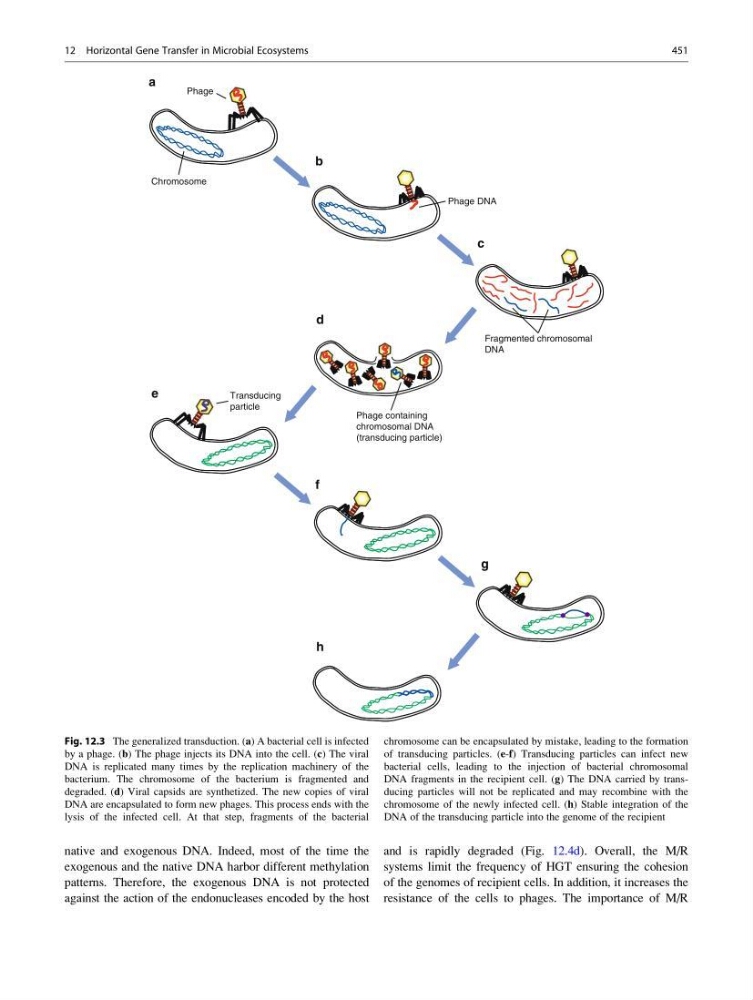
Fig. 12.3 The generalized transduction. (a) A bacterial cell is infected
by a phage. (b) The phage injects its DNA into the cell. (c) The viral
DNA is replicated many times by the replication machinery of the
bacterium. The chromosome of the bacterium is fragmented and
degraded. (d) Viral capsids are synthetized. The new copies of viral
DNA are encapsulated to form new phages. This process ends with the
lysis of the infected cell. At that step, fragments of the bacterial
chromosome can be encapsulated by mistake, leading to the formation
of transducing particles. (e-f) Transducing particles can infect new
bacterial cells, leading to the injection of bacterial chromosomal
DNA fragments in the recipient cell. (g) The DNA carried by transducing particles will not be replicated and may recombine with the
chromosome of the newly infected cell. (h) Stable integration of the
DNA of the transducing particle into the genome of the recipient
12 Horizontal Gene Transfer in Microbial Ecosystems
451
exogenous and the native DNA harbor different methylation
patterns. Therefore, the exogenous DNA is not protected
against the action of the endonucleases encoded by the host
and is rapidly degraded (Fig. 12.4d). Overall, the M/R
systems limit the frequency of HGT ensuring the cohesion
of the genomes of recipient cells. In addition, it increases the
resistance of the cells to phages. The importance of M/R
Chromosome
a
b
c
d
e
f
g
h
Phage
Phage DNA
Fragmented chromosomal
DNA
Phage containing
chromosomal DNA
(transducing particle)
Transducing
particle
Fig. 12.3 The generalized transduction. (a) A bacterial cell is infected
by a phage. (b) The phage injects its DNA into the cell. (c) The viral
DNA is replicated many times by the replication machinery of the
bacterium. The chromosome of the bacterium is fragmented and
degraded. (d) Viral capsids are synthetized. The new copies of viral
DNA are encapsulated to form new phages. This process ends with the
lysis of the infected cell. At that step, fragments of the bacterial
chromosome can be encapsulated by mistake, leading to the formation
of transducing particles. (e-f) Transducing particles can infect new
bacterial cells, leading to the injection of bacterial chromosomal
DNA fragments in the recipient cell. (g) The DNA carried by transducing particles will not be replicated and may recombine with the
chromosome of the newly infected cell. (h) Stable integration of the
DNA of the transducing particle into the genome of the recipient
12 Horizontal Gene Transfer in Microbial Ecosystems
451