

Agrobacterium (Krimi et al. 2002). It was shown that the
presence of a host plant may increase the rate of conjugative
transfer, as in Sinorhizobium loti, and give rise to many
strains able to nodulate (Sullivan et al. 1995).
11.3 Interactions Between Plants
and Microorganisms
11.3.1 Introduction
Plants play a major ecological role as the main primary
producers of organic matter in terrestrial ecosystems. Part
of this organic material is available for plant-associated
microorganisms. The latter are present within the plant, at
the surface of the plant (roots or shoots), or in the immediate
vicinity of the roots, i.e., in rhizosphere (the soil under the
direct influence of living roots) (Fig. 11.7). Indeed, plants
release a fraction of photosynthates in the form of exudates
or more generally (in the case of roots) rhizodeposits
(Nguyen 2003). The availability of these organic nutrients
stimulates plant-associated microorganisms, resulting in
increased population size and physiological activity
(Garbeva et al. 2004; Bais et al. 2006). In aquatic
ecosystems, algae and other photosynthetic eukaryotes play
a similar role in terms of primary production, but the relationship between algae and microorganisms is poorly
documented, and these interactions are not considered in
this chapter.
In return, the microorganisms associated with the plant
will have a significant impact on the nutrition, development,
growth, and health of the plant partner. Some of these
microorganisms especially pathogens (parasites) have a
negative impact on the plant. Conversely, others will have
direct phytobeneficial effects, noticeably those in symbiosis
(Mathesius 2003; Brundrett 2009) or cooperation with the
plant (Dobbelaere et al. 2003; Mantelin et al. 2006). Indirect
phytobeneficial effects are also possible, in particular, for
microorganisms competing with or antagonistic toward
phytoparasites (Alabouvette et al. 2006; Raaijmakers et al.
2009). Therefore, microorganisms associated with plants
have considerable practical significance, which explains
why historically they have often been studied to address
concerns in the fields of agronomy and phytopathology. In
this context, newer issues pertaining to food quality, environmental health, and global climate change are receiving
increased research attention, along with long-standing issues
about plant nutrition and health and soil fertility (van Elsas
et al. 2007).
11.3.2 Location and Population Levels
of Microorganisms Associated
with Plants
Microorganisms associated with plants are mainly bacteria
and fungi, as well as protozoa to a lesser extent. Depending
on their location on/in plants, these microorganisms will be
exposed to contrasting environmental conditions. A difference can be made between the root system and aerial parts.
Microorganisms at the surface of aerial parts are confronted
to fluctuating microclimatic situations, and they may be
exposed to stressful conditions in particular with regard to
desiccation and ultraviolet radiations (Kinkel et al. 2000). In
addition, organic exudates are released in smaller quantities
by leaves than by roots (Lucas and Sarniguet 1998; Leveau
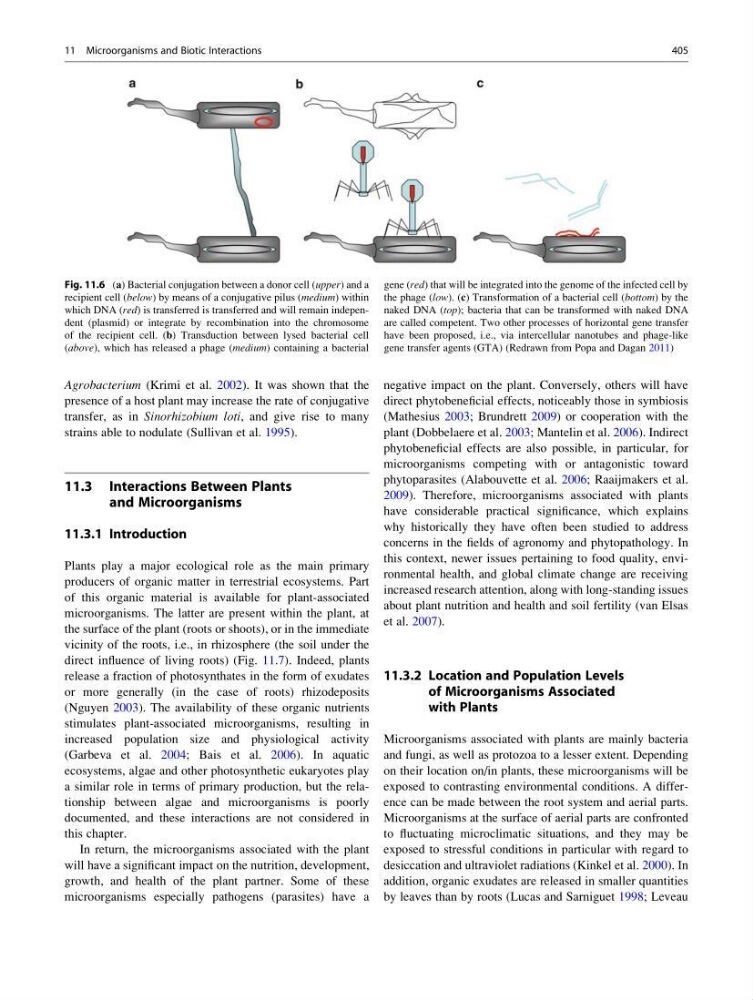
Fig. 11.6 (a) Bacterial conjugation between a donor cell (upper) and a
recipient cell (below) by means of a conjugative pilus (medium) within
which DNA (red) is transferred is transferred and will remain independent (plasmid) or integrate by recombination into the chromosome
of the recipient cell. (b) Transduction between lysed bacterial cell
(above), which has released a phage (medium) containing a bacterial
gene (red) that will be integrated into the genome of the infected cell by
the phage (low). (c) Transformation of a bacterial cell (bottom) by the
naked DNA (top); bacteria that can be transformed with naked DNA
are called competent. Two other processes of horizontal gene transfer
have been proposed, i.e., via intercellular nanotubes and phage-like
gene transfer agents (GTA) (Redrawn from Popa and Dagan 2011)
11 Microorganisms and Biotic Interactions
405
presence of a host plant may increase the rate of conjugative
transfer, as in Sinorhizobium loti, and give rise to many
strains able to nodulate (Sullivan et al. 1995).
11.3 Interactions Between Plants
and Microorganisms
11.3.1 Introduction
Plants play a major ecological role as the main primary
producers of organic matter in terrestrial ecosystems. Part
of this organic material is available for plant-associated
microorganisms. The latter are present within the plant, at
the surface of the plant (roots or shoots), or in the immediate
vicinity of the roots, i.e., in rhizosphere (the soil under the
direct influence of living roots) (Fig. 11.7). Indeed, plants
release a fraction of photosynthates in the form of exudates
or more generally (in the case of roots) rhizodeposits
(Nguyen 2003). The availability of these organic nutrients
stimulates plant-associated microorganisms, resulting in
increased population size and physiological activity
(Garbeva et al. 2004; Bais et al. 2006). In aquatic
ecosystems, algae and other photosynthetic eukaryotes play
a similar role in terms of primary production, but the relationship between algae and microorganisms is poorly
documented, and these interactions are not considered in
this chapter.
In return, the microorganisms associated with the plant
will have a significant impact on the nutrition, development,
growth, and health of the plant partner. Some of these
microorganisms especially pathogens (parasites) have a
negative impact on the plant. Conversely, others will have
direct phytobeneficial effects, noticeably those in symbiosis
(Mathesius 2003; Brundrett 2009) or cooperation with the
plant (Dobbelaere et al. 2003; Mantelin et al. 2006). Indirect
phytobeneficial effects are also possible, in particular, for
microorganisms competing with or antagonistic toward
phytoparasites (Alabouvette et al. 2006; Raaijmakers et al.
2009). Therefore, microorganisms associated with plants
have considerable practical significance, which explains
why historically they have often been studied to address
concerns in the fields of agronomy and phytopathology. In
this context, newer issues pertaining to food quality, environmental health, and global climate change are receiving
increased research attention, along with long-standing issues
about plant nutrition and health and soil fertility (van Elsas
et al. 2007).
11.3.2 Location and Population Levels
of Microorganisms Associated
with Plants
Microorganisms associated with plants are mainly bacteria
and fungi, as well as protozoa to a lesser extent. Depending
on their location on/in plants, these microorganisms will be
exposed to contrasting environmental conditions. A difference can be made between the root system and aerial parts.
Microorganisms at the surface of aerial parts are confronted
to fluctuating microclimatic situations, and they may be
exposed to stressful conditions in particular with regard to
desiccation and ultraviolet radiations (Kinkel et al. 2000). In
addition, organic exudates are released in smaller quantities
by leaves than by roots (Lucas and Sarniguet 1998; Leveau
Fig. 11.6 (a) Bacterial conjugation between a donor cell (upper) and a
recipient cell (below) by means of a conjugative pilus (medium) within
which DNA (red) is transferred is transferred and will remain independent (plasmid) or integrate by recombination into the chromosome
of the recipient cell. (b) Transduction between lysed bacterial cell
(above), which has released a phage (medium) containing a bacterial
gene (red) that will be integrated into the genome of the infected cell by
the phage (low). (c) Transformation of a bacterial cell (bottom) by the
naked DNA (top); bacteria that can be transformed with naked DNA
are called competent. Two other processes of horizontal gene transfer
have been proposed, i.e., via intercellular nanotubes and phage-like
gene transfer agents (GTA) (Redrawn from Popa and Dagan 2011)
11 Microorganisms and Biotic Interactions
405