

biosynthetic genes, resistance genes, and genes necessary for
their transport out of the cell. The presence of an antibiotic is
not necessarily detrimental for a given taxon, either because
it has acquired genes permitting its degradation, and thus to
feed on it, or a mutation has occurred in the genes whose
product is the antibiotic target (Birge and Kurland 1969).
This kind of phenomenon could in principle occur with any
antibiotic.
There has been a debate on the relationship between
antibiotics and bacteriocins. In contrast to antibiotics,
bacteriocins affect bacteria closely related to the producing
organism, often belonging to the same species. They are often
of a proteinaceous nature. The mode of action is varied and
includes pore formation in the membrane inducing leakage of
cellular constituents, DNA or RNA degradation in the target
strain, and inhibition of the production of murein in cell walls.
They have been described in various bacteria especially
Escherichia coli, Vibrio, Lactococcus, and Pediococcus and
have a high potential in biotechnology, for example, in yogurt
manufacturing. The distinction between antibiotics and
bacteriocins is not always clear, because some bacteriocins
have targets in distant taxa, such as Lactobacillus spp. against
E. coli or Listeria (Millette et al. 2007), and also because
antibiotics and bacteriocins are less and less defined by their
modes of action.
Antibiotics have been given several definitions, initially
by Waksman (1969) who used this term for any natural
compound active on other organisms, to distinguish from
synthetic compounds such as sulfonamides. Given the progress of synthetic chemistry that helped change natural
compounds to modify their properties, they are now
designated as synthetic–natural compounds. The word antibiotic now refers to compounds, natural or otherwise, with
antimicrobial activity and that are used in human and veterinary medicine or in biotechnology.
Genes for antibiotic synthesis, carried on plasmids, are
often exchanged by conjugation or transformation. They are
especially abundant in soil organisms with large genomes
such as Streptomyces (Bentley et al. 2002), particularly in
telomeric regions subject to high recombination rates. Bacterial isolates are generally resistant rather than sensitive to
antibiotics produced by isolates from the same soil (Davelos
et al. 2004), which probably comes from the phenomenon of
coadaptation.
It has long been argued that the synthesis of antibiotics
belongs to the same type of evolutionary event as the emergence of wings, called exaptation (spandrel) by Gould and
Vrba (1982) to indicate that their primary function could be
quite different from the final one. The genes encoding the
synthesis of antibiotics belong to secondary metabolism; that
is to say, they are expressed mainly at the end of the exponential
phase and later, and furthermore they are not always essential.
They would therefore be genes resulting from random recombination as ORFans, initially without detectable function but
that have gained one due to reactivity toward various cell
constituents, and their selective advantage would have resulted
in their fixation in the genome and their subsequent dispersion
by lateral transfer (Daubin and Ochman 2004).
11.2.1.4 Competition
Competition* is an interaction defined as a simultaneous
demand by two or more organisms for a limited environmental resource, such as a nutrient, water, living space, or
light. This is of course the rule in the microbial world where
many habitats include several taxa with closely related
metabolic capabilities. For example, the addition to the soil
of a complex carbon source like deciduous tree litter
stimulates many fungi and bacteria capable of metabolizing
polymers such as cellulose, hemicelluloses, and pectin.
Microbial populations that grow in the soil thus vary
according to the carbon sources added (Hery et al. 2005).
A wastewater treatment plant is another biotope
(anthropized), in which is found a rich mixture of carbon
molecules inducing fluctuations of the microbial community
present (Snaidr et al. 1997).
11.2.2 Beneficial Interactions
When comparing various beneficial interactions between
microorganisms, it appears that the terms cooperation,
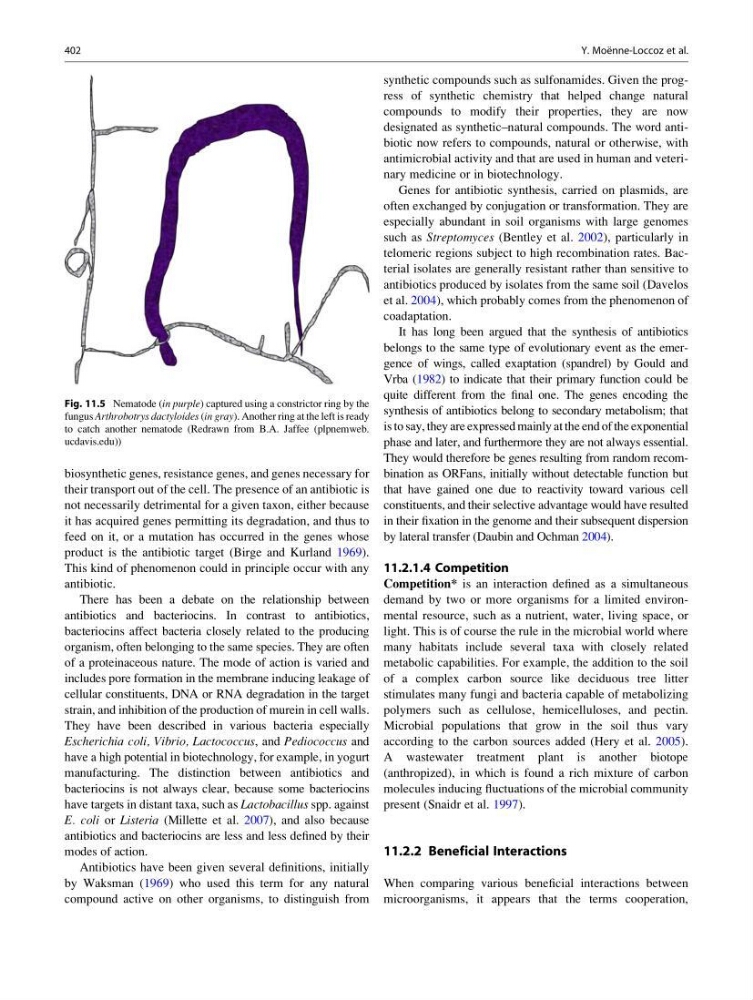
Fig. 11.5 Nematode (in purple) captured using a constrictor ring by the
fungus Arthrobotrys dactyloides (in gray). Another ring at the left is ready
to catch another nematode (Redrawn from B.A. Jaffee (plpnemweb.
ucdavis.edu))
402
Y. Moe ¨nne-Loccoz et al.
their transport out of the cell. The presence of an antibiotic is
not necessarily detrimental for a given taxon, either because
it has acquired genes permitting its degradation, and thus to
feed on it, or a mutation has occurred in the genes whose
product is the antibiotic target (Birge and Kurland 1969).
This kind of phenomenon could in principle occur with any
antibiotic.
There has been a debate on the relationship between
antibiotics and bacteriocins. In contrast to antibiotics,
bacteriocins affect bacteria closely related to the producing
organism, often belonging to the same species. They are often
of a proteinaceous nature. The mode of action is varied and
includes pore formation in the membrane inducing leakage of
cellular constituents, DNA or RNA degradation in the target
strain, and inhibition of the production of murein in cell walls.
They have been described in various bacteria especially
Escherichia coli, Vibrio, Lactococcus, and Pediococcus and
have a high potential in biotechnology, for example, in yogurt
manufacturing. The distinction between antibiotics and
bacteriocins is not always clear, because some bacteriocins
have targets in distant taxa, such as Lactobacillus spp. against
E. coli or Listeria (Millette et al. 2007), and also because
antibiotics and bacteriocins are less and less defined by their
modes of action.
Antibiotics have been given several definitions, initially
by Waksman (1969) who used this term for any natural
compound active on other organisms, to distinguish from
synthetic compounds such as sulfonamides. Given the progress of synthetic chemistry that helped change natural
compounds to modify their properties, they are now
designated as synthetic–natural compounds. The word antibiotic now refers to compounds, natural or otherwise, with
antimicrobial activity and that are used in human and veterinary medicine or in biotechnology.
Genes for antibiotic synthesis, carried on plasmids, are
often exchanged by conjugation or transformation. They are
especially abundant in soil organisms with large genomes
such as Streptomyces (Bentley et al. 2002), particularly in
telomeric regions subject to high recombination rates. Bacterial isolates are generally resistant rather than sensitive to
antibiotics produced by isolates from the same soil (Davelos
et al. 2004), which probably comes from the phenomenon of
coadaptation.
It has long been argued that the synthesis of antibiotics
belongs to the same type of evolutionary event as the emergence of wings, called exaptation (spandrel) by Gould and
Vrba (1982) to indicate that their primary function could be
quite different from the final one. The genes encoding the
synthesis of antibiotics belong to secondary metabolism; that
is to say, they are expressed mainly at the end of the exponential
phase and later, and furthermore they are not always essential.
They would therefore be genes resulting from random recombination as ORFans, initially without detectable function but
that have gained one due to reactivity toward various cell
constituents, and their selective advantage would have resulted
in their fixation in the genome and their subsequent dispersion
by lateral transfer (Daubin and Ochman 2004).
11.2.1.4 Competition
Competition* is an interaction defined as a simultaneous
demand by two or more organisms for a limited environmental resource, such as a nutrient, water, living space, or
light. This is of course the rule in the microbial world where
many habitats include several taxa with closely related
metabolic capabilities. For example, the addition to the soil
of a complex carbon source like deciduous tree litter
stimulates many fungi and bacteria capable of metabolizing
polymers such as cellulose, hemicelluloses, and pectin.
Microbial populations that grow in the soil thus vary
according to the carbon sources added (Hery et al. 2005).
A wastewater treatment plant is another biotope
(anthropized), in which is found a rich mixture of carbon
molecules inducing fluctuations of the microbial community
present (Snaidr et al. 1997).
11.2.2 Beneficial Interactions
When comparing various beneficial interactions between
microorganisms, it appears that the terms cooperation,
Fig. 11.5 Nematode (in purple) captured using a constrictor ring by the
fungus Arthrobotrys dactyloides (in gray). Another ring at the left is ready
to catch another nematode (Redrawn from B.A. Jaffee (plpnemweb.
ucdavis.edu))
402
Y. Moe ¨nne-Loccoz et al.