

defining an inner cytoplasmic zone containing the chromosome (cf. Sect. 6.6.2: phylum Planctomycetes).
3.1.1.1 Cell Envelopes of Prokaryotes
Prokaryotic cells have generally two types of envelopes; on
the outside, the rigid wall maintains the shape of the cells
and covers the cytoplasmic membrane delimiting the cytoplasm. The composition of the wall defines three groups of
prokaryotes: Gram-positive bacteria (Gram +), Gramnegative bacteria (GramÀ), and archaea. Mycoplasma and
some archaea do not have a wall.
Cytoplasmic Membrane
In bacteria, the cytoplasmic membrane is composed of
proteins (cf. Sect. 4.1.7, Fig. 4.5) and a phospholipid bilayer
(Fig. 3.3) that forms the basic structure. In this double layer,
phospholipids are oriented such that the apolar chains are
placed inside and polar ends located on the surface of the
membrane. Many molecules are included in the membrane:
1. Terpenoid derivatives (hopanes) acting as stabilizers of
membrane structure (cf. Sect. 4.1.5, Fig. 4.15; cf. Sect. 16.
8.2, Fig. 16.40).
2. Enzymes, pigments, and electron carriers involved in
respiratory and photosynthesis activities. The cytoplasmic membrane of prokaryotes is the principal location of
the production of cellular energy. This energy is derived
from enzymes, pigments, and electron carriers involved
in the respiratory and bacterial membrane proton-motive
force (Δp) resulting from the formation of a transmembrane proton gradient (cf. Sect. 3.3.1).
In archaea, the cytoplasmic membrane plays the same
role, but its bilayer or monolayer structure is different.
Branched hydrocarbon chains associated with the glycerol
by ether linkages – stronger than the ester linkages of bacteria – replace linear fatty acids. Branched chains have variable lengths in carbon number of C20 (bilayer) to C40
(monolayer). In the latter case, typical of many extreme
thermophilic archaea, the monolayer consists of molecules
having two glycerols linked by four ether linkages
(tetraether) to the ends of the two branched chains, allowing
for greater stability and rigidity of the membrane at high
temperatures (cf. Sect. 4.1.7). Diethers and tetraethers may
be mixed with lipids (phospholipids, sulfolipids, or
glycolipids). The Halobacteria (extreme halophilic archaea)
synthesize a modified membrane, the purple membrane, by
inserting of a protein pigment, bacteriorhodopsin, close to
the rhodopsin of the retina of the eye. The activation of this
pigment by light allows the membrane energy production via
the formation of a gradient of protons (cf. Sect. 3.3.4,
Fig. 3.30).
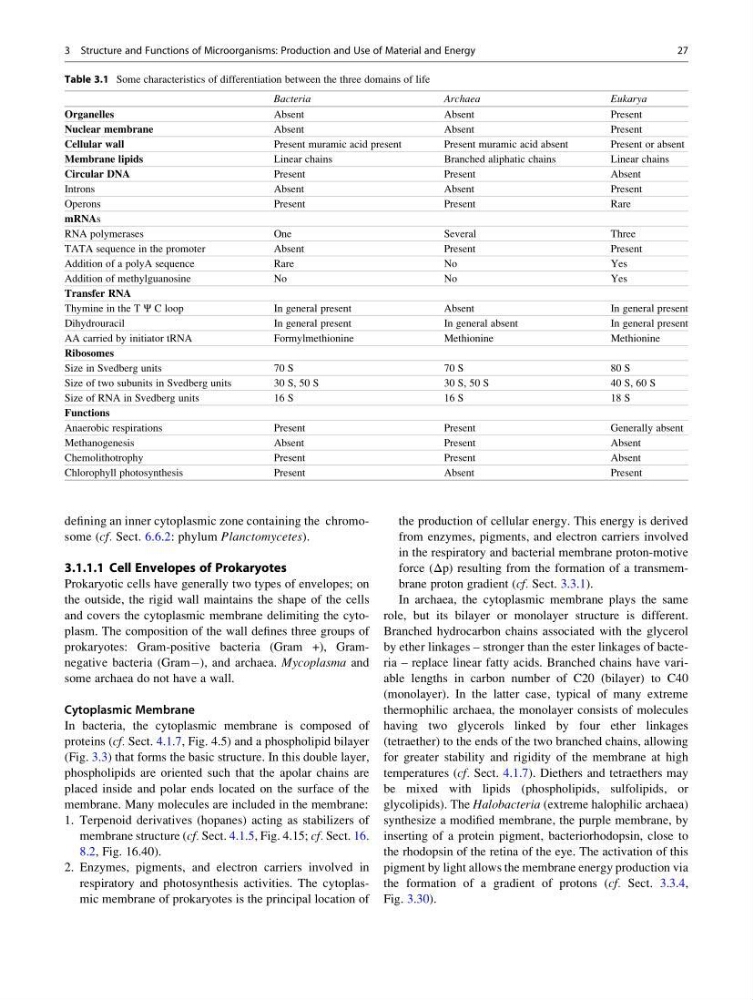
Table 3.1 Some characteristics of differentiation between the three domains of life
Bacteria
Archaea
Eukarya
Organelles
Absent
Absent
Present
Nuclear membrane
Absent
Absent
Present
Cellular wall
Present muramic acid present
Present muramic acid absent
Present or absent
Membrane lipids
Linear chains
Branched aliphatic chains
Linear chains
Circular DNA
Present
Present
Absent
Introns
Absent
Absent
Present
Operons
Present
Present
Rare
mRNAs
RNA polymerases
One
Several
Three
TATA sequence in the promoter
Absent
Present
Present
Addition of a polyA sequence
Rare
No
Yes
Addition of methylguanosine
No
No
Yes
Transfer RNA
Thymine in the T Ψ C loop
In general present
Absent
In general present
Dihydrouracil
In general present
In general absent
In general present
AA carried by initiator tRNA
Formylmethionine
Methionine
Methionine
Ribosomes
Size in Svedberg units
70 S
70 S
80 S
Size of two subunits in Svedberg units
30 S, 50 S
30 S, 50 S
40 S, 60 S
Size of RNA in Svedberg units
16 S
16 S
18 S
Functions
Anaerobic respirations
Present
Present
Generally absent
Methanogenesis
Absent
Present
Absent
Chemolithotrophy
Present
Present
Absent
Chlorophyll photosynthesis
Present
Absent
Present
3 Structure and Functions of Microorganisms: Production and Use of Material and Energy
27
3.1.1.1 Cell Envelopes of Prokaryotes
Prokaryotic cells have generally two types of envelopes; on
the outside, the rigid wall maintains the shape of the cells
and covers the cytoplasmic membrane delimiting the cytoplasm. The composition of the wall defines three groups of
prokaryotes: Gram-positive bacteria (Gram +), Gramnegative bacteria (GramÀ), and archaea. Mycoplasma and
some archaea do not have a wall.
Cytoplasmic Membrane
In bacteria, the cytoplasmic membrane is composed of
proteins (cf. Sect. 4.1.7, Fig. 4.5) and a phospholipid bilayer
(Fig. 3.3) that forms the basic structure. In this double layer,
phospholipids are oriented such that the apolar chains are
placed inside and polar ends located on the surface of the
membrane. Many molecules are included in the membrane:
1. Terpenoid derivatives (hopanes) acting as stabilizers of
membrane structure (cf. Sect. 4.1.5, Fig. 4.15; cf. Sect. 16.
8.2, Fig. 16.40).
2. Enzymes, pigments, and electron carriers involved in
respiratory and photosynthesis activities. The cytoplasmic membrane of prokaryotes is the principal location of
the production of cellular energy. This energy is derived
from enzymes, pigments, and electron carriers involved
in the respiratory and bacterial membrane proton-motive
force (Δp) resulting from the formation of a transmembrane proton gradient (cf. Sect. 3.3.1).
In archaea, the cytoplasmic membrane plays the same
role, but its bilayer or monolayer structure is different.
Branched hydrocarbon chains associated with the glycerol
by ether linkages – stronger than the ester linkages of bacteria – replace linear fatty acids. Branched chains have variable lengths in carbon number of C20 (bilayer) to C40
(monolayer). In the latter case, typical of many extreme
thermophilic archaea, the monolayer consists of molecules
having two glycerols linked by four ether linkages
(tetraether) to the ends of the two branched chains, allowing
for greater stability and rigidity of the membrane at high
temperatures (cf. Sect. 4.1.7). Diethers and tetraethers may
be mixed with lipids (phospholipids, sulfolipids, or
glycolipids). The Halobacteria (extreme halophilic archaea)
synthesize a modified membrane, the purple membrane, by
inserting of a protein pigment, bacteriorhodopsin, close to
the rhodopsin of the retina of the eye. The activation of this
pigment by light allows the membrane energy production via
the formation of a gradient of protons (cf. Sect. 3.3.4,
Fig. 3.30).
Table 3.1 Some characteristics of differentiation between the three domains of life
Bacteria
Archaea
Eukarya
Organelles
Absent
Absent
Present
Nuclear membrane
Absent
Absent
Present
Cellular wall
Present muramic acid present
Present muramic acid absent
Present or absent
Membrane lipids
Linear chains
Branched aliphatic chains
Linear chains
Circular DNA
Present
Present
Absent
Introns
Absent
Absent
Present
Operons
Present
Present
Rare
mRNAs
RNA polymerases
One
Several
Three
TATA sequence in the promoter
Absent
Present
Present
Addition of a polyA sequence
Rare
No
Yes
Addition of methylguanosine
No
No
Yes
Transfer RNA
Thymine in the T Ψ C loop
In general present
Absent
In general present
Dihydrouracil
In general present
In general absent
In general present
AA carried by initiator tRNA
Formylmethionine
Methionine
Methionine
Ribosomes
Size in Svedberg units
70 S
70 S
80 S
Size of two subunits in Svedberg units
30 S, 50 S
30 S, 50 S
40 S, 60 S
Size of RNA in Svedberg units
16 S
16 S
18 S
Functions
Anaerobic respirations
Present
Present
Generally absent
Methanogenesis
Absent
Present
Absent
Chemolithotrophy
Present
Present
Absent
Chlorophyll photosynthesis
Present
Absent
Present
3 Structure and Functions of Microorganisms: Production and Use of Material and Energy
27