

spp., and Acidiphilium spp.), but recently several Grampositive microorganisms corresponding to different genera
have been isolated from acidic environments and biohydrometallurgical operations (Sulfobacillus spp., Acidimicrobium
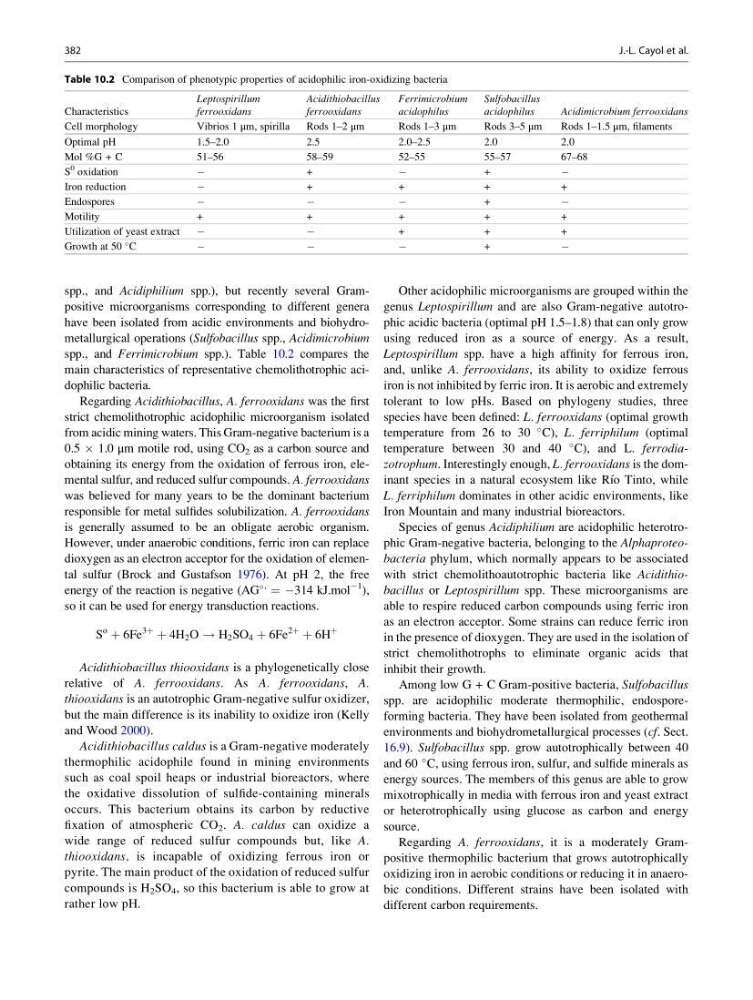
spp., and Ferrimicrobium spp.). Table 10.2 compares the
main characteristics of representative chemolithotrophic acidophilic bacteria.
Regarding Acidithiobacillus, A. ferrooxidans was the first
strict chemolithotrophic acidophilic microorganism isolated
from acidic mining waters. This Gram-negative bacterium is a
0.5 Â 1.0 μm motile rod, using CO 2 as a carbon source and
obtaining its energy from the oxidation of ferrous iron, elemental sulfur, and reduced sulfur compounds. A. ferrooxidans
was believed for many years to be the dominant bacterium
responsible for metal sulfides solubilization. A. ferrooxidans
is generally assumed to be an obligate aerobic organism.
However, under anaerobic conditions, ferric iron can replace
dioxygen as an electron acceptor for the oxidation of elemental sulfur (Brock and Gustafson 1976). At pH 2, the free
energy of the reaction is negative (AG
,
¼ À314 kJ.mol
À1
),
so it can be used for energy transduction reactions.
S
o
þ 6Fe
3þ
þ 4H 2 O ! H 2 SO 4 þ 6Fe
2þ
þ 6H
þ
Acidithiobacillus thiooxidans is a phylogenetically close
relative of A. ferrooxidans. As A. ferrooxidans, A.
thiooxidans is an autotrophic Gram-negative sulfur oxidizer,
but the main difference is its inability to oxidize iron (Kelly
and Wood 2000).
Acidithiobacillus caldus is a Gram-negative moderately
thermophilic acidophile found in mining environments
such as coal spoil heaps or industrial bioreactors, where
the oxidative dissolution of sulfide-containing minerals
occurs. This bacterium obtains its carbon by reductive
fixation of atmospheric CO 2 . A. caldus can oxidize a
wide range of reduced sulfur compounds but, like A.
thiooxidans, is incapable of oxidizing ferrous iron or
pyrite. The main product of the oxidation of reduced sulfur
compounds is H 2 SO 4 , so this bacterium is able to grow at
rather low pH.
Other acidophilic microorganisms are grouped within the
genus Leptospirillum and are also Gram-negative autotrophic acidic bacteria (optimal pH 1.5–1.8) that can only grow
using reduced iron as a source of energy. As a result,
Leptospirillum spp. have a high affinity for ferrous iron,
and, unlike A. ferrooxidans, its ability to oxidize ferrous
iron is not inhibited by ferric iron. It is aerobic and extremely
tolerant to low pHs. Based on phylogeny studies, three
species have been defined: L. ferrooxidans (optimal growth
temperature from 26 to 30
C), L. ferriphilum (optimal
temperature between 30 and 40
C), and L. ferrodiazotrophum. Interestingly enough, L. ferrooxidans is the dominant species in a natural ecosystem like Rı ´o Tinto, while
L. ferriphilum dominates in other acidic environments, like
Iron Mountain and many industrial bioreactors.
Species of genus Acidiphilium are acidophilic heterotrophic Gram-negative bacteria, belonging to the Alphaproteobacteria phylum, which normally appears to be associated
with strict chemolithoautotrophic bacteria like Acidithiobacillus or Leptospirillum spp. These microorganisms are
able to respire reduced carbon compounds using ferric iron
as an electron acceptor. Some strains can reduce ferric iron
in the presence of dioxygen. They are used in the isolation of
strict chemolithotrophs to eliminate organic acids that
inhibit their growth.
Among low G + C Gram-positive bacteria, Sulfobacillus
spp. are acidophilic moderate thermophilic, endosporeforming bacteria. They have been isolated from geothermal
environments and biohydrometallurgical processes (cf. Sect.
16.9). Sulfobacillus spp. grow autotrophically between 40
and 60
C, using ferrous iron, sulfur, and sulfide minerals as
energy sources. The members of this genus are able to grow
mixotrophically in media with ferrous iron and yeast extract
or heterotrophically using glucose as carbon and energy
source.
Regarding A. ferrooxidans, it is a moderately Grampositive thermophilic bacterium that grows autotrophically
oxidizing iron in aerobic conditions or reducing it in anaerobic conditions. Different strains have been isolated with
different carbon requirements.
Table 10.2 Comparison of phenotypic properties of acidophilic iron-oxidizing bacteria
Characteristics
Leptospirillum
ferrooxidans
Acidithiobacillus
ferrooxidans
Ferrimicrobium
acidophilus
Sulfobacillus
acidophilus
Acidimicrobium ferrooxidans
Cell morphology
Vibrios 1 μm, spirilla
Rods 1–2 μm
Rods 1–3 μm
Rods 3–5 μm
Rods 1–1.5 μm, filaments
Optimal pH
1.5–2.0
2.5
2.0–2.5
2.0
2.0
Mol %G + C
51–56
58–59
52–55
55–57
67–68
S
0 oxidation
À
+
À
+
À
Iron reduction
À
+
+
+
+
Endospores
À
À
À
+
À
Motility
+
+
+
+
+
Utilization of yeast extract
À
À
+
+
+
Growth at 50
C
À
À
À
+
À
382
J.-L. Cayol et al.
have been isolated from acidic environments and biohydrometallurgical operations (Sulfobacillus spp., Acidimicrobium
spp., and Ferrimicrobium spp.). Table 10.2 compares the
main characteristics of representative chemolithotrophic acidophilic bacteria.
Regarding Acidithiobacillus, A. ferrooxidans was the first
strict chemolithotrophic acidophilic microorganism isolated
from acidic mining waters. This Gram-negative bacterium is a
0.5 Â 1.0 μm motile rod, using CO 2 as a carbon source and
obtaining its energy from the oxidation of ferrous iron, elemental sulfur, and reduced sulfur compounds. A. ferrooxidans
was believed for many years to be the dominant bacterium
responsible for metal sulfides solubilization. A. ferrooxidans
is generally assumed to be an obligate aerobic organism.
However, under anaerobic conditions, ferric iron can replace
dioxygen as an electron acceptor for the oxidation of elemental sulfur (Brock and Gustafson 1976). At pH 2, the free
energy of the reaction is negative (AG
,
¼ À314 kJ.mol
À1
),
so it can be used for energy transduction reactions.
S
o
þ 6Fe
3þ
þ 4H 2 O ! H 2 SO 4 þ 6Fe
2þ
þ 6H
þ
Acidithiobacillus thiooxidans is a phylogenetically close
relative of A. ferrooxidans. As A. ferrooxidans, A.
thiooxidans is an autotrophic Gram-negative sulfur oxidizer,
but the main difference is its inability to oxidize iron (Kelly
and Wood 2000).
Acidithiobacillus caldus is a Gram-negative moderately
thermophilic acidophile found in mining environments
such as coal spoil heaps or industrial bioreactors, where
the oxidative dissolution of sulfide-containing minerals
occurs. This bacterium obtains its carbon by reductive
fixation of atmospheric CO 2 . A. caldus can oxidize a
wide range of reduced sulfur compounds but, like A.
thiooxidans, is incapable of oxidizing ferrous iron or
pyrite. The main product of the oxidation of reduced sulfur
compounds is H 2 SO 4 , so this bacterium is able to grow at
rather low pH.
Other acidophilic microorganisms are grouped within the
genus Leptospirillum and are also Gram-negative autotrophic acidic bacteria (optimal pH 1.5–1.8) that can only grow
using reduced iron as a source of energy. As a result,
Leptospirillum spp. have a high affinity for ferrous iron,
and, unlike A. ferrooxidans, its ability to oxidize ferrous
iron is not inhibited by ferric iron. It is aerobic and extremely
tolerant to low pHs. Based on phylogeny studies, three
species have been defined: L. ferrooxidans (optimal growth
temperature from 26 to 30
C), L. ferriphilum (optimal
temperature between 30 and 40
C), and L. ferrodiazotrophum. Interestingly enough, L. ferrooxidans is the dominant species in a natural ecosystem like Rı ´o Tinto, while
L. ferriphilum dominates in other acidic environments, like
Iron Mountain and many industrial bioreactors.
Species of genus Acidiphilium are acidophilic heterotrophic Gram-negative bacteria, belonging to the Alphaproteobacteria phylum, which normally appears to be associated
with strict chemolithoautotrophic bacteria like Acidithiobacillus or Leptospirillum spp. These microorganisms are
able to respire reduced carbon compounds using ferric iron
as an electron acceptor. Some strains can reduce ferric iron
in the presence of dioxygen. They are used in the isolation of
strict chemolithotrophs to eliminate organic acids that
inhibit their growth.
Among low G + C Gram-positive bacteria, Sulfobacillus
spp. are acidophilic moderate thermophilic, endosporeforming bacteria. They have been isolated from geothermal
environments and biohydrometallurgical processes (cf. Sect.
16.9). Sulfobacillus spp. grow autotrophically between 40
and 60
C, using ferrous iron, sulfur, and sulfide minerals as
energy sources. The members of this genus are able to grow
mixotrophically in media with ferrous iron and yeast extract
or heterotrophically using glucose as carbon and energy
source.
Regarding A. ferrooxidans, it is a moderately Grampositive thermophilic bacterium that grows autotrophically
oxidizing iron in aerobic conditions or reducing it in anaerobic conditions. Different strains have been isolated with
different carbon requirements.
Table 10.2 Comparison of phenotypic properties of acidophilic iron-oxidizing bacteria
Characteristics
Leptospirillum
ferrooxidans
Acidithiobacillus
ferrooxidans
Ferrimicrobium
acidophilus
Sulfobacillus
acidophilus
Acidimicrobium ferrooxidans
Cell morphology
Vibrios 1 μm, spirilla
Rods 1–2 μm
Rods 1–3 μm
Rods 3–5 μm
Rods 1–1.5 μm, filaments
Optimal pH
1.5–2.0
2.5
2.0–2.5
2.0
2.0
Mol %G + C
51–56
58–59
52–55
55–57
67–68
S
0 oxidation
À
+
À
+
À
Iron reduction
À
+
+
+
+
Endospores
À
À
À
+
À
Motility
+
+
+
+
+
Utilization of yeast extract
À
À
+
+
+
Growth at 50
C
À
À
À
+
À
382
J.-L. Cayol et al.