

operations, etc. Some are alkaline environments such as soda
lakes (salt lakes containing sodium carbonate at saturation
level), some soils, etc.
Ecology and Diversity of Prokaryotes Living
in Extreme pH
For now, there are few described bacteria that can live
at pH extremes. The majority of prokaryotes living where
pH is extreme are alkaliphilic or hyperacidophilic archaea.
Acidophilic archaea are generally hyperthermophilic and are
described as thermo-acidophilic and are isolated for the most
part from hydrothermal vents. They can tolerate pH ranging
from pH 1 to pH 3–4. Alkaliphilic archaea are also extreme
halophiles, also called natrono-archaea isolated from soda
lakes and developing in habitats at pH 11–12.
Bacteria (domain Bacteria) living at pH extremes are
found in living organisms and in biological media or coexist
with archaea in extreme environments such as acidic drainage or soda lakes. For example, bacteria living in the
digestive tract must pass from a very acidic pH (pH 1.5 in
the stomach) to a very alkaline pH (pH 10 at the beginning
of the intestine). Some optional anaerobic bacteria
(lactobacilli, Sarcina ventriculi) are tolerant to pH ranges
from pH 1 to pH 9.5. In the gastrointestinal tract, anaerobic
bacteria produce acids, as fermentation products, and
thereby lower the pH leading to a variability of bacterial
community: at pH 7 Clostridium is dominating the community, whereas at pH 5 it is Bifidobacterium. In carbohydrate
fermenters (silage, compost), the production of lactic acid
by fermentation lowers the pH to pH 3.5–5, thus promoting
the development of moderately or strictly acidophilic
bacteria (Lactobacillus, Pediococcus, Leuconostoc). In contrast, in the fermenters of proteins, the release of NH3 leads
to an increase in pH (pH 8–9), promoting the development of
enterobacteria and Clostridium. In mining operation
drainages, Acidithiobacillus proliferates, and their sulfur
and iron oxidizing metabolism, producer of sulfuric acid,
maintains a very acid pH in their environment around
pH 1.5–2.5 which allows to solubilize iron ore (pyrite),
freeing the iron which will then be oxidized to generate
energy.
Acidophilic Bacteria and Archaea (cf. Sect. 10.6)
Obligatory and extreme acidophilic prokaryotes cannot
develop at neutral pH. They are essentially thiobacilli
(Thiobacillus, Acidithiobacillus) and hyperthermophilic
archaea (Acidianus, Thermoplasma, Sulfolobus, etc.). They
use reduced sulfur or iron compounds as electron donors in
their chemolithotrophic metabolism, or organic compounds.
The mechanisms of adaptation to extreme pH in acidophilic
prokaryotes do not consume energy. For example, Acidithiobacillus, who lives in an environment at pH 2, maintains its
intracellular pH at pH 6.5 based on the simple and strict
mechanisms that control the membrane flow of carbon and
proton. The membranes are modified and membrane transport proteins are synthesized. Cell division is slower
and produces greater amounts of cytoplasmic membrane
with a higher surface/cell volume ratio. The membrane
surface allows a greater flux of protons and increased compensatory activation of potassium via the Kdp pumping
system, allowing an exchange of H
+ and K
+
.
Alkaliphilic Bacteria and Archaea (cf. Sect. 10.7)
There are many alkali tolerant bacteria, but few are strict to
extreme alkaliphiles. The extreme alkaliphiles are mainly
halophilic archaea.
Among bacteria, some NH 3 -using nitrifying bacteria are
moderately alkaliphilic, as are some aerobic (some Bacillus) or anaerobic (some Clostridium) chemoorganotrophs.
In the marine environment, there are many alkali tolerant
and some strictly alkaliphiles (Vibrio). Some alkaliphilic
bacteria are also phototrophic, such as cyanobacteria
(Spirulina, Synechococcus) or purple bacteria (Halorhodospira) isolated from soda lakes. There are also some
alkaliphiles living in alkaline soils (some Actinomyces,
and Corynebacterium).
Alkaliphilic archaea have been isolated from soda lakes
containing natron (Natronococcus, Natronobacter, etc.).
They are also extremely halophilic and maintain their energy
metabolism using a sodium flow like all halophilic bacteria.
Some methanogenic archaea are also halophilic and
alkaliphilic (Methanosalsum, Methanobacterium).
Strict alkaliphiles are dependent upon sodium as
halophiles. In alkaliphiles as well as in halophiles, a
Na
+ /H
+ anti-port has been observed as well as symports,
allowing intake of substrates in exchange for sodium.
Sodium motive force created by the delocalization of sodium
during the transfer of electrons in the respiratory chain
pH
1
2
3
4
5
6
7
8
9 10 11 12 13 14
Microorganisms
Growth rate
1
2
3
4
5
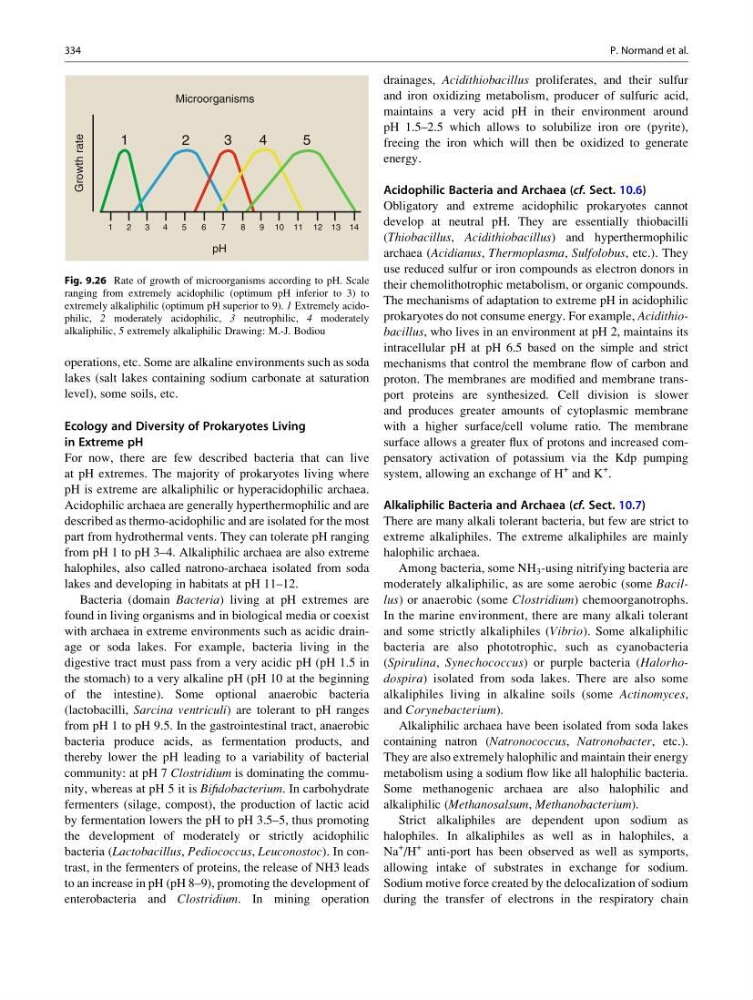
Fig. 9.26 Rate of growth of microorganisms according to pH. Scale
ranging from extremely acidophilic (optimum pH inferior to 3) to
extremely alkaliphilic (optimum pH superior to 9). 1 Extremely acidophilic, 2 moderately acidophilic, 3 neutrophilic, 4 moderately
alkaliphilic, 5 extremely alkaliphilic Drawing: M.-J. Bodiou
334
P. Normand et al.
lakes (salt lakes containing sodium carbonate at saturation
level), some soils, etc.
Ecology and Diversity of Prokaryotes Living
in Extreme pH
For now, there are few described bacteria that can live
at pH extremes. The majority of prokaryotes living where
pH is extreme are alkaliphilic or hyperacidophilic archaea.
Acidophilic archaea are generally hyperthermophilic and are
described as thermo-acidophilic and are isolated for the most
part from hydrothermal vents. They can tolerate pH ranging
from pH 1 to pH 3–4. Alkaliphilic archaea are also extreme
halophiles, also called natrono-archaea isolated from soda
lakes and developing in habitats at pH 11–12.
Bacteria (domain Bacteria) living at pH extremes are
found in living organisms and in biological media or coexist
with archaea in extreme environments such as acidic drainage or soda lakes. For example, bacteria living in the
digestive tract must pass from a very acidic pH (pH 1.5 in
the stomach) to a very alkaline pH (pH 10 at the beginning
of the intestine). Some optional anaerobic bacteria
(lactobacilli, Sarcina ventriculi) are tolerant to pH ranges
from pH 1 to pH 9.5. In the gastrointestinal tract, anaerobic
bacteria produce acids, as fermentation products, and
thereby lower the pH leading to a variability of bacterial
community: at pH 7 Clostridium is dominating the community, whereas at pH 5 it is Bifidobacterium. In carbohydrate
fermenters (silage, compost), the production of lactic acid
by fermentation lowers the pH to pH 3.5–5, thus promoting
the development of moderately or strictly acidophilic
bacteria (Lactobacillus, Pediococcus, Leuconostoc). In contrast, in the fermenters of proteins, the release of NH3 leads
to an increase in pH (pH 8–9), promoting the development of
enterobacteria and Clostridium. In mining operation
drainages, Acidithiobacillus proliferates, and their sulfur
and iron oxidizing metabolism, producer of sulfuric acid,
maintains a very acid pH in their environment around
pH 1.5–2.5 which allows to solubilize iron ore (pyrite),
freeing the iron which will then be oxidized to generate
energy.
Acidophilic Bacteria and Archaea (cf. Sect. 10.6)
Obligatory and extreme acidophilic prokaryotes cannot
develop at neutral pH. They are essentially thiobacilli
(Thiobacillus, Acidithiobacillus) and hyperthermophilic
archaea (Acidianus, Thermoplasma, Sulfolobus, etc.). They
use reduced sulfur or iron compounds as electron donors in
their chemolithotrophic metabolism, or organic compounds.
The mechanisms of adaptation to extreme pH in acidophilic
prokaryotes do not consume energy. For example, Acidithiobacillus, who lives in an environment at pH 2, maintains its
intracellular pH at pH 6.5 based on the simple and strict
mechanisms that control the membrane flow of carbon and
proton. The membranes are modified and membrane transport proteins are synthesized. Cell division is slower
and produces greater amounts of cytoplasmic membrane
with a higher surface/cell volume ratio. The membrane
surface allows a greater flux of protons and increased compensatory activation of potassium via the Kdp pumping
system, allowing an exchange of H
+ and K
+
.
Alkaliphilic Bacteria and Archaea (cf. Sect. 10.7)
There are many alkali tolerant bacteria, but few are strict to
extreme alkaliphiles. The extreme alkaliphiles are mainly
halophilic archaea.
Among bacteria, some NH 3 -using nitrifying bacteria are
moderately alkaliphilic, as are some aerobic (some Bacillus) or anaerobic (some Clostridium) chemoorganotrophs.
In the marine environment, there are many alkali tolerant
and some strictly alkaliphiles (Vibrio). Some alkaliphilic
bacteria are also phototrophic, such as cyanobacteria
(Spirulina, Synechococcus) or purple bacteria (Halorhodospira) isolated from soda lakes. There are also some
alkaliphiles living in alkaline soils (some Actinomyces,
and Corynebacterium).
Alkaliphilic archaea have been isolated from soda lakes
containing natron (Natronococcus, Natronobacter, etc.).
They are also extremely halophilic and maintain their energy
metabolism using a sodium flow like all halophilic bacteria.
Some methanogenic archaea are also halophilic and
alkaliphilic (Methanosalsum, Methanobacterium).
Strict alkaliphiles are dependent upon sodium as
halophiles. In alkaliphiles as well as in halophiles, a
Na
+ /H
+ anti-port has been observed as well as symports,
allowing intake of substrates in exchange for sodium.
Sodium motive force created by the delocalization of sodium
during the transfer of electrons in the respiratory chain
pH
1
2
3
4
5
6
7
8
9 10 11 12 13 14
Microorganisms
Growth rate
1
2
3
4
5
Fig. 9.26 Rate of growth of microorganisms according to pH. Scale
ranging from extremely acidophilic (optimum pH inferior to 3) to
extremely alkaliphilic (optimum pH superior to 9). 1 Extremely acidophilic, 2 moderately acidophilic, 3 neutrophilic, 4 moderately
alkaliphilic, 5 extremely alkaliphilic Drawing: M.-J. Bodiou
334
P. Normand et al.