

In thermophilic prokaryotes, enzymes are thermostable
and protected from denaturation. Thus, the metabolism
remains stable at high temperatures (cf. Sect. 10.2). Stability
seems to be maintained by supplementary hydrogen bonds
and bridges between polar groups. Changes in the amino
acid composition also affect the thermostability. Ribosomes
are also more resistant to heat: in the moderately thermophilic bacterium Bacillus stearothermophilus, ribosomes
resist to 77–82
C, while in E. coli, they resist to 66 C
only. Similarly, nucleic acids contain a greater percentage
of G + C, which presents a stabilizing effect for the double
strands. Finally, the membranes are rich in saturated fatty
acids, or polycyclic as hopanoids, to maintain their stability
at high temperatures. In contrast, phototrophic bacteria are
much more sensitive because of the thermolability of their
photosynthetic apparatus rich in unsaturated lipids. In hyperthermophilic archaea, many changes occur at several specific molecules, such as unique membrane lipids, transfer
RNA, nucleic acids, and certain specific enzymes.
The answers to the increase in temperature result in an
increase in K
+ present in the form of 2,3-diphosphoglycerate
potassium, by the change in the percentage of polyamines
with more penta-amines and in some cases by the
supercoiling of DNA.
Finally, it has been shown that thermophiles in general
had developed a specific usage of the code for certain amino
acids such as arginine and leucine (Singer and Hickey 2003);
a modified proportion of amino acids glutamic acid, lysine,
and arginine (Tekaia et al. 2002); generally an increase of
hydrophobic amino acids in theoretical proteomes (Lieph
et al. 2006); and finally a change in the fluidity of the
membrane by the synthesis of hopanoid lipids (Hermans
et al. 1991).
9.6.1.2 Low Temperatures
Bacteria that inhabit cold environments will be different
depending to their adaptations to low temperatures either
permanently or periodically. We therefore distinguish psychrophilic microorganisms (living in permanently
cold environments) and psychrotrophic microorganisms.
The psychrotrophic microorganisms are generally mesophilic bacteria that are able to continue to grow slowly
even at low temperatures, less than 5–7
C. For example,
mesophilic Bacillus (B. subtilis and B. megaterium), natural
inhabitants of soils, can develop at temperatures below 5
C.
The pathogen Yersinia pestis is able to live from À2
C to
+40
C. These psychrotrophic bacteria, also called facultative psychrophiles, are more widespread than the strict
psychrophiles. In fact, the latter are inhibited when temperature rises by a few degrees, thus leaving space for
psychrotrophs who have a great adaptability to the variations
of temperature, and thus can colonize a majority of cold
environments either permanently or periodically. These
bacteria can be harmful in certain preserved foods chilled
or frozen badly as Listeria monocytogenes which can grow
at 4
C in meat and cheese, called for this reason the bacteria
of the refrigerator. There are also eukaryotic microorganisms, such as yeasts and filamentous fungi, that live
in psychrotrophic environments (food, snow, etc.) and
contaminate it.
Strict psychrophilic microorganisms are essentially
bacteria, some archaea (cf. Sect. 10.2), and micro-eukaryotic
(micro-algae in the snow) restricted to permanently
cold environments, due to their high thermolability when
the temperature rises a few degrees. Indeed, these microorganisms are inhibited and even killed when they are
“warmed up” for a brief moment at room temperature.
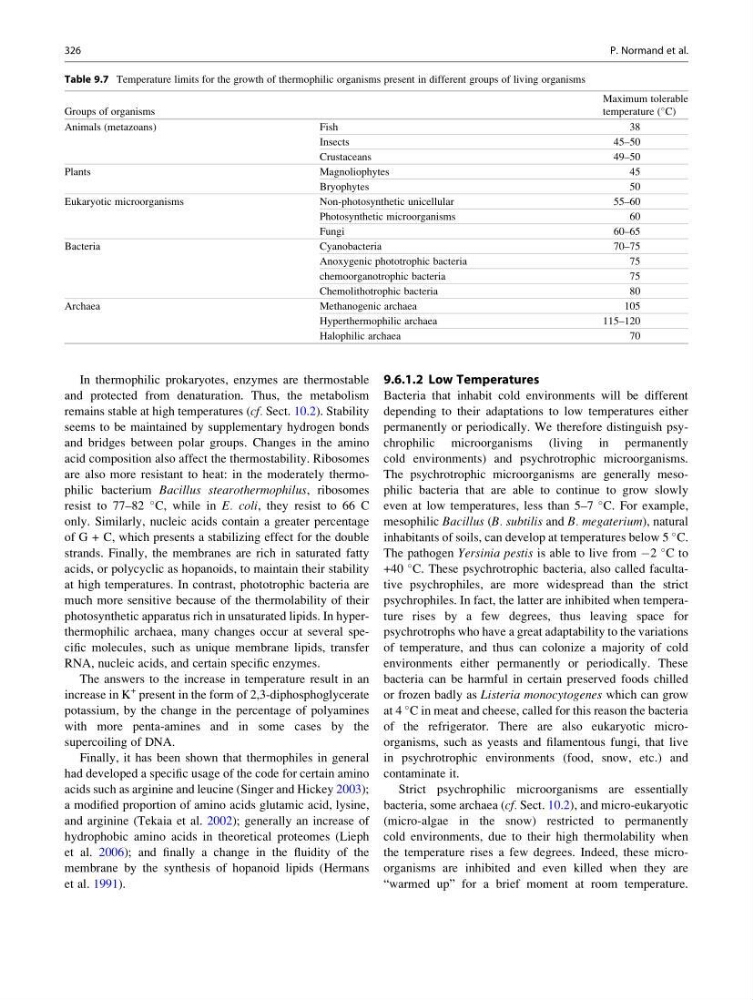
Table 9.7 Temperature limits for the growth of thermophilic organisms present in different groups of living organisms
Groups of organisms
Maximum tolerable
temperature (
C)
Animals (metazoans)
Fish
38
Insects
45–50
Crustaceans
49–50
Plants
Magnoliophytes
45
Bryophytes
50
Eukaryotic microorganisms
Non-photosynthetic unicellular
55–60
Photosynthetic microorganisms
60
Fungi
60–65
Bacteria
Cyanobacteria
70–75
Anoxygenic phototrophic bacteria
75
chemoorganotrophic bacteria
75
Chemolithotrophic bacteria
80
Archaea
Methanogenic archaea
105
Hyperthermophilic archaea
115–120
Halophilic archaea
70
326
P. Normand et al.
and protected from denaturation. Thus, the metabolism
remains stable at high temperatures (cf. Sect. 10.2). Stability
seems to be maintained by supplementary hydrogen bonds
and bridges between polar groups. Changes in the amino
acid composition also affect the thermostability. Ribosomes
are also more resistant to heat: in the moderately thermophilic bacterium Bacillus stearothermophilus, ribosomes
resist to 77–82
C, while in E. coli, they resist to 66 C
only. Similarly, nucleic acids contain a greater percentage
of G + C, which presents a stabilizing effect for the double
strands. Finally, the membranes are rich in saturated fatty
acids, or polycyclic as hopanoids, to maintain their stability
at high temperatures. In contrast, phototrophic bacteria are
much more sensitive because of the thermolability of their
photosynthetic apparatus rich in unsaturated lipids. In hyperthermophilic archaea, many changes occur at several specific molecules, such as unique membrane lipids, transfer
RNA, nucleic acids, and certain specific enzymes.
The answers to the increase in temperature result in an
increase in K
+ present in the form of 2,3-diphosphoglycerate
potassium, by the change in the percentage of polyamines
with more penta-amines and in some cases by the
supercoiling of DNA.
Finally, it has been shown that thermophiles in general
had developed a specific usage of the code for certain amino
acids such as arginine and leucine (Singer and Hickey 2003);
a modified proportion of amino acids glutamic acid, lysine,
and arginine (Tekaia et al. 2002); generally an increase of
hydrophobic amino acids in theoretical proteomes (Lieph
et al. 2006); and finally a change in the fluidity of the
membrane by the synthesis of hopanoid lipids (Hermans
et al. 1991).
9.6.1.2 Low Temperatures
Bacteria that inhabit cold environments will be different
depending to their adaptations to low temperatures either
permanently or periodically. We therefore distinguish psychrophilic microorganisms (living in permanently
cold environments) and psychrotrophic microorganisms.
The psychrotrophic microorganisms are generally mesophilic bacteria that are able to continue to grow slowly
even at low temperatures, less than 5–7
C. For example,
mesophilic Bacillus (B. subtilis and B. megaterium), natural
inhabitants of soils, can develop at temperatures below 5
C.
The pathogen Yersinia pestis is able to live from À2
C to
+40
C. These psychrotrophic bacteria, also called facultative psychrophiles, are more widespread than the strict
psychrophiles. In fact, the latter are inhibited when temperature rises by a few degrees, thus leaving space for
psychrotrophs who have a great adaptability to the variations
of temperature, and thus can colonize a majority of cold
environments either permanently or periodically. These
bacteria can be harmful in certain preserved foods chilled
or frozen badly as Listeria monocytogenes which can grow
at 4
C in meat and cheese, called for this reason the bacteria
of the refrigerator. There are also eukaryotic microorganisms, such as yeasts and filamentous fungi, that live
in psychrotrophic environments (food, snow, etc.) and
contaminate it.
Strict psychrophilic microorganisms are essentially
bacteria, some archaea (cf. Sect. 10.2), and micro-eukaryotic
(micro-algae in the snow) restricted to permanently
cold environments, due to their high thermolability when
the temperature rises a few degrees. Indeed, these microorganisms are inhibited and even killed when they are
“warmed up” for a brief moment at room temperature.
Table 9.7 Temperature limits for the growth of thermophilic organisms present in different groups of living organisms
Groups of organisms
Maximum tolerable
temperature (
C)
Animals (metazoans)
Fish
38
Insects
45–50
Crustaceans
49–50
Plants
Magnoliophytes
45
Bryophytes
50
Eukaryotic microorganisms
Non-photosynthetic unicellular
55–60
Photosynthetic microorganisms
60
Fungi
60–65
Bacteria
Cyanobacteria
70–75
Anoxygenic phototrophic bacteria
75
chemoorganotrophic bacteria
75
Chemolithotrophic bacteria
80
Archaea
Methanogenic archaea
105
Hyperthermophilic archaea
115–120
Halophilic archaea
70
326
P. Normand et al.