

species of the genus Leishmania are responsible for the
disease leishmaniasis; they are spread through sandflies of
the genus Phlebotomus in the Old World, and of the genus
Lutzomyia in America; their primary hosts are vertebrates
(e.g., dogs, rodents, and humans). Bodonidae (Bodo) live in
freshwater and feed on organic matter or are predators of
bacteria. Finally, many taxa of Kinetoplastida were discovered in hydrothermal vents of the Mid-Atlantic Ridge
(Lopez-Garcia et al. 2003).
7.13 Kingdom Excavates
7.13.1 General Remarks
For many authors, Excavates (sensu lato) include
Discicristates (e.g., Simpson 2003; Hampl et al. 2009).
Here they are reduced to Parabasalia, Diplomonadida,
Oxymonadida, Retortamonadida, and related taxa
(Fig. 7.1). The three latter taxa are generally met within
the phylum Metamonada. The Excavates include about 650
species, all unicellular (Lecointre and Le Guyader 2006).
They are unusual eukaryotes in lacking mitochondria. For
this reason, together with an artifact in phylogenetic and
clustering analyses (“long branch attraction”), they were
originally considered as “primitive” eukaryotes, diverging
from the others before the endosymbiosis at the origin of
mitochondria; however, as in Microsporidia (Opisthokonta),
they are now known to have lost mitochondria secondarily,
while retaining both organelles and nuclear genes derived
from them. Mitochondrial relics include hydrogenosomes,
which produce hydrogen, and mitosomes (Germot et al.
1997; Simpson 2003).
In Oxymonadida, Retortamonadida, and some Diplomonadida, there is a ventral groove that plays a role in
feeding: the beating of the undulipodiums pushes food
particles into the groove. The presence of the ventral groove
is almost a characteristic feature in Excavates, although it
may be slightly marked or absent. Its presence in
Percolobionta (Discicristates) indicates either an ancestral
Thylakoids stacked into 3-thylakoid lamellae.
Chlorophylls a and b
Chloroplast with a 3-membrane enveloppe
Prokaryotic DNA
Prokaryotic
ribosome 70 S
Cross section of one of
the strips of the pellicle
Plasmalemma
Nucleus
Eukaryotic
DNA
Cytoplasm
Mitochondrion
with pingpong racketlike cristae
Eukaryotic
ribosome 80 S
Extraplastidial
polysaccharide:
paramylon
Undulipodium with a single
spiraled row of mastigonemes
Contractile vacuole
Centrosome
Kinetosome
Stigma
Cytostome
Short naked
undulipodium
merging with
the other
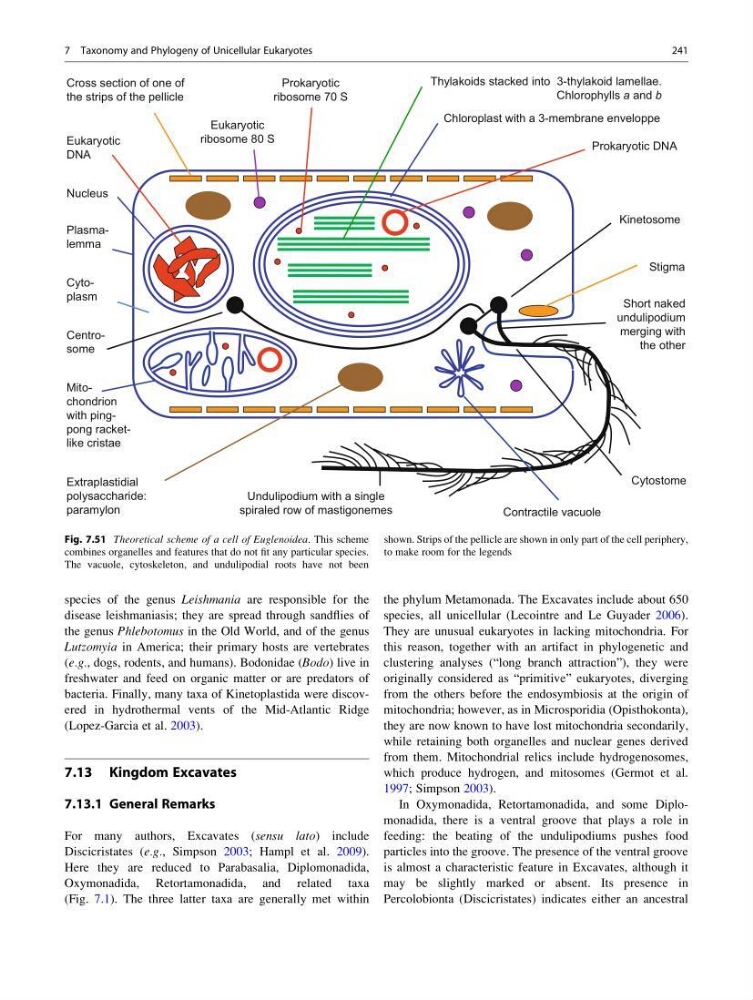
Fig. 7.51 Theoretical scheme of a cell of Euglenoidea. This scheme
combines organelles and features that do not fit any particular species.
The vacuole, cytoskeleton, and undulipodial roots have not been
shown. Strips of the pellicle are shown in only part of the cell periphery,
to make room for the legends
7 Taxonomy and Phylogeny of Unicellular Eukaryotes
241
disease leishmaniasis; they are spread through sandflies of
the genus Phlebotomus in the Old World, and of the genus
Lutzomyia in America; their primary hosts are vertebrates
(e.g., dogs, rodents, and humans). Bodonidae (Bodo) live in
freshwater and feed on organic matter or are predators of
bacteria. Finally, many taxa of Kinetoplastida were discovered in hydrothermal vents of the Mid-Atlantic Ridge
(Lopez-Garcia et al. 2003).
7.13 Kingdom Excavates
7.13.1 General Remarks
For many authors, Excavates (sensu lato) include
Discicristates (e.g., Simpson 2003; Hampl et al. 2009).
Here they are reduced to Parabasalia, Diplomonadida,
Oxymonadida, Retortamonadida, and related taxa
(Fig. 7.1). The three latter taxa are generally met within
the phylum Metamonada. The Excavates include about 650
species, all unicellular (Lecointre and Le Guyader 2006).
They are unusual eukaryotes in lacking mitochondria. For
this reason, together with an artifact in phylogenetic and
clustering analyses (“long branch attraction”), they were
originally considered as “primitive” eukaryotes, diverging
from the others before the endosymbiosis at the origin of
mitochondria; however, as in Microsporidia (Opisthokonta),
they are now known to have lost mitochondria secondarily,
while retaining both organelles and nuclear genes derived
from them. Mitochondrial relics include hydrogenosomes,
which produce hydrogen, and mitosomes (Germot et al.
1997; Simpson 2003).
In Oxymonadida, Retortamonadida, and some Diplomonadida, there is a ventral groove that plays a role in
feeding: the beating of the undulipodiums pushes food
particles into the groove. The presence of the ventral groove
is almost a characteristic feature in Excavates, although it
may be slightly marked or absent. Its presence in
Percolobionta (Discicristates) indicates either an ancestral
Thylakoids stacked into 3-thylakoid lamellae.
Chlorophylls a and b
Chloroplast with a 3-membrane enveloppe
Prokaryotic DNA
Prokaryotic
ribosome 70 S
Cross section of one of
the strips of the pellicle
Plasmalemma
Nucleus
Eukaryotic
DNA
Cytoplasm
Mitochondrion
with pingpong racketlike cristae
Eukaryotic
ribosome 80 S
Extraplastidial
polysaccharide:
paramylon
Undulipodium with a single
spiraled row of mastigonemes
Contractile vacuole
Centrosome
Kinetosome
Stigma
Cytostome
Short naked
undulipodium
merging with
the other
Fig. 7.51 Theoretical scheme of a cell of Euglenoidea. This scheme
combines organelles and features that do not fit any particular species.
The vacuole, cytoskeleton, and undulipodial roots have not been
shown. Strips of the pellicle are shown in only part of the cell periphery,
to make room for the legends
7 Taxonomy and Phylogeny of Unicellular Eukaryotes
241