

diatoms of the genus Licmophora (Feldmann and Feldmann
1955). Eurychasma spp. are widespread parasites of marine
Phaeophyceae (Chromobionta).
7.9.3 Chromobionta
The Chromobionta
26
(¼Chromobiota, Chromophyta,
Ochrophyta
27
) are a very large taxon within stramenopiles,
both by the number of species and the phylogenetic diversity
(Fig. 7.41). These include in particular organisms, mostly
photosynthetic, that tradition has called “brown algae”
(Phaeophyceae), “golden algae” (Chrysophyceae and
Synurophyceae) and “yellow algae” (Xanthophyceae). Most
taxa of Chromobionta are unicellular and/or colonial
(Table 7.5). Several taxa encompass very small-sized unicellular organisms (<3 μm); eukaryotic organisms whose size is
similar or identical to that of prokaryotes are designated under
the general term of pico-eukaryotes
28 (Box 5.2; cf. Sect. 5.1.2);
this is the case of Bolidophyceae (e.g., Bolidomonas),
Eustigmatophyceae (e.g., Nannochloropsis), Pelagophyceae
a Sporogen (2n)
b Conidiocyst
c Primary
conidium
(2n)
d
Conidial
cyst (2n)
e Secondary
conidium (2n)
f Male and female
sporocysts
meiosis
spores = gametes
Sporogen (2n)
Male sporocyst
Female sporocyst
Spore = female
gamete (n)
g Fertilization zygotes (2n)
Fertilization
tube
Fertilization
Caryogamy
h Zygote (2n)
i Carpoconidiogen
cyst (2n)
j Carpoconidium (2n)
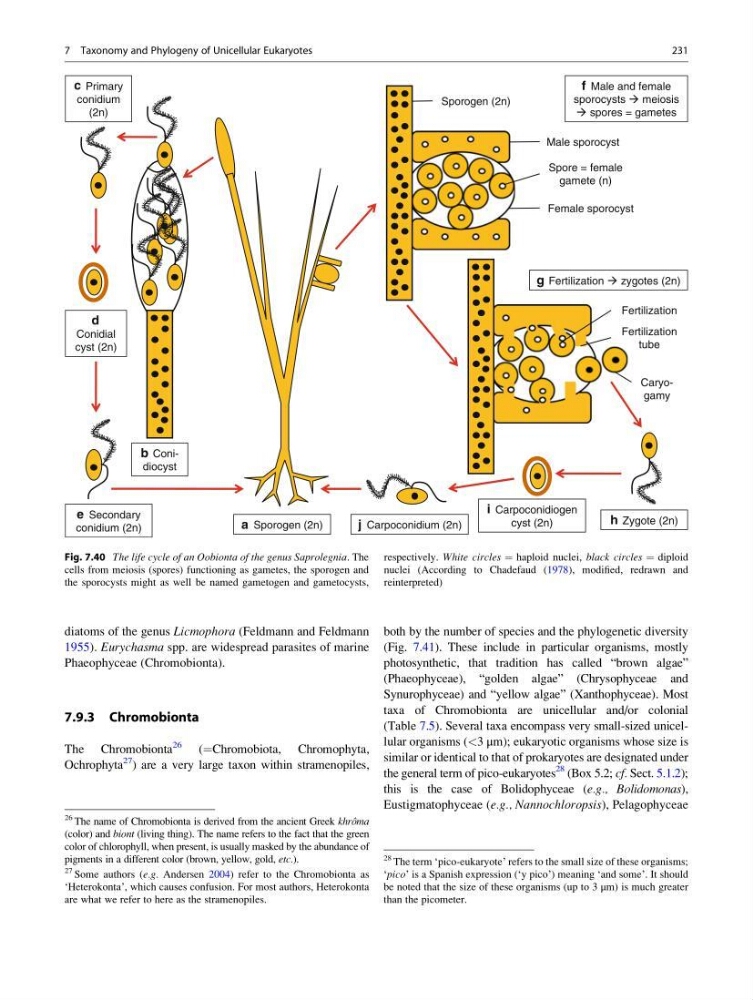
Fig. 7.40 The life cycle of an Oobionta of the genus Saprolegnia. The
cells from meiosis (spores) functioning as gametes, the sporogen and
the sporocysts might as well be named gametogen and gametocysts,
respectively. White circles ¼ haploid nuclei, black circles ¼ diploid
nuclei (According to Chadefaud (1978), modified, redrawn and
reinterpreted)
26 The name of Chromobionta is derived from the ancient Greek khro ˆma
(color) and biont (living thing). The name refers to the fact that the green
color of chlorophyll, when present, is usually masked by the abundance of
pigments in a different color (brown, yellow, gold, etc.).
27 Some authors (e.g. Andersen 2004) refer to the Chromobionta as
‘Heterokonta’, which causes confusion. For most authors, Heterokonta
are what we refer to here as the stramenopiles.
28 The term ‘pico-eukaryote’ refers to the small size of these organisms;
‘pico’ is a Spanish expression (‘y pico’) meaning ‘and some’. It should
be noted that the size of these organisms (up to 3 μm) is much greater
than the picometer.
7 Taxonomy and Phylogeny of Unicellular Eukaryotes
231
1955). Eurychasma spp. are widespread parasites of marine
Phaeophyceae (Chromobionta).
7.9.3 Chromobionta
The Chromobionta
26
(¼Chromobiota, Chromophyta,
Ochrophyta
27
) are a very large taxon within stramenopiles,
both by the number of species and the phylogenetic diversity
(Fig. 7.41). These include in particular organisms, mostly
photosynthetic, that tradition has called “brown algae”
(Phaeophyceae), “golden algae” (Chrysophyceae and
Synurophyceae) and “yellow algae” (Xanthophyceae). Most
taxa of Chromobionta are unicellular and/or colonial
(Table 7.5). Several taxa encompass very small-sized unicellular organisms (<3 μm); eukaryotic organisms whose size is
similar or identical to that of prokaryotes are designated under
the general term of pico-eukaryotes
28 (Box 5.2; cf. Sect. 5.1.2);
this is the case of Bolidophyceae (e.g., Bolidomonas),
Eustigmatophyceae (e.g., Nannochloropsis), Pelagophyceae
a Sporogen (2n)
b Conidiocyst
c Primary
conidium
(2n)
d
Conidial
cyst (2n)
e Secondary
conidium (2n)
f Male and female
sporocysts
meiosis
spores = gametes
Sporogen (2n)
Male sporocyst
Female sporocyst
Spore = female
gamete (n)
g Fertilization zygotes (2n)
Fertilization
tube
Fertilization
Caryogamy
h Zygote (2n)
i Carpoconidiogen
cyst (2n)
j Carpoconidium (2n)
Fig. 7.40 The life cycle of an Oobionta of the genus Saprolegnia. The
cells from meiosis (spores) functioning as gametes, the sporogen and
the sporocysts might as well be named gametogen and gametocysts,
respectively. White circles ¼ haploid nuclei, black circles ¼ diploid
nuclei (According to Chadefaud (1978), modified, redrawn and
reinterpreted)
26 The name of Chromobionta is derived from the ancient Greek khro ˆma
(color) and biont (living thing). The name refers to the fact that the green
color of chlorophyll, when present, is usually masked by the abundance of
pigments in a different color (brown, yellow, gold, etc.).
27 Some authors (e.g. Andersen 2004) refer to the Chromobionta as
‘Heterokonta’, which causes confusion. For most authors, Heterokonta
are what we refer to here as the stramenopiles.
28 The term ‘pico-eukaryote’ refers to the small size of these organisms;
‘pico’ is a Spanish expression (‘y pico’) meaning ‘and some’. It should
be noted that the size of these organisms (up to 3 μm) is much greater
than the picometer.
7 Taxonomy and Phylogeny of Unicellular Eukaryotes
231