

helida ?
Embryophyta
Charophyceae
Prasinophyceae
Rhodobionta
Glauco
-cystobionta
Lobosa
Mycetobionta
Chytridiomycota
Fungi
Choanoflagellata
Metazoa
(animals)
basalia
monadida
Euglenoidea
Kinetoplastida
Acrasiobionta
(= Heterolobosa)
Percolobionta
Chromobionta
Oobionta
Labyrinthulobionta
Ciliophora
Dinobionta
Apicomplexa
Radiolaria
Foraminifera
Chlorarachniobionta
EXCAVATES
DISCICRISTATES
STRAMENOPILES
(= HETEROKONTA)
ALVEOLATA
RHIZARIA
AMOEBOBIONTA (=
AMOEBOZOA)
OPISTHOKONTA
Actinophryda
HAPTOBIONTA
Chromalveolata Chromalveolata
Chlorobionta
Viridiplantae
Euglenobionta
Archamaeba
Phytomyxea
Haplosporidia
Unikonts
monadida
Oxymonadida
Streptobionta
Euglyphids
Retaria
Cercobionta
ARCHAEPLASTIDA
(=
(= PLANTAE) )
Ellobiopsidae
Bicosoecida
Eumetazoa
Placozoa
Porifera
Microsporidia
Ascomycota
Mesomycetozoa
Picobiliphyta ?
Katablepharida
Cryptophyta
CRYPTOBIONTA
Trentepohliophyceae
Ulvophyceae
totophyceae
LECA
Unicellular
Partly unicellular
Basidiomycota
Chlorophyceae
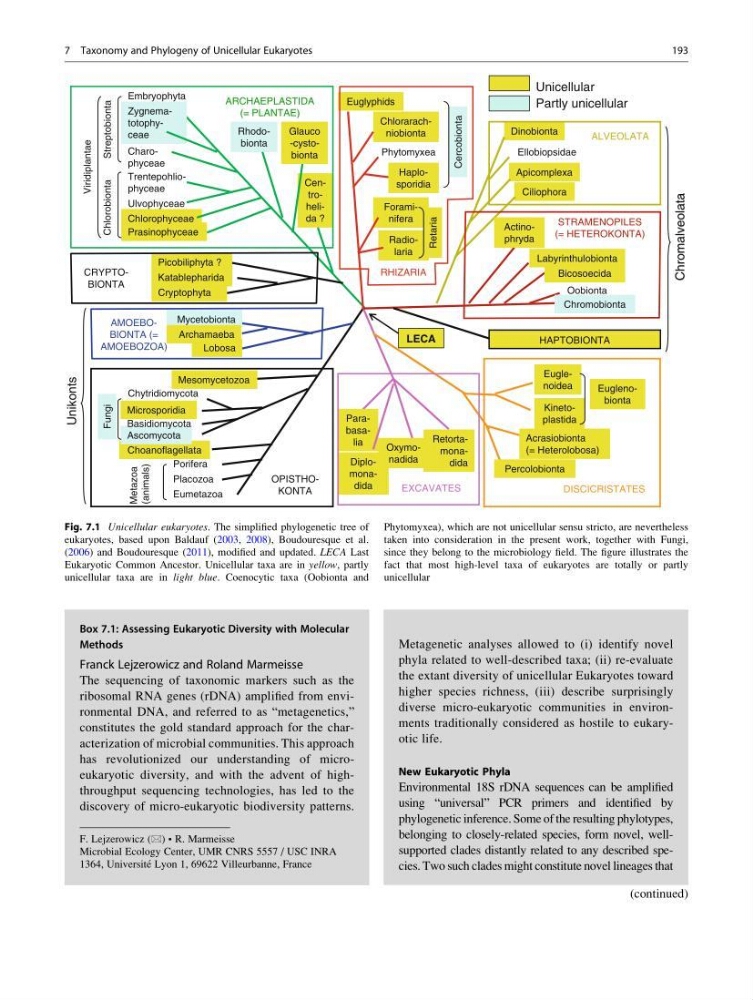
Fig. 7.1 Unicellular eukaryotes. The simplified phylogenetic tree of
eukaryotes, based upon Baldauf (2003, 2008), Boudouresque et al.
(2006) and Boudouresque (2011), modified and updated. LECA Last
Eukaryotic Common Ancestor. Unicellular taxa are in yellow, partly
unicellular taxa are in light blue. Coenocytic taxa (Oobionta and
Phytomyxea), which are not unicellular sensu stricto, are nevertheless
taken into consideration in the present work, together with Fungi,
since they belong to the microbiology field. The figure illustrates the
fact that most high-level taxa of eukaryotes are totally or partly
unicellular
Box 7.1: Assessing Eukaryotic Diversity with Molecular
Methods
Franck Lejzerowicz and Roland Marmeisse
The sequencing of taxonomic markers such as the
ribosomal RNA genes (rDNA) amplified from environmental DNA, and referred to as “metagenetics,”
constitutes the gold standard approach for the characterization of microbial communities. This approach
has revolutionized our understanding of microeukaryotic diversity, and with the advent of highthroughput sequencing technologies, has led to the
discovery of micro-eukaryotic biodiversity patterns.
F. Lejzerowicz (*) • R. Marmeisse
Microbial Ecology Center, UMR CNRS 5557 / USC INRA
1364, Universite ´ Lyon 1, 69622 Villeurbanne, France
(continued)
Box 7.1 (continued)
Metagenetic analyses allowed to (i) identify novel
phyla related to well-described taxa; (ii) re-evaluate
the extant diversity of unicellular Eukaryotes toward
higher species richness, (iii) describe surprisingly
diverse micro-eukaryotic communities in environments traditionally considered as hostile to eukaryotic life.
New Eukaryotic Phyla
Environmental 18S rDNA sequences can be amplified
using “universal” PCR primers and identified by
phylogenetic inference. Some of the resulting phylotypes,
belonging to closely-related species, form novel, wellsupported clades distantly related to any described species. Two such clades might constitute novel lineages that
(continued)
7 Taxonomy and Phylogeny of Unicellular Eukaryotes
193
Embryophyta
Charophyceae
Prasinophyceae
Rhodobionta
Glauco
-cystobionta
Lobosa
Mycetobionta
Chytridiomycota
Fungi
Choanoflagellata
Metazoa
(animals)
basalia
monadida
Euglenoidea
Kinetoplastida
Acrasiobionta
(= Heterolobosa)
Percolobionta
Chromobionta
Oobionta
Labyrinthulobionta
Ciliophora
Dinobionta
Apicomplexa
Radiolaria
Foraminifera
Chlorarachniobionta
EXCAVATES
DISCICRISTATES
STRAMENOPILES
(= HETEROKONTA)
ALVEOLATA
RHIZARIA
AMOEBOBIONTA (=
AMOEBOZOA)
OPISTHOKONTA
Actinophryda
HAPTOBIONTA
Chromalveolata Chromalveolata
Chlorobionta
Viridiplantae
Euglenobionta
Archamaeba
Phytomyxea
Haplosporidia
Unikonts
monadida
Oxymonadida
Streptobionta
Euglyphids
Retaria
Cercobionta
ARCHAEPLASTIDA
(=
(= PLANTAE) )
Ellobiopsidae
Bicosoecida
Eumetazoa
Placozoa
Porifera
Microsporidia
Ascomycota
Mesomycetozoa
Picobiliphyta ?
Katablepharida
Cryptophyta
CRYPTOBIONTA
Trentepohliophyceae
Ulvophyceae
totophyceae
LECA
Unicellular
Partly unicellular
Basidiomycota
Chlorophyceae
Fig. 7.1 Unicellular eukaryotes. The simplified phylogenetic tree of
eukaryotes, based upon Baldauf (2003, 2008), Boudouresque et al.
(2006) and Boudouresque (2011), modified and updated. LECA Last
Eukaryotic Common Ancestor. Unicellular taxa are in yellow, partly
unicellular taxa are in light blue. Coenocytic taxa (Oobionta and
Phytomyxea), which are not unicellular sensu stricto, are nevertheless
taken into consideration in the present work, together with Fungi,
since they belong to the microbiology field. The figure illustrates the
fact that most high-level taxa of eukaryotes are totally or partly
unicellular
Box 7.1: Assessing Eukaryotic Diversity with Molecular
Methods
Franck Lejzerowicz and Roland Marmeisse
The sequencing of taxonomic markers such as the
ribosomal RNA genes (rDNA) amplified from environmental DNA, and referred to as “metagenetics,”
constitutes the gold standard approach for the characterization of microbial communities. This approach
has revolutionized our understanding of microeukaryotic diversity, and with the advent of highthroughput sequencing technologies, has led to the
discovery of micro-eukaryotic biodiversity patterns.
F. Lejzerowicz (*) • R. Marmeisse
Microbial Ecology Center, UMR CNRS 5557 / USC INRA
1364, Universite ´ Lyon 1, 69622 Villeurbanne, France
(continued)
Box 7.1 (continued)
Metagenetic analyses allowed to (i) identify novel
phyla related to well-described taxa; (ii) re-evaluate
the extant diversity of unicellular Eukaryotes toward
higher species richness, (iii) describe surprisingly
diverse micro-eukaryotic communities in environments traditionally considered as hostile to eukaryotic life.
New Eukaryotic Phyla
Environmental 18S rDNA sequences can be amplified
using “universal” PCR primers and identified by
phylogenetic inference. Some of the resulting phylotypes,
belonging to closely-related species, form novel, wellsupported clades distantly related to any described species. Two such clades might constitute novel lineages that
(continued)
7 Taxonomy and Phylogeny of Unicellular Eukaryotes
193