

especially important; it is the phylum Proteobacteria originally called the phylum of purple bacteria.
The Phylum Proteobacteria
This phylum was originally called “purple bacteria” because
it includes pigmented photosynthetic bacteria. Anoxygenic
photosynthesis is carried out by these microorganisms by
using as an electron donor either an organic compound
(phototrophic purple nonsulfur bacteria) or inorganic
compounds such as sulfides, hydrogen, or iron (phototrophic
purple sulfur bacteria) via bacteriochlorophylls a or b (cf.
Sect. 3.3.4). Originally C. Woese had proposed the term
“purple bacteria phylum” to emphasize the photosynthetic
origin of this group; however, these photosynthetic bacteria
are found only in three classes among the six classes that
make up this phylum. In fact, in addition to the purple
bacteria, this phylum contains a large number of nonphotosynthetic bacteria corresponding to the majority of
Gram-negative bacterial genera currently known; it is a
very large and very varied phylum with different types of
bacterial metabolisms: phototrophy, chemoorganotrophy,
and chemolithotrophy. Analyses suggest that the absence
of photosynthesis observed in a majority of representatives
of this phylum is the result of a loss of this metabolism
initially present in their ancestor. Indeed, some nonphotosynthetic proteobacteria still have a portion of bacteriochlorophyll gene in their genome.
The Class Alphaproteobacteria
It includes many kinds of phototrophic purple nonsulfur
bacteria such as Rhodospirillum (Fig. 6.14g), Rhodobacter,
Rhodovulum, Rhodobium, and Rhodopseudomonas
(Fig. 6.14d). These genera are grouped into three levels
(Rhodospirillales, Rhodobacterales, and Rhizobiales).
Many chemoorganotrophic bacteria with varied ecological
niches (soil saprophytes, pathogens of plants or animals,
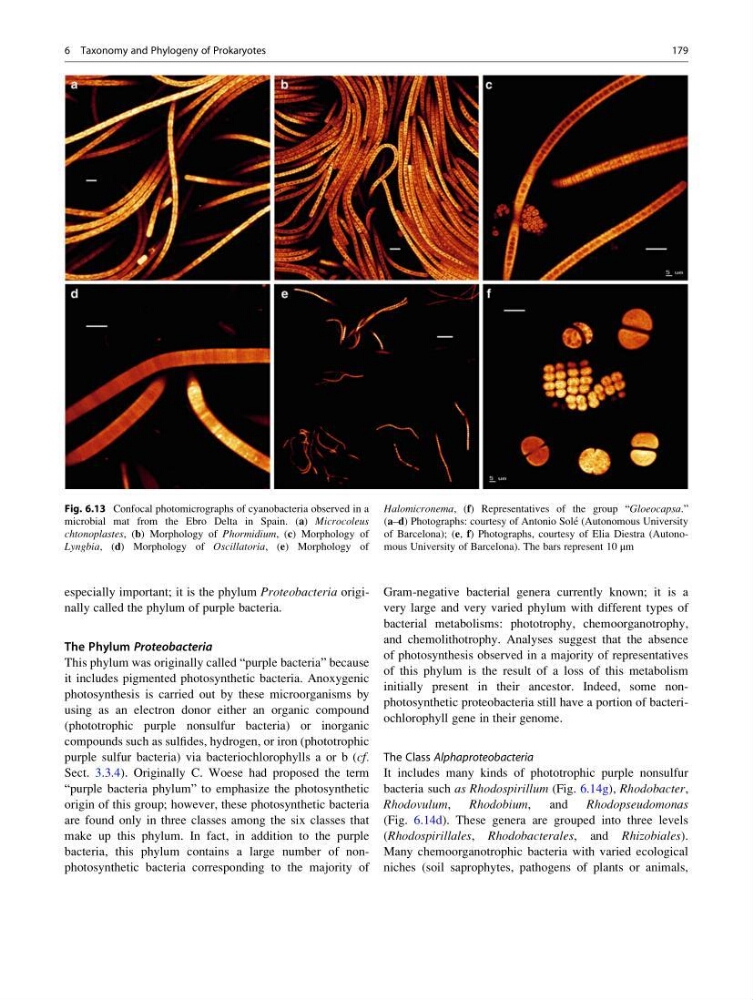
Fig. 6.13 Confocal photomicrographs of cyanobacteria observed in a
microbial mat from the Ebro Delta in Spain. (a) Microcoleus
chtonoplastes, (b) Morphology of Phormidium, (c) Morphology of
Lyngbia, (d) Morphology of Oscillatoria, (e) Morphology of
Halomicronema, (f) Representatives of the group “Gloeocapsa.”
(a–d) Photographs: courtesy of Antonio Sole ´ (Autonomous University
of Barcelona); (e, f) Photographs, courtesy of Elia Diestra (Autonomous University of Barcelona). The bars represent 10 μm
6 Taxonomy and Phylogeny of Prokaryotes
179
The Phylum Proteobacteria
This phylum was originally called “purple bacteria” because
it includes pigmented photosynthetic bacteria. Anoxygenic
photosynthesis is carried out by these microorganisms by
using as an electron donor either an organic compound
(phototrophic purple nonsulfur bacteria) or inorganic
compounds such as sulfides, hydrogen, or iron (phototrophic
purple sulfur bacteria) via bacteriochlorophylls a or b (cf.
Sect. 3.3.4). Originally C. Woese had proposed the term
“purple bacteria phylum” to emphasize the photosynthetic
origin of this group; however, these photosynthetic bacteria
are found only in three classes among the six classes that
make up this phylum. In fact, in addition to the purple
bacteria, this phylum contains a large number of nonphotosynthetic bacteria corresponding to the majority of
Gram-negative bacterial genera currently known; it is a
very large and very varied phylum with different types of
bacterial metabolisms: phototrophy, chemoorganotrophy,
and chemolithotrophy. Analyses suggest that the absence
of photosynthesis observed in a majority of representatives
of this phylum is the result of a loss of this metabolism
initially present in their ancestor. Indeed, some nonphotosynthetic proteobacteria still have a portion of bacteriochlorophyll gene in their genome.
The Class Alphaproteobacteria
It includes many kinds of phototrophic purple nonsulfur
bacteria such as Rhodospirillum (Fig. 6.14g), Rhodobacter,
Rhodovulum, Rhodobium, and Rhodopseudomonas
(Fig. 6.14d). These genera are grouped into three levels
(Rhodospirillales, Rhodobacterales, and Rhizobiales).
Many chemoorganotrophic bacteria with varied ecological
niches (soil saprophytes, pathogens of plants or animals,
Fig. 6.13 Confocal photomicrographs of cyanobacteria observed in a
microbial mat from the Ebro Delta in Spain. (a) Microcoleus
chtonoplastes, (b) Morphology of Phormidium, (c) Morphology of
Lyngbia, (d) Morphology of Oscillatoria, (e) Morphology of
Halomicronema, (f) Representatives of the group “Gloeocapsa.”
(a–d) Photographs: courtesy of Antonio Sole ´ (Autonomous University
of Barcelona); (e, f) Photographs, courtesy of Elia Diestra (Autonomous University of Barcelona). The bars represent 10 μm
6 Taxonomy and Phylogeny of Prokaryotes
179