

called beocytes for multiplication (such as genera
Pleurocapsa, Dermocarpa).
Subsection 3 (Oscillatoriales): it is formed of filamentous
cyanobacteria that divide by binary fission in a single
plane constituting long gliding filaments of identical
non-individualized cells as Oscillatoria, Spirulina, and
Microcoleus.
Subsection 4 (Nostocales): it corresponds to the filamentous
cyanobacteria with heterocysts – the filaments are formed
of photosynthetic cells sometimes interspersed with
differentiated cells (heterocysts). These do not make photosynthesis and do not produce oxygen but possess an
enzyme (nitrogenase) sensitive to oxygen which enables
them to fix atmospheric dinitrogen (N 2 ) by reducing it to
ammonium used by other cells of the filament (Stacey
et al. 1979). The best known are the genera Nostoc,
Anabaena, and Scytonema.
Subsection 5 (Stigonematales): it includes branched filamentous cyanobacteria as genera Fischerella and Stigonema.
Many cyanobacteria even non-heterocystous ones are
able to fix nitrogen from atmospheric dinitrogen. In this
case, nitrogenase must be protected from oxygen produced
during photosynthesis, either by being active especially in
dark phase or by a spatial cell organization in clusters,
allowing the cells at the center of the cluster to find an anoxic
environment (cf. Sect. 3.4.4).
In the phylum, Cyanobacteria are also prochlorophytes
with Prochlorococcus, Prochloron, and Prochlorothrix
genera, which are unicellular or filamentous, abundant in
marine phytoplankton. They contain chlorophyll a (as other
cyanobacteria) and b (as Viridiplantae chloroplasts), but do
not have phycobilins. These microorganisms thrive in the
euphotic zone of oligotrophic oceanic waters in the wide
open ocean. They are grouped within Chroococcales
(Subsection 1).
6.6.2.4 Other Gram-Negative Bacteria
This set consists of phyla B12 to B30 except phyla B14, B15,
and B16 (which include most of the Gram-positive bacteria),
that is to say 16 phyla in total. It includes the majority of
described species in the domain Bacteria. A phylum is
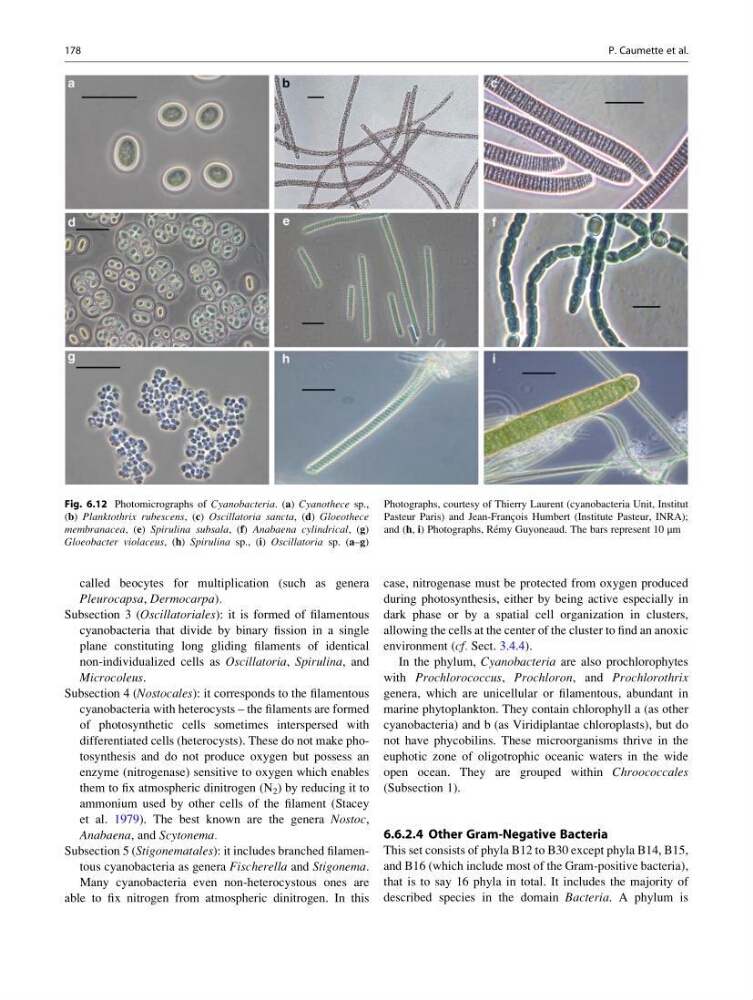
Fig. 6.12 Photomicrographs of Cyanobacteria. (a) Cyanothece sp.,
(b) Planktothrix rubescens, (c) Oscillatoria sancta, (d) Gloeothece
membranacea, (e) Spirulina subsala, (f) Anabaena cylindrical, (g)
Gloeobacter violaceus, (h) Spirulina sp., (i) Oscillatoria sp. (a–g)
Photographs, courtesy of Thierry Laurent (cyanobacteria Unit, Institut
Pasteur Paris) and Jean-Franc ¸ois Humbert (Institute Pasteur, INRA);
and (h, i) Photographs, Re ´my Guyoneaud. The bars represent 10 μm
178
P. Caumette et al.
Pleurocapsa, Dermocarpa).
Subsection 3 (Oscillatoriales): it is formed of filamentous
cyanobacteria that divide by binary fission in a single
plane constituting long gliding filaments of identical
non-individualized cells as Oscillatoria, Spirulina, and
Microcoleus.
Subsection 4 (Nostocales): it corresponds to the filamentous
cyanobacteria with heterocysts – the filaments are formed
of photosynthetic cells sometimes interspersed with
differentiated cells (heterocysts). These do not make photosynthesis and do not produce oxygen but possess an
enzyme (nitrogenase) sensitive to oxygen which enables
them to fix atmospheric dinitrogen (N 2 ) by reducing it to
ammonium used by other cells of the filament (Stacey
et al. 1979). The best known are the genera Nostoc,
Anabaena, and Scytonema.
Subsection 5 (Stigonematales): it includes branched filamentous cyanobacteria as genera Fischerella and Stigonema.
Many cyanobacteria even non-heterocystous ones are
able to fix nitrogen from atmospheric dinitrogen. In this
case, nitrogenase must be protected from oxygen produced
during photosynthesis, either by being active especially in
dark phase or by a spatial cell organization in clusters,
allowing the cells at the center of the cluster to find an anoxic
environment (cf. Sect. 3.4.4).
In the phylum, Cyanobacteria are also prochlorophytes
with Prochlorococcus, Prochloron, and Prochlorothrix
genera, which are unicellular or filamentous, abundant in
marine phytoplankton. They contain chlorophyll a (as other
cyanobacteria) and b (as Viridiplantae chloroplasts), but do
not have phycobilins. These microorganisms thrive in the
euphotic zone of oligotrophic oceanic waters in the wide
open ocean. They are grouped within Chroococcales
(Subsection 1).
6.6.2.4 Other Gram-Negative Bacteria
This set consists of phyla B12 to B30 except phyla B14, B15,
and B16 (which include most of the Gram-positive bacteria),
that is to say 16 phyla in total. It includes the majority of
described species in the domain Bacteria. A phylum is
Fig. 6.12 Photomicrographs of Cyanobacteria. (a) Cyanothece sp.,
(b) Planktothrix rubescens, (c) Oscillatoria sancta, (d) Gloeothece
membranacea, (e) Spirulina subsala, (f) Anabaena cylindrical, (g)
Gloeobacter violaceus, (h) Spirulina sp., (i) Oscillatoria sp. (a–g)
Photographs, courtesy of Thierry Laurent (cyanobacteria Unit, Institut
Pasteur Paris) and Jean-Franc ¸ois Humbert (Institute Pasteur, INRA);
and (h, i) Photographs, Re ´my Guyoneaud. The bars represent 10 μm
178
P. Caumette et al.