

If strain cultures are well preserved, microorganisms can
be “revived” and subcultured when requested to be studied
or used. Sometimes, however, strains with unusual physiological requirements may get lost, which is why it is so
important that international collections of microorganisms
should share their strains, and reference strains should be
deposited in several international collections.
6.3
Characterization of a Prokaryotic
Strain (Minimum Standards)
Strains of prokaryotes are characterized using two types of
criteria: phenotypic and genotypic criteria. The “minimum
standards” are the minimum phenotypic and genotypic
characters requested by the International Committee on Systematics of Prokaryotes (ICSP) which guarantees the description of species, their nomenclature, and their taxonomic
position. The International Committee on Systematics of
Prokaryotes brings together researchers in microbiology
from different countries chosen for their expertise in systematics of defined bacterial groups. The committee is assisted by
subcommittees corresponding to different bacterial groups,
for example, the subcommittee on photosynthetic bacteria,
the subcommittee for sulfate-reducing bacteria, the subcommittee for Gram-positive bacteria, the subcommittee for thermophilic archaea, etc.
6.3.1 Phenotypic Criteria
These correspond to phenotypic traits expressed by
microorganisms maintained in pure cultures. They must be
carefully chosen to distinguish clearly between microorganisms (Table 6.1). They must be easy to determine and
provide reproducible and reliable results. For a long time,
these phenotypic criteria were limited to morphological
characters: shape and size of the cells which constitute the
pure strains, types of cell aggregates, response to Gram
staining, presence of flagella, spore formation, the presence
of capsules, cell particularities, etc. If morphological criteria
have been used extensively (and successfully) for the classification of eukaryotes, the low morphological diversity of
prokaryotes (cocci, rods, spirilla, cf. Sect. 3.1.1) did not
allow developing a system for precise classification. However, this low morphological diversity is compensated by the
high prokaryotic metabolic diversity especially in energy
metabolism (cf. Sect. 3.3).
In prokaryotic microorganisms, the metabolic diversity,
whether relating to catabolism (energy metabolism: donors
and electron acceptors, respiratory, fermentative or photosynthetic types) or anabolism (sources of carbon, nitrogen, sulfur,
etc.), has been used to characterize strains of prokaryotes
relatively accurately. Many additional criteria were used in
some cases to refine the characterization and allow a better
classification. These are structural criteria (membrane lipids,
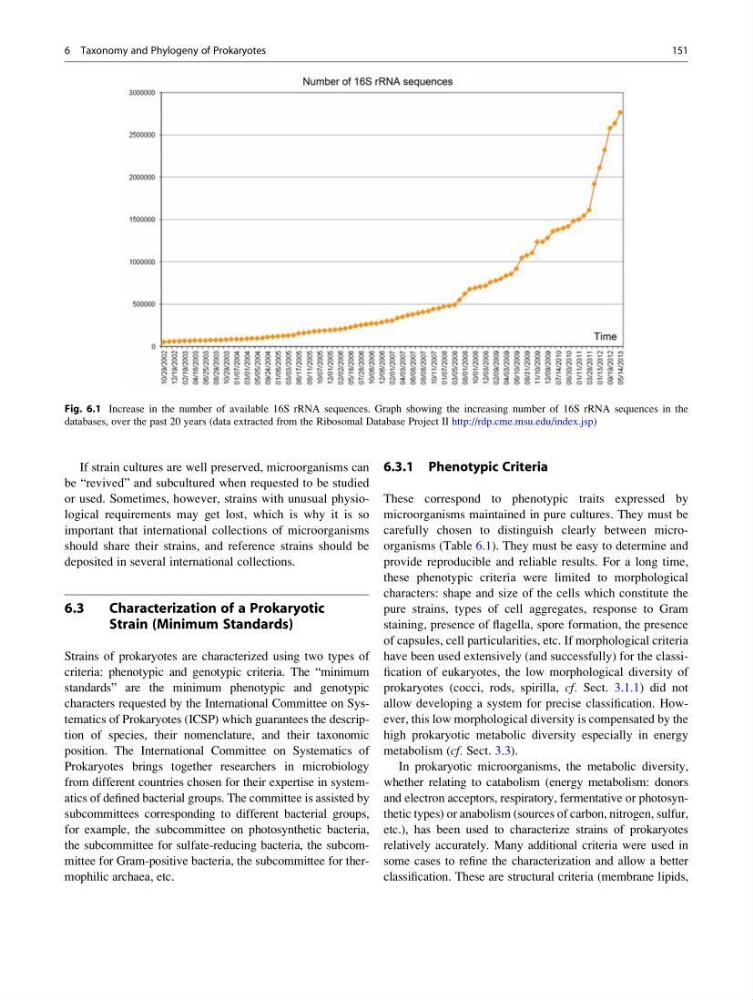
Fig. 6.1 Increase in the number of available 16S rRNA sequences. Graph showing the increasing number of 16S rRNA sequences in the
databases, over the past 20 years (data extracted from the Ribosomal Database Project II http://rdp.cme.msu.edu/index.jsp)
6 Taxonomy and Phylogeny of Prokaryotes
151
be “revived” and subcultured when requested to be studied
or used. Sometimes, however, strains with unusual physiological requirements may get lost, which is why it is so
important that international collections of microorganisms
should share their strains, and reference strains should be
deposited in several international collections.
6.3
Characterization of a Prokaryotic
Strain (Minimum Standards)
Strains of prokaryotes are characterized using two types of
criteria: phenotypic and genotypic criteria. The “minimum
standards” are the minimum phenotypic and genotypic
characters requested by the International Committee on Systematics of Prokaryotes (ICSP) which guarantees the description of species, their nomenclature, and their taxonomic
position. The International Committee on Systematics of
Prokaryotes brings together researchers in microbiology
from different countries chosen for their expertise in systematics of defined bacterial groups. The committee is assisted by
subcommittees corresponding to different bacterial groups,
for example, the subcommittee on photosynthetic bacteria,
the subcommittee for sulfate-reducing bacteria, the subcommittee for Gram-positive bacteria, the subcommittee for thermophilic archaea, etc.
6.3.1 Phenotypic Criteria
These correspond to phenotypic traits expressed by
microorganisms maintained in pure cultures. They must be
carefully chosen to distinguish clearly between microorganisms (Table 6.1). They must be easy to determine and
provide reproducible and reliable results. For a long time,
these phenotypic criteria were limited to morphological
characters: shape and size of the cells which constitute the
pure strains, types of cell aggregates, response to Gram
staining, presence of flagella, spore formation, the presence
of capsules, cell particularities, etc. If morphological criteria
have been used extensively (and successfully) for the classification of eukaryotes, the low morphological diversity of
prokaryotes (cocci, rods, spirilla, cf. Sect. 3.1.1) did not
allow developing a system for precise classification. However, this low morphological diversity is compensated by the
high prokaryotic metabolic diversity especially in energy
metabolism (cf. Sect. 3.3).
In prokaryotic microorganisms, the metabolic diversity,
whether relating to catabolism (energy metabolism: donors
and electron acceptors, respiratory, fermentative or photosynthetic types) or anabolism (sources of carbon, nitrogen, sulfur,
etc.), has been used to characterize strains of prokaryotes
relatively accurately. Many additional criteria were used in
some cases to refine the characterization and allow a better
classification. These are structural criteria (membrane lipids,
Fig. 6.1 Increase in the number of available 16S rRNA sequences. Graph showing the increasing number of 16S rRNA sequences in the
databases, over the past 20 years (data extracted from the Ribosomal Database Project II http://rdp.cme.msu.edu/index.jsp)
6 Taxonomy and Phylogeny of Prokaryotes
151