

5.4
The Origin of Eukaryotes
Eukaryotes differ from prokaryotes (Bacteria and Archaea)
by a variety of cytological and biochemical characteristics
(cf. Chap. 3), which confirm the robustness of molecular
phylogenies. Although many of these characters can be
observed in intermediate cases, there is no case of a species or
higher taxon for which there is doubt as to its position within
prokaryotes or eukaryotes.
According to Cavalier-Smith (2002b), it is the loss of the
prokaryotic cell wall that made possible the acquisition of
phagotrophy (ingestion of prey; secondarily lost in some
taxa such as Fungi) which is the major event in the evolution
of eukaryotes. Phagotrophy indeed has allowed endosymbiosis and therefore the acquisition of chloroplast, of
mitochondria and perhaps of kinetic apparatus (cf. Sects.
4.3.1 and 5.4.2).
5.4.1 How Old Are the First Eukaryotes?
Forterre and Philippe (1999) do not exclude that eukaryotes
are ancestral in the tree of life. Although this does not imply
that they then possessed all the characteristics that characterize them today, this assumption is rarely accepted. It is
generally accepted that eukaryotes are more recent than
prokaryotes. Based on the discovery of steranes (degradation
products of sterols and eukaryotic biomarkers
8 ) in the
2.7-Ga-old rocks of the Pilbara Craton (Australia), Brocks
et al. (1999) concluded that eukaryotes have the same
age (i.e., 2.7 Ga) (cf. Chap. 4). The oldest fossil attributed
to eukaryotes dates from 2.1 Ga (El Albani et al. 2010),
but it is doubtful. Less questionable eukaryotic remains
are 1.8 Ga old (Acritarchs, Buick 2010). Bangiomorpha
pubescens, much like the contemporaneous Rhodobionta,
is dated from 1.2 Ga (Butterfield 2000). Finally, CavalierSmith (2002a) argues for a more recent emergence
of eukaryotes (about 850 Ma), considered a sister group
of archaea. However, this hypothesis is rejected by a majority of authors. In the current state of our knowledge,
the emergence of eukaryotes is therefore between 2.7
and 1.8 Ga.
5.4.2 The Discovery of Endosymbiosis
At the end of the nineteenth century, biologists have been
intrigued by the brutality of the “jump” between the relative
simplicity of prokaryotic cells and the extreme complexity
of eukaryotic cells. Although prokaryotic cells are far from
being as simple as we have expected, the separation between
prokaryotes and eukaryotes is less clear-cut than previously
thought, with exceptions. However, these exceptions concern few isolated criteria, so that, overall, the “jump” is not
really questioned (cf. Sect. 5.4.1). For example, the fact that
archaea (the hyperthermophilic genus Thermoplasma) have
some eukaryotic characters do not undermine their archaeal
phylogenetic position (Waggoner 2001).
The apparent resemblance between a eukaryotic chloroplast, most particularly of Rhodobionta, and a cyanobacterium has led a German botanist, A. F. W. Schimper in 1883,
to suggest, in a context of a general indifference of scientists,
that chloroplasts can derive from cyanobacteria. It then took
more than 20 years, the time of one human generation, for
the idea to resurface, due to Mereschkowsky (1905, 1910).
The concepts developed by Mereschkowsky are insightful
and even modern: Mereschkowsky was the first to compare
chloroplasts to “little green slaves,” despite the limited
means of investigation at that time to buttress his hypothesis
(McFadden 2001). Knowledge in biochemistry at that time
was indeed modest, and the tools such as transmission or
scanning electron microscopy and, of course, molecular
phylogeny did not exist then.
Mereschkowsky knew that chloroplasts are “selfreproducing,” that is to say, in a cell, a new chloroplast
forms from the division of an existing chloroplast and,
upon the division of the eukaryotic cell, not only the nucleus
but also the chloroplast divide. There was no evidence of the
autonomous nature of the chloroplast, known later from
micromanipulation experiments: in a cell with a single chloroplast, if extracted, the cell is not able to form a new
Bacteria
Eukarya
Archaea
Proteobacteria
Cyanobacteria
Fungi
Euryarchaeota
Animalia
Plantae
Archezoa
Crenarchaeota
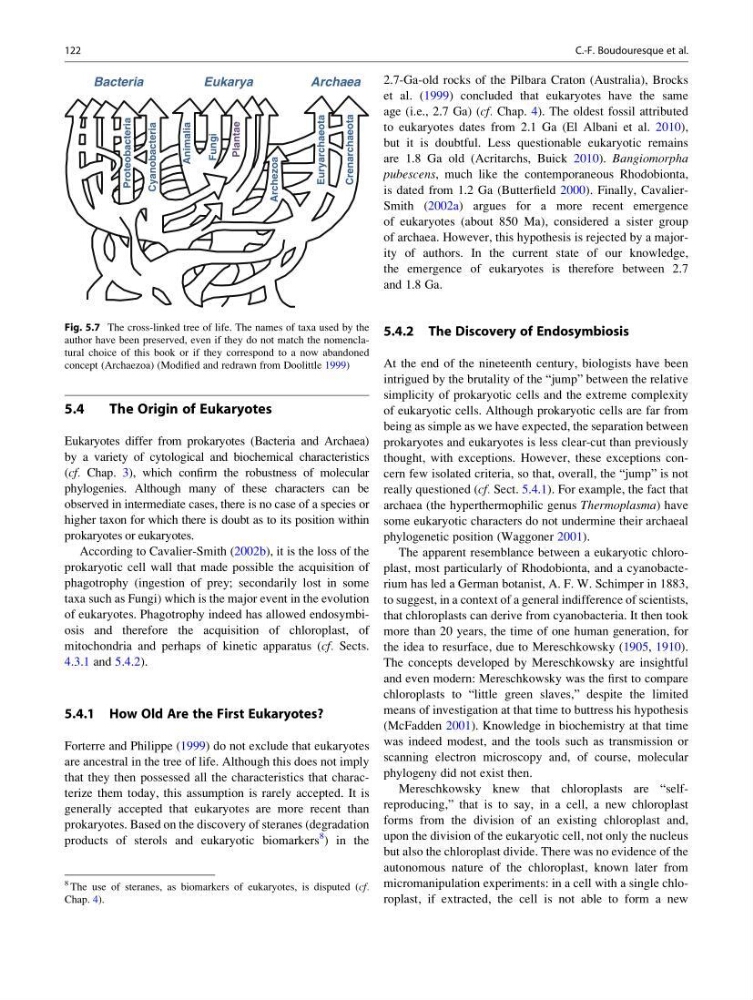
Fig. 5.7 The cross-linked tree of life. The names of taxa used by the
author have been preserved, even if they do not match the nomenclatural choice of this book or if they correspond to a now abandoned
concept (Archaezoa) (Modified and redrawn from Doolittle 1999)
8 The use of steranes, as biomarkers of eukaryotes, is disputed (cf.
Chap. 4).
122
C.-F. Boudouresque et al.
The Origin of Eukaryotes
Eukaryotes differ from prokaryotes (Bacteria and Archaea)
by a variety of cytological and biochemical characteristics
(cf. Chap. 3), which confirm the robustness of molecular
phylogenies. Although many of these characters can be
observed in intermediate cases, there is no case of a species or
higher taxon for which there is doubt as to its position within
prokaryotes or eukaryotes.
According to Cavalier-Smith (2002b), it is the loss of the
prokaryotic cell wall that made possible the acquisition of
phagotrophy (ingestion of prey; secondarily lost in some
taxa such as Fungi) which is the major event in the evolution
of eukaryotes. Phagotrophy indeed has allowed endosymbiosis and therefore the acquisition of chloroplast, of
mitochondria and perhaps of kinetic apparatus (cf. Sects.
4.3.1 and 5.4.2).
5.4.1 How Old Are the First Eukaryotes?
Forterre and Philippe (1999) do not exclude that eukaryotes
are ancestral in the tree of life. Although this does not imply
that they then possessed all the characteristics that characterize them today, this assumption is rarely accepted. It is
generally accepted that eukaryotes are more recent than
prokaryotes. Based on the discovery of steranes (degradation
products of sterols and eukaryotic biomarkers
8 ) in the
2.7-Ga-old rocks of the Pilbara Craton (Australia), Brocks
et al. (1999) concluded that eukaryotes have the same
age (i.e., 2.7 Ga) (cf. Chap. 4). The oldest fossil attributed
to eukaryotes dates from 2.1 Ga (El Albani et al. 2010),
but it is doubtful. Less questionable eukaryotic remains
are 1.8 Ga old (Acritarchs, Buick 2010). Bangiomorpha
pubescens, much like the contemporaneous Rhodobionta,
is dated from 1.2 Ga (Butterfield 2000). Finally, CavalierSmith (2002a) argues for a more recent emergence
of eukaryotes (about 850 Ma), considered a sister group
of archaea. However, this hypothesis is rejected by a majority of authors. In the current state of our knowledge,
the emergence of eukaryotes is therefore between 2.7
and 1.8 Ga.
5.4.2 The Discovery of Endosymbiosis
At the end of the nineteenth century, biologists have been
intrigued by the brutality of the “jump” between the relative
simplicity of prokaryotic cells and the extreme complexity
of eukaryotic cells. Although prokaryotic cells are far from
being as simple as we have expected, the separation between
prokaryotes and eukaryotes is less clear-cut than previously
thought, with exceptions. However, these exceptions concern few isolated criteria, so that, overall, the “jump” is not
really questioned (cf. Sect. 5.4.1). For example, the fact that
archaea (the hyperthermophilic genus Thermoplasma) have
some eukaryotic characters do not undermine their archaeal
phylogenetic position (Waggoner 2001).
The apparent resemblance between a eukaryotic chloroplast, most particularly of Rhodobionta, and a cyanobacterium has led a German botanist, A. F. W. Schimper in 1883,
to suggest, in a context of a general indifference of scientists,
that chloroplasts can derive from cyanobacteria. It then took
more than 20 years, the time of one human generation, for
the idea to resurface, due to Mereschkowsky (1905, 1910).
The concepts developed by Mereschkowsky are insightful
and even modern: Mereschkowsky was the first to compare
chloroplasts to “little green slaves,” despite the limited
means of investigation at that time to buttress his hypothesis
(McFadden 2001). Knowledge in biochemistry at that time
was indeed modest, and the tools such as transmission or
scanning electron microscopy and, of course, molecular
phylogeny did not exist then.
Mereschkowsky knew that chloroplasts are “selfreproducing,” that is to say, in a cell, a new chloroplast
forms from the division of an existing chloroplast and,
upon the division of the eukaryotic cell, not only the nucleus
but also the chloroplast divide. There was no evidence of the
autonomous nature of the chloroplast, known later from
micromanipulation experiments: in a cell with a single chloroplast, if extracted, the cell is not able to form a new
Bacteria
Eukarya
Archaea
Proteobacteria
Cyanobacteria
Fungi
Euryarchaeota
Animalia
Plantae
Archezoa
Crenarchaeota
Fig. 5.7 The cross-linked tree of life. The names of taxa used by the
author have been preserved, even if they do not match the nomenclatural choice of this book or if they correspond to a now abandoned
concept (Archaezoa) (Modified and redrawn from Doolittle 1999)
8 The use of steranes, as biomarkers of eukaryotes, is disputed (cf.
Chap. 4).
122
C.-F. Boudouresque et al.