

Despite their divergences, both teams admit that life
existed at that time. In particular, Martin Brasier and his
team identified an enrichment of
12 C atoms compared to
13 C
atoms which is a reflection of autotrophic activity. However,
they interpret the
12
C enrichment as a reflection of the
activity of methanogens and not as the activity of photosynthetic bacteria (Brasier et al. 2006).
4.2.3.7 Other Fossil Traces of Prokaryotic Cells
Stromatolites and photosynthetic microbial mats are not
the only traces of ancient life. Sediments on the early Earth
were mainly composed of volcanic ash and dust that could
have provided habitats for chemolithotrophic microorganisms. The glassy surfaces of lava extruded underwater
(pillow lava) are also a favoured habitat for chemolithotrophs.
5
4,5
4
3,5
3
2,5
2
1,5
1
0,5
0
Earth
formation
Years
(Billions)
O 2
percent in
atmosphere
0,1
1
10
20
OXYGENIC
PHOTOSYNTHESIS
Steranes
(Eukaryotes ?)
Ediacara fauna
Unicellular
fossil
eukaryotes
ACETOGENESIS
ANNAMOX
DENITRIFICATION
METHANOGENESIS
ANAEROBIC OXIDATION OF METHANE
ANOXYGENIC PHOTOSYNTHESIS
IRON REDUCTION
NITRATE REDUCTION
SULFATE REDUCTION
2 α - methylhopanes
Pluricellular
fossil eukaryotes
PHANERO
ZOIC
HADEAN
ARCHAEAN
PROTEROZOIC
STROMATOLITES
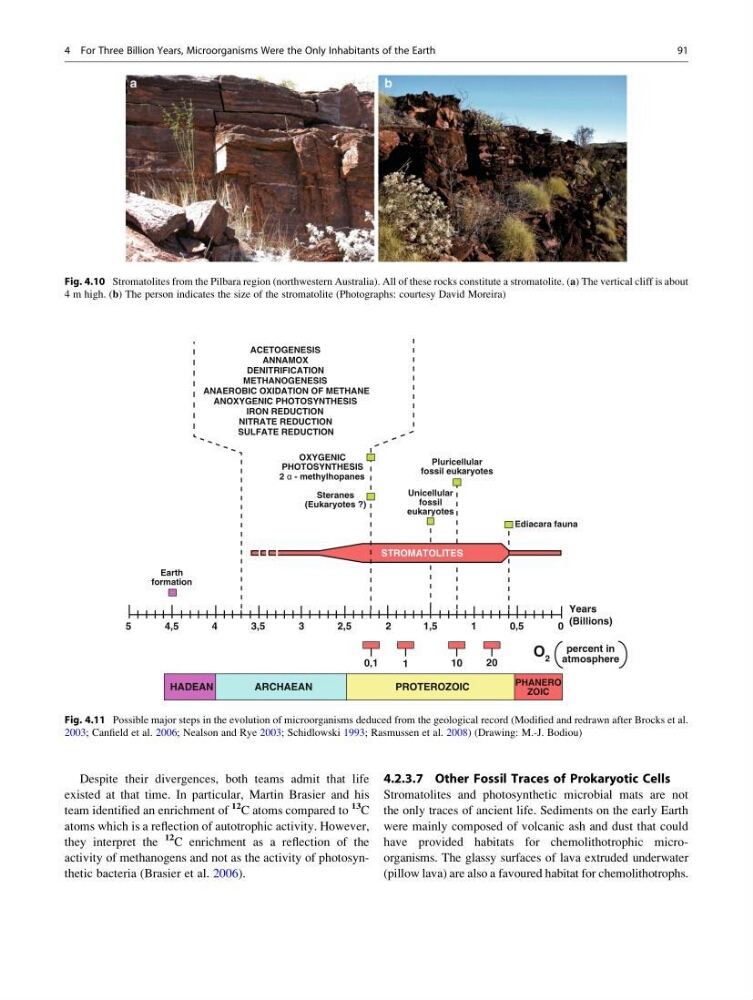
Fig. 4.11 Possible major steps in the evolution of microorganisms deduced from the geological record (Modified and redrawn after Brocks et al.
2003; Canfield et al. 2006; Nealson and Rye 2003; Schidlowski 1993; Rasmussen et al. 2008) (Drawing: M.-J. Bodiou)
Fig. 4.10 Stromatolites from the Pilbara region (northwestern Australia). All of these rocks constitute a stromatolite. (a) The vertical cliff is about
4 m high. (b) The person indicates the size of the stromatolite (Photographs: courtesy David Moreira)
4 For Three Billion Years, Microorganisms Were the Only Inhabitants of the Earth
91
existed at that time. In particular, Martin Brasier and his
team identified an enrichment of
12 C atoms compared to
13 C
atoms which is a reflection of autotrophic activity. However,
they interpret the
12
C enrichment as a reflection of the
activity of methanogens and not as the activity of photosynthetic bacteria (Brasier et al. 2006).
4.2.3.7 Other Fossil Traces of Prokaryotic Cells
Stromatolites and photosynthetic microbial mats are not
the only traces of ancient life. Sediments on the early Earth
were mainly composed of volcanic ash and dust that could
have provided habitats for chemolithotrophic microorganisms. The glassy surfaces of lava extruded underwater
(pillow lava) are also a favoured habitat for chemolithotrophs.
5
4,5
4
3,5
3
2,5
2
1,5
1
0,5
0
Earth
formation
Years
(Billions)
O 2
percent in
atmosphere
0,1
1
10
20
OXYGENIC
PHOTOSYNTHESIS
Steranes
(Eukaryotes ?)
Ediacara fauna
Unicellular
fossil
eukaryotes
ACETOGENESIS
ANNAMOX
DENITRIFICATION
METHANOGENESIS
ANAEROBIC OXIDATION OF METHANE
ANOXYGENIC PHOTOSYNTHESIS
IRON REDUCTION
NITRATE REDUCTION
SULFATE REDUCTION
2 α - methylhopanes
Pluricellular
fossil eukaryotes
PHANERO
ZOIC
HADEAN
ARCHAEAN
PROTEROZOIC
STROMATOLITES
Fig. 4.11 Possible major steps in the evolution of microorganisms deduced from the geological record (Modified and redrawn after Brocks et al.
2003; Canfield et al. 2006; Nealson and Rye 2003; Schidlowski 1993; Rasmussen et al. 2008) (Drawing: M.-J. Bodiou)
Fig. 4.10 Stromatolites from the Pilbara region (northwestern Australia). All of these rocks constitute a stromatolite. (a) The vertical cliff is about
4 m high. (b) The person indicates the size of the stromatolite (Photographs: courtesy David Moreira)
4 For Three Billion Years, Microorganisms Were the Only Inhabitants of the Earth
91