

694
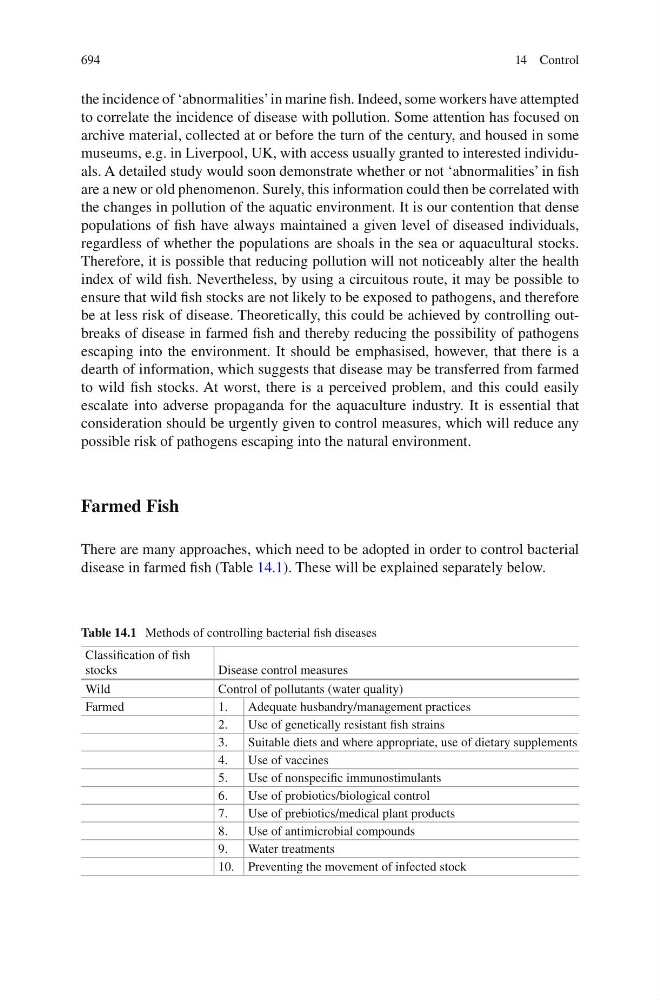
Table 14.1 Methods of controlling bacterial fi sh diseases
Classifi cation of fi sh
stocks
Disease control measures
Wild
Control of pollutants (water quality)
Farmed
1.
Adequate husbandry/management practices
2.
Use of genetically resistant fi sh strains
3.
Suitable diets and where appropriate, use of dietary supplements
4.
Use of vaccines
5.
Use of nonspecifi c immunostimulants
6.
Use of probiotics/biological control
7.
Use of prebiotics/medical plant products
8.
Use of antimicrobial compounds
9.
Water treatments
10. Preventing the movement of infected stock
the incidence of ‘abnormalities’ in marine fi sh. Indeed, some workers have attempted
to correlate the incidence of disease with pollution. Some attention has focused on
archive material, collected at or before the turn of the century, and housed in some
museums, e.g. in Liverpool, UK, with access usually granted to interested individuals. A detailed study would soon demonstrate whether or not ‘abnormalities’ in fi sh
are a new or old phenomenon. Surely, this information could then be correlated with
the changes in pollution of the aquatic environment. It is our contention that dense
populations of fi sh have always maintained a given level of diseased individuals,
regardless of whether the populations are shoals in the sea or aquacultural stocks.
Therefore, it is possible that reducing pollution will not noticeably alter the health
index of wild fi sh. Nevertheless, by using a circuitous route, it may be possible to
ensure that wild fi sh stocks are not likely to be exposed to pathogens, and therefore
be at less risk of disease. Theoretically, this could be achieved by controlling outbreaks of disease in farmed fi sh and thereby reducing the possibility of pathogens
escaping into the environment. It should be emphasised, however, that there is a
dearth of information, which suggests that disease may be transferred from farmed
to wild fi sh stocks. At worst, there is a perceived problem, and this could easily
escalate into adverse propaganda for the aquaculture industry. It is essential that
consideration should be urgently given to control measures, which will reduce any
possible risk of pathogens escaping into the natural environment.
Farmed Fish
There are many approaches, which need to be adopted in order to control bacterial
disease in farmed fi sh (Table 14.1 ). These will be explained separately below.
14 Control