

their comparatively low diversity, but this feature is arguably also related to the harsh environmental conditions
defining the niche. Today’s mangrove flora includes representatives of at least 21 plant families, testament to the
adaptive success of various phylogenetic lineages venturing into the intertidal zone from upland rainforest ancestors. This small group of highly specialized plants tap
rich estuarine nutrients with characteristically shallow
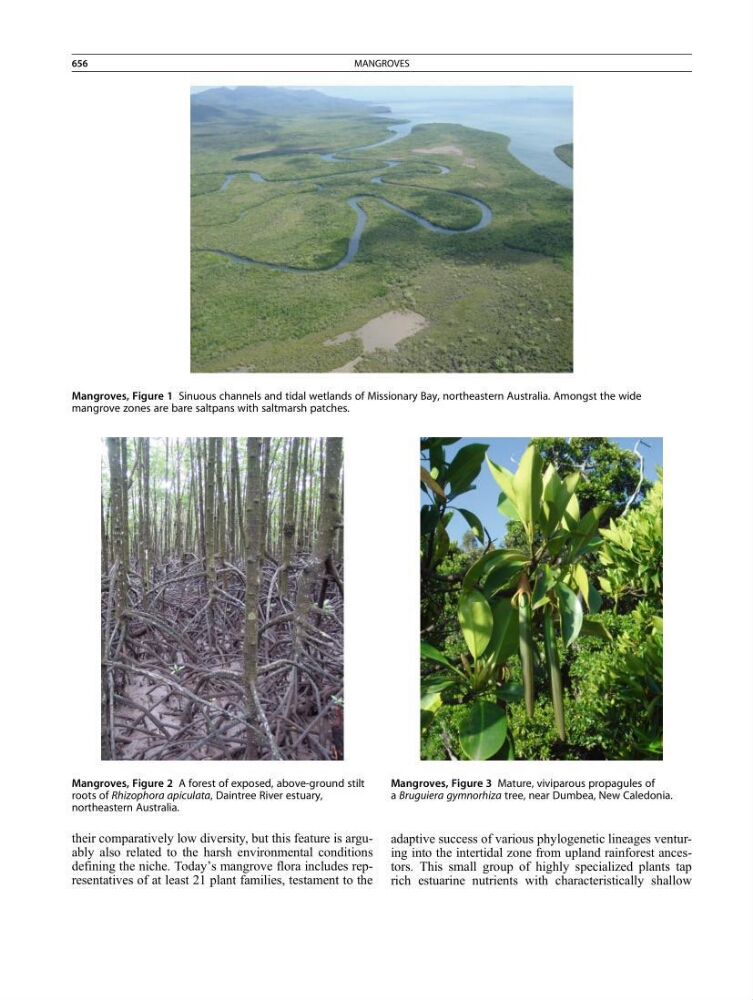
Mangroves, Figure 1 Sinuous channels and tidal wetlands of Missionary Bay, northeastern Australia. Amongst the wide
mangrove zones are bare saltpans with saltmarsh patches.
Mangroves, Figure 2 A forest of exposed, above-ground stilt
roots of Rhizophora apiculata, Daintree River estuary,
northeastern Australia.
Mangroves, Figure 3 Mature, viviparous propagules of
a Bruguiera gymnorhiza tree, near Dumbea, New Caledonia.
656
MANGROVES