

Changes to these figures occur through time. Greater
porosity may result from bio-erosion while denser framework results from compaction and deposition of marine
cements.
Bibliography
Buddemeir, R. W., Maragos, J. E., and Knutson, D. W., 1974.
Radiographic studies of reef coral exoskeletons: rates and patterns of coral growth. Journal of Experimental Marine. Biology
and Ecology, 14, 179–200.
Chave, K., Smith, S. V., and Roy, K. J., 1972. Carbonate production
by coral reefs. Marine Biology, 12, 123–140.
Davies, P. J., 1983. Reef growth. In Barnes, D. J. (ed.), Perspectives
on Coral Reefs. Townsville: Australian Institute of Marine Science, pp. 69–106.
Davies, P. J., and Hopley, D., 1983. Growth facies and growth rates
of Holocene reefs in the Great Barrier Reef. Bureau Mineral
Resources Journal of Australian Geology and Geophysics, 8,
237–251.
Hopley, D., Smithers, S. G., and Parnell, K. E., 2007. The
Geomorphology of the Great Barrier Reef: Development,
Diversity and Change. Cambridge: Cambridge University Press,
p. 532.
Kinsey, D. W., 1985. Metabolism, calcification and carbon production: 1 Systems level studies. In Proceedings of the 5th International Coral Reef Congress. Tahiti, Vol. 4, pp. 505–526.
Smith, S. V. 1983. Coral reef calcification. In Barnes D. J. (ed.),
Perspectives on Coral Reefs. Townsville: Australian Institute
Marine Science, pp. 240–247.
Cross-references
Aragonite
Calcite
Carbonate Budgets and Reef Framework Accumulation
Porosity Variability in Limestone Sequences
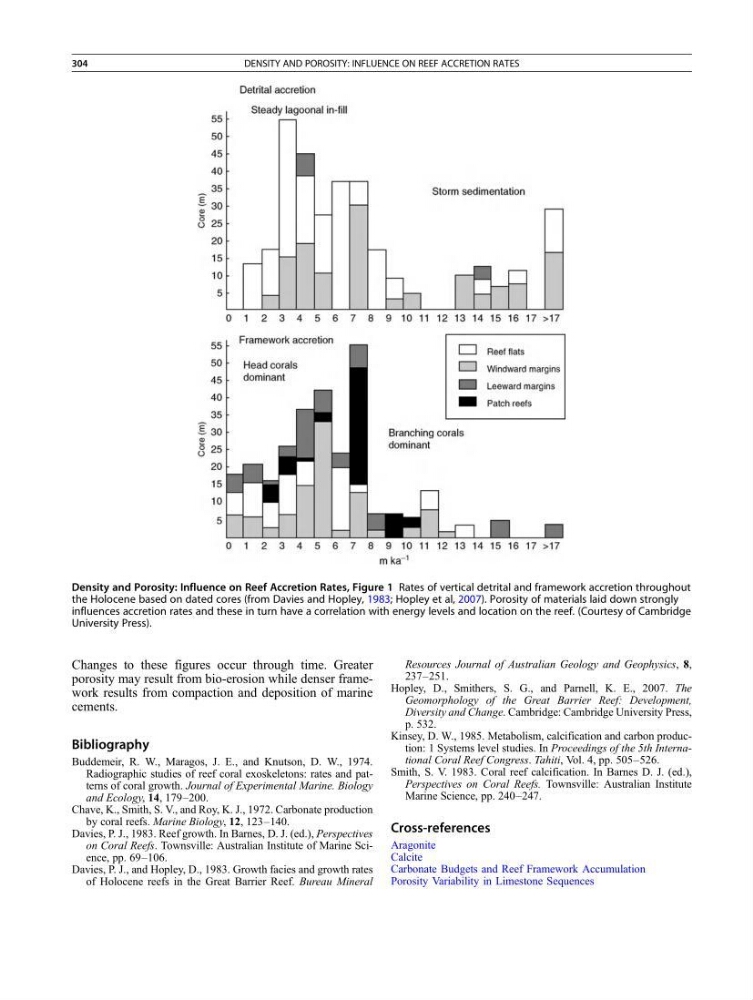
Density and Porosity: Influence on Reef Accretion Rates, Figure 1 Rates of vertical detrital and framework accretion throughout
the Holocene based on dated cores (from Davies and Hopley, 1983; Hopley et al, 2007). Porosity of materials laid down strongly
influences accretion rates and these in turn have a correlation with energy levels and location on the reef. (Courtesy of Cambridge
University Press).
304
DENSITY AND POROSITY: INFLUENCE ON REEF ACCRETION RATES
porosity may result from bio-erosion while denser framework results from compaction and deposition of marine
cements.
Bibliography
Buddemeir, R. W., Maragos, J. E., and Knutson, D. W., 1974.
Radiographic studies of reef coral exoskeletons: rates and patterns of coral growth. Journal of Experimental Marine. Biology
and Ecology, 14, 179–200.
Chave, K., Smith, S. V., and Roy, K. J., 1972. Carbonate production
by coral reefs. Marine Biology, 12, 123–140.
Davies, P. J., 1983. Reef growth. In Barnes, D. J. (ed.), Perspectives
on Coral Reefs. Townsville: Australian Institute of Marine Science, pp. 69–106.
Davies, P. J., and Hopley, D., 1983. Growth facies and growth rates
of Holocene reefs in the Great Barrier Reef. Bureau Mineral
Resources Journal of Australian Geology and Geophysics, 8,
237–251.
Hopley, D., Smithers, S. G., and Parnell, K. E., 2007. The
Geomorphology of the Great Barrier Reef: Development,
Diversity and Change. Cambridge: Cambridge University Press,
p. 532.
Kinsey, D. W., 1985. Metabolism, calcification and carbon production: 1 Systems level studies. In Proceedings of the 5th International Coral Reef Congress. Tahiti, Vol. 4, pp. 505–526.
Smith, S. V. 1983. Coral reef calcification. In Barnes D. J. (ed.),
Perspectives on Coral Reefs. Townsville: Australian Institute
Marine Science, pp. 240–247.
Cross-references
Aragonite
Calcite
Carbonate Budgets and Reef Framework Accumulation
Porosity Variability in Limestone Sequences
Density and Porosity: Influence on Reef Accretion Rates, Figure 1 Rates of vertical detrital and framework accretion throughout
the Holocene based on dated cores (from Davies and Hopley, 1983; Hopley et al, 2007). Porosity of materials laid down strongly
influences accretion rates and these in turn have a correlation with energy levels and location on the reef. (Courtesy of Cambridge
University Press).
304
DENSITY AND POROSITY: INFLUENCE ON REEF ACCRETION RATES