

Tuna Fisheries and their Resources in the Indian Ocean
437
c) Albacore
Albacore at the larval stage is distributed in a different manner from yellowfin and
bigeye. The occurrence is observed in the waters between 10 0 Sand 25 0 S.
d) Southern Bluefin
The distribution of larvae of this species is restricted to a very small area between
10° S and 20° S off the NW coast of Australia. Although similar hydrographic conditions
are to be found in other areas, such as off the west coasts of South Africa and South
America, surveys did not show spawning there. It seems, therefore, that the area off NW
Australia is the only spawning area of the southern bluefin.
In general, it is suggested that the spawning grounds of large-sized tunas are restricted
to the lower latitudinal waters, the area north of the southern boundary of the South
Equatorial Current. In addition, each species shows a specific pattern of larval distribution, yellowfin and bigeye tending to spawn in the lowest latitudinal areas, whereas
albacore and southern bluefin remain subtropical species, also with respect to the
distribution of their larvae. The limited area in the eastern part of the South Equatorial
Current is the spawning ground for southern bluefin.
II. Distribution of Smaller Tunas
(Skipjack, Little Tuna and Frigate Mackerel)
1. Distribution at Fishable Age
Commercial fisheries for small tunas are dispersed over the Indian Ocean area and
little information on these species is available in the present study. As to skipjack, the
~,:
200
'.~:
~ .
. ..
:
S
400
40°
60°
80°
100 0
E 120°
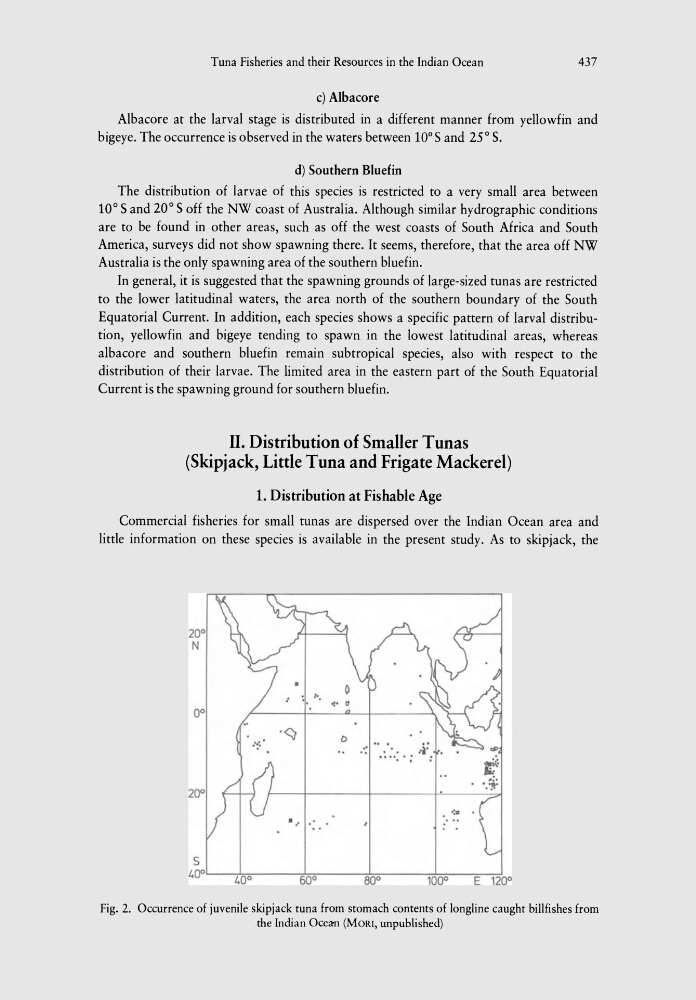
Fig. 2. Occurrence of juvenile skipjack tuna from stomach contents of longline caught billfishes from
the Indian Ocean (MORI, unpublished)
437
c) Albacore
Albacore at the larval stage is distributed in a different manner from yellowfin and
bigeye. The occurrence is observed in the waters between 10 0 Sand 25 0 S.
d) Southern Bluefin
The distribution of larvae of this species is restricted to a very small area between
10° S and 20° S off the NW coast of Australia. Although similar hydrographic conditions
are to be found in other areas, such as off the west coasts of South Africa and South
America, surveys did not show spawning there. It seems, therefore, that the area off NW
Australia is the only spawning area of the southern bluefin.
In general, it is suggested that the spawning grounds of large-sized tunas are restricted
to the lower latitudinal waters, the area north of the southern boundary of the South
Equatorial Current. In addition, each species shows a specific pattern of larval distribution, yellowfin and bigeye tending to spawn in the lowest latitudinal areas, whereas
albacore and southern bluefin remain subtropical species, also with respect to the
distribution of their larvae. The limited area in the eastern part of the South Equatorial
Current is the spawning ground for southern bluefin.
II. Distribution of Smaller Tunas
(Skipjack, Little Tuna and Frigate Mackerel)
1. Distribution at Fishable Age
Commercial fisheries for small tunas are dispersed over the Indian Ocean area and
little information on these species is available in the present study. As to skipjack, the
~,:
200
'.~:
~ .
. ..
:
S
400
40°
60°
80°
100 0
E 120°
Fig. 2. Occurrence of juvenile skipjack tuna from stomach contents of longline caught billfishes from
the Indian Ocean (MORI, unpublished)